

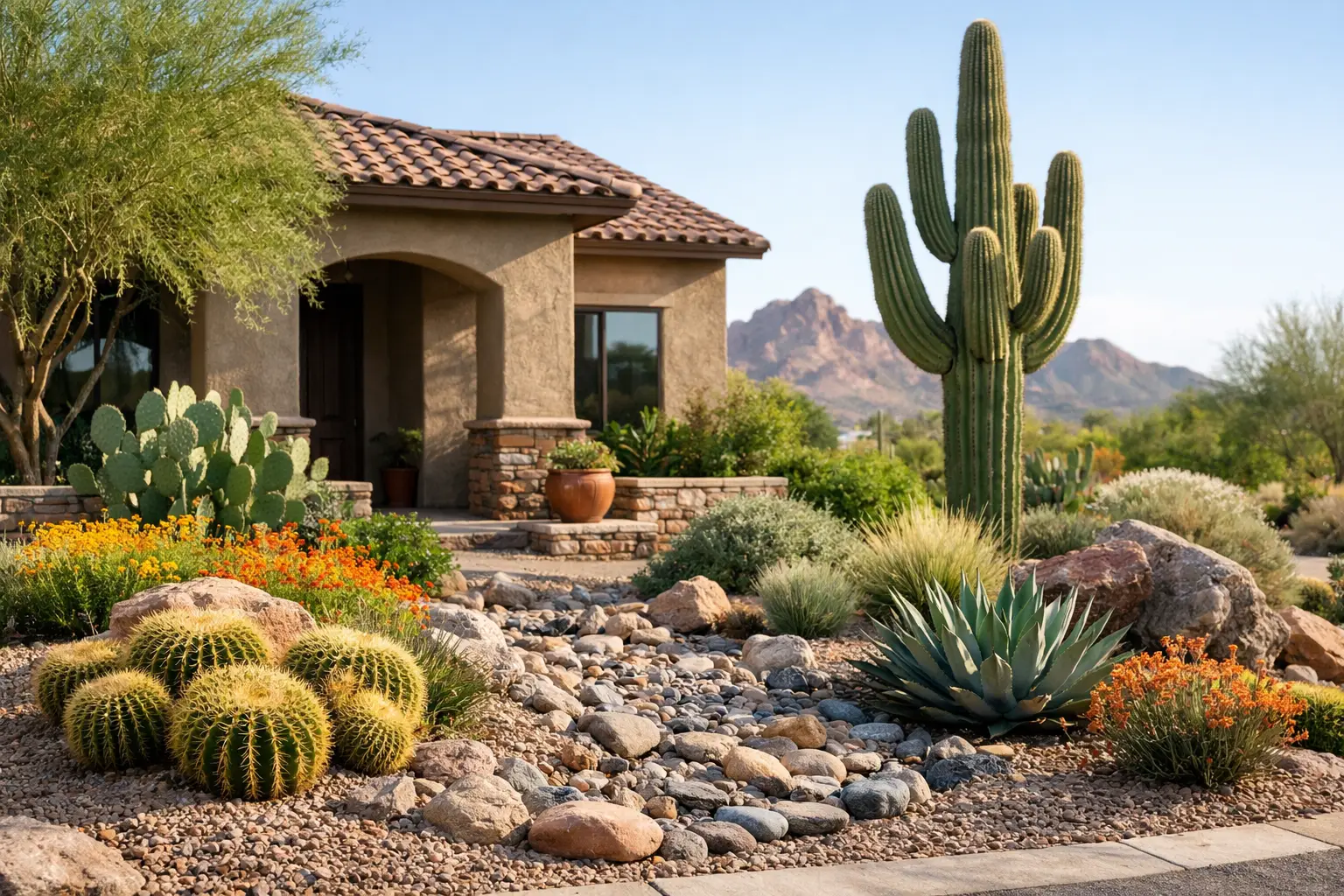
A front yard in Arizona has to handle more than curb appeal. It has to stand up to intense sun, reflected heat, blowing dust, monsoon runoff, hard water, and busy schedules. This Arizona front yard landscaping guide helps homeowners build an entrance that looks clean, works well in the desert, and does not demand constant weekend maintenance.
The best results come from planning the yard as one complete system. That means grading, drainage, irrigation, hardscape, plants, lighting, and cleanup should work together instead of being installed as separate fixes over time.
Start With How the Front Yard Is Used
Before choosing a plant or gravel color, look at how people move through the space. Identify the path from the driveway to the front door, where trash bins sit, where deliveries are dropped, and whether guests need a clear walkway. A small yard can feel crowded quickly when stepping stones, shrubs, decorative boulders, and parked vehicles all compete for the same area.
Also pay attention to sun exposure. A west-facing wall can create serious afternoon heat, while a covered entry may stay shaded enough for a different group of plants. Areas near stucco walls, block walls, and driveways often run hotter than the rest of the yard because they reflect and hold heat. Plant placement should account for those conditions, not just how a design looks on installation day.
For rental homes, commercial properties, or households with limited time, simple layouts are usually the smart choice. Defined walkways, durable ground cover, grouped plants, and accessible irrigation components make routine maintenance faster and help the property keep a professional appearance.
Build the Arizona Front Yard From the Ground Up
A polished front yard starts with proper preparation. If the ground is uneven, water can collect near the house, wash gravel into walkways, or create low spots where weeds take hold. Land grading should direct water away from the foundation while allowing natural drainage during Arizona’s heavy summer storms.
Choose Ground Cover That Matches the Property
Decorative gravel remains one of the most practical choices for Arizona front yards. It holds up in sun, requires little water, and can create a clean contrast around plants, pavers, and artificial grass. The right material depends on the home and maintenance expectations. Fine gravel can look refined but may migrate more easily, while larger rock is more stable but can be harder to rake and remove debris from.
Use edging to keep gravel where it belongs. Steel, concrete, paver, or masonry edging creates a crisp boundary between landscape zones and reduces the need for repeated touch-ups. Good separation is especially useful where gravel meets a driveway, turf strip, or front walkway.
Artificial grass can add a finished green accent without the water demand and mowing schedule of natural lawn. It works best in defined areas, such as a small center panel, a shaded entry section, or a narrow strip that softens a large expanse of gravel. It is not always the right choice for every front yard. Artificial turf can get hot in direct summer sun, so placement, quality materials, and proper base preparation matter.
Use Pavers for Function, Not Just Decoration
Pavers give a front yard structure. They can create a more welcoming path to the entry, widen a narrow walkway, frame a seating area, or replace cracked concrete sections. Travertine and pavers can also improve the transition between a driveway, gate, and front door.
The base beneath the surface matters as much as the finished material. Poor preparation can lead to shifting, uneven edges, and drainage problems after monsoon season. A properly installed hardscape should have stable compaction, appropriate slope, and clean restraint at the borders. If existing pavers are stained, loose, or faded, renovation and sealing may be more cost-effective than a full replacement.
Choose Plants That Can Handle Desert Conditions
Arizona landscaping does not mean a yard has to look bare. The goal is to use plants with compatible water needs, enough room to mature, and a realistic maintenance level. A crowded nursery-style planting plan may look full at first, but it often becomes expensive to trim, replace, and irrigate once plants grow together.
Desert-adapted trees, shrubs, flowering accents, and succulents can add texture without turning the front yard into a high-water project. Use taller plants to frame the home or soften block walls, medium shrubs to fill planting beds, and low-growing varieties near paths and windows. Keep thorny plants away from walkways, mailboxes, and areas where children or guests pass.
Avoid planting trees too close to the house, underground utilities, or hardscape. Roots, canopy spread, and falling litter should all be considered before installation. A tree that looks modest in a container can eventually block a walkway, interfere with a roofline, or add recurring cleanup work.
Plant groups should have similar watering needs. Pairing thirsty flowering plants with low-water cactus or desert shrubs often leads to one of two problems: the drought-tolerant plants get overwatered, or the higher-water plants struggle. Separating irrigation zones gives each area a better chance to perform.
Install Irrigation That Saves Water and Protects Plants
A modern irrigation system does more than turn water on and off. It delivers water to the right area, at the right rate, with less waste. Drip irrigation is a practical choice for most desert plants because it puts water near the root zone instead of spraying it into the air or onto gravel.
Check the system seasonally. Damaged emitters, leaks, clogged lines, and broken valves can quietly waste water and leave plants stressed. Hard water buildup can also affect performance over time. If a plant bed looks unhealthy, the problem may be irrigation coverage rather than the plant itself.
Watering schedules should change with the weather. Summer heat, winter dormancy, rainfall, and newly installed plants all require different watering approaches. New landscaping generally needs more attention while roots establish, even when the final design is intended to be low maintenance.
Add Lighting for Safety and Evening Curb Appeal
Landscape lighting makes a front yard easier to use after dark and helps the home look cared for from the street. Path lights can define walkways, while uplighting can bring out the shape of a mature tree, textured wall, or architectural feature. Lighting near address numbers and entry doors also helps visitors and delivery drivers find the property.
More fixtures do not automatically create a better result. Overlighting can produce glare, harsh shadows, and a cluttered appearance. A few well-placed, warm-toned fixtures usually look better than a row of bright lights lining every edge. Wiring and fixture placement should be planned before major hardscape work whenever possible.
Plan for Maintenance Before Installation
Low maintenance does not mean no maintenance. Gravel needs occasional raking and weed control. Plants need pruning, seasonal inspections, and replacement if they fail. Artificial grass benefits from rinsing, brushing, and debris removal. Pavers may need cleaning, repairs, or resealing depending on use and exposure.
The key is to make these tasks manageable. Leave room to access valves, keep plants from growing into walkways, and avoid designs that trap leaves and debris in tight corners. For properties with overgrown trees, dead limbs, old stumps, or construction debris, cleanup and removal should happen before final landscape installation. Starting with a clean site prevents new materials from being damaged or buried under old problems.
When a Full Front Yard Upgrade Makes Sense
A complete upgrade is often more efficient than repeatedly patching a worn-out yard. If irrigation is failing, gravel is mixed with soil, plants are overgrown, and the walkway is damaged, handling each issue separately can create inconsistent results and higher costs over time. A coordinated project can address grading, removal, irrigation, hardscape, ground cover, and planting in the right order.
This is where working with one contractor can simplify the job. Pro Natural Landscape can help Arizona property owners combine design, installation, repairs, and ongoing maintenance without coordinating separate crews for every phase.
A well-built front yard should make the property easier to own, not harder to manage. Start with the conditions on your site, choose materials that can take Arizona heat, and invest in the details that keep the space clean, safe, and ready to welcome people home.