

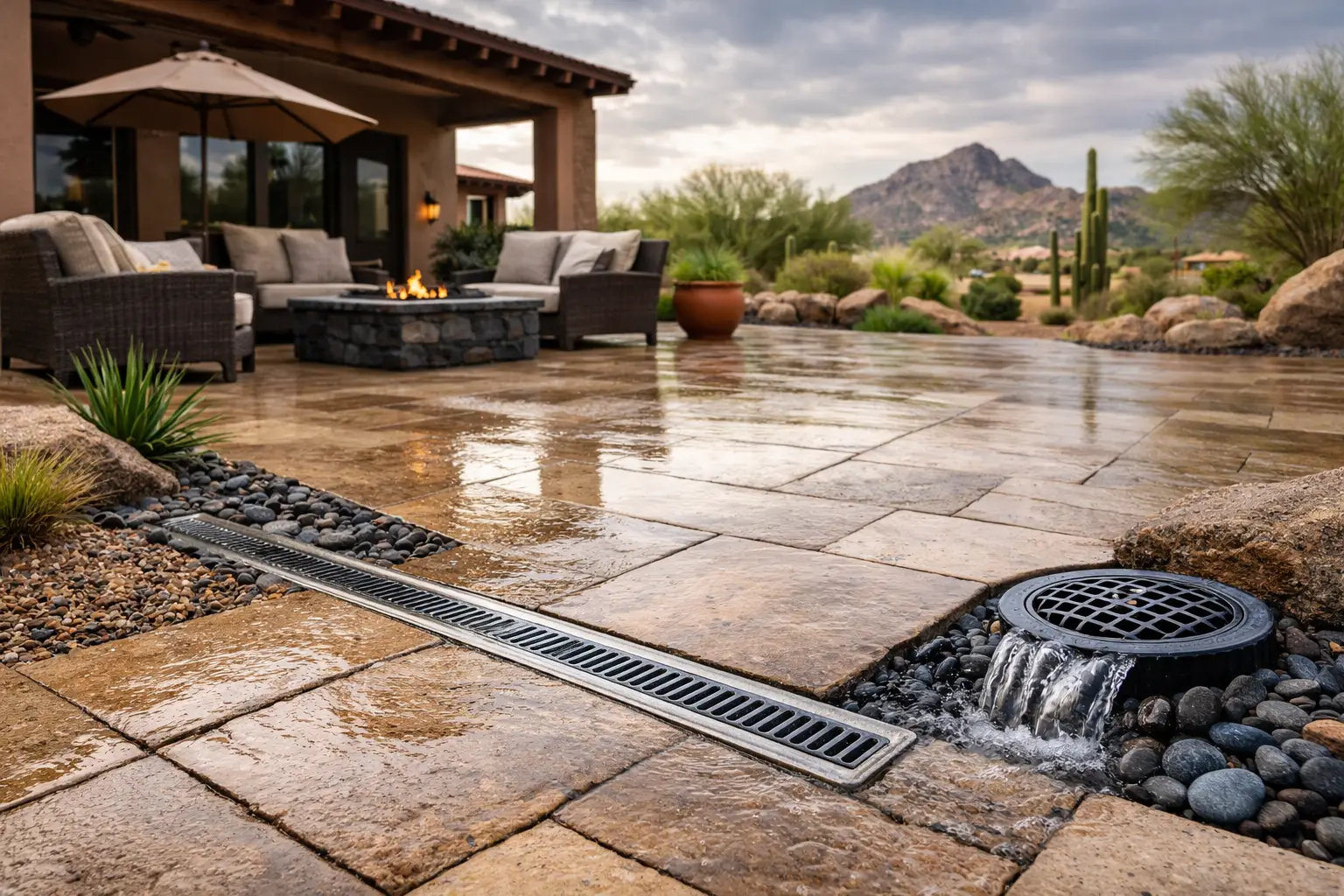
A patio can look perfect for most of the year, then reveal a major problem during one Arizona monsoon storm. Water that pools against the house, runs through paver joints, or washes gravel into the yard can damage hardscapes and create ongoing maintenance issues. The best patio drainage solutions address where water starts, where it collects, and where it can safely exit the property.
For Arizona homeowners and property managers, drainage is not about handling daily rain. It is about preparing for short, heavy downpours that move a large amount of water quickly. A well-planned solution protects your patio surface, foundation, landscaping, and outdoor living area without making the space harder to maintain.
Start With the Cause of Patio Water Problems
Before choosing a drain or replacing pavers, identify the source of the water. Many drainage problems begin above or beside the patio, not on the patio itself. Roof runoff, downspouts, poorly graded yards, raised planter beds, and neighboring slopes can all send water toward a hardscape area.
Look for standing water more than a few hours after rain, soil washing out from patio edges, white mineral staining on concrete or travertine, and paver joints that repeatedly lose sand. Water marks on block walls or the bottom of exterior doors also deserve attention. These are signs that water is taking the wrong path.
The drainage route matters as much as the drain itself. Water should move away from the home and toward a suitable collection area, landscape basin, or approved discharge location. Sending water straight toward a fence, property line, or neighboring yard often creates a new problem instead of fixing the existing one.
Best Patio Drainage Solutions for Different Yards
There is no single drain system that fits every Arizona patio. The right option depends on the patio material, the amount of water, available slope, and how much space is around the hardscape.
Regrade the Patio and Surrounding Yard
Proper grading is usually the first and most important fix. A patio needs a consistent slope away from the house so water does not settle near doors, walls, or the foundation. In many hardscape installations, a slope of roughly one-eighth to one-quarter inch per foot provides enough movement without making the patio feel noticeably uneven.
Grading is especially effective when a patio has low spots or when surrounding gravel and soil have built up over time. It may involve removing and resetting pavers, adjusting the base material, or reshaping the landscape beside the patio. This work takes more effort than adding a drain grate, but it solves the underlying issue when the entire surface is pitched the wrong way.
For a large concrete patio, regrading may not always be practical without removal or resurfacing. In that situation, a surface drain may be the better fit.
Install a Channel Drain Along the Patio Edge
A channel drain, also called a trench drain, is one of the most reliable options where water travels across a patio toward the house, a door, a pool deck, or a wall. It is a narrow linear drain installed flush with the surface, collecting runoff before it reaches the vulnerable area.
Channel drains work well with concrete, pavers, tile, and travertine because they create a clear collection point for fast-moving water. The drain connects to a buried pipe that carries water to a lower area of the yard or another planned outlet.
This is often the best choice for patios with limited room to regrade. It is also useful at the base of steps, between a patio and artificial grass, or beside a covered outdoor kitchen where water tends to collect. The trade-off is that the drain must be installed at the correct elevation and kept free of leaves, gravel, and debris.
Add Catch Basins for Low Spots
Catch basins are box-shaped underground collection points with surface grates. They are useful where runoff naturally funnels into one low area, such as the corner of a patio, the bottom of a sloped walkway, or near a downspout.
Unlike a channel drain, which gathers water along a line, a catch basin handles concentrated flow at a specific point. It can be connected to solid drainage pipe and routed away from the patio. For a small drainage issue, one basin may be enough. For larger yards, several basins may work together with grading and underground piping.
A basin alone will not fix a patio that is flat or sloped toward the house. It needs water to reach it, which is why surface slope remains essential.
Route Roof Runoff Away From the Patio
Downspouts can overload a patio drainage system during a heavy storm. If a roof drains directly onto pavers or concrete, the water can splash, erode adjacent gravel, and create a repeated pooling problem.
Extensions or underground drain pipe can move roof water beyond the patio area. In many Arizona landscapes, that water can be directed toward a dry creek feature, gravel basin, or planted area designed to accept occasional runoff. The goal is controlled dispersal, not simply moving water from one hard surface to another.
Make sure roof drainage does not empty next to the foundation or beneath a patio slab. Water trapped in those areas can contribute to settling and surface movement over time.
Use Permeable Pavers Where Water Needs a Place to Go
Permeable pavers allow water to pass through wider joints and into a specially prepared aggregate base below. They can be a strong option for patios, walkways, and drive areas where reducing surface runoff is a priority.
For Arizona properties, permeable systems can work well when the base is properly designed and the surrounding soil can manage the water. They are not a shortcut for poor grading, however. Compacted desert soil, heavy runoff from a roof, or a low patio area may still require a drainage pipe or collection basin.
Maintenance also matters. The joints need to remain open and free of fine dust, soil, and debris. A patio that receives frequent windblown dirt or landscaping runoff may need periodic cleaning to maintain drainage performance.
Build a Gravel Drainage Strip or Dry Creek Area
A gravel strip can help manage light to moderate runoff along the perimeter of a patio. It is commonly installed between pavers and a block wall, planting bed, artificial turf, or fence line. The gravel slows water, limits mud, and gives runoff a path away from the hardscape.
For larger volumes of water, a dry creek bed or decorative rock swale can be both functional and attractive. These features guide water through the landscape while fitting naturally with Arizona-style gravel, boulders, and drought-tolerant plantings.
This approach works best when there is room to move water across the yard. It is less effective for a patio enclosed by walls or for areas where runoff must cross a high-traffic walkway.
Avoid Quick Fixes That Create Bigger Repairs
Caulking patio joints, adding extra gravel over a low spot, or placing a small drain grate without a pipe behind it may hide the problem temporarily. Water still needs a route. If it cannot flow out, it will collect below the surface, against walls, or under pavers.
Avoid burying drainage pipe without checking the slope. A pipe that runs uphill or remains flat can hold water and sediment. Also avoid draining concentrated runoff onto a neighbor’s property or directly against a block wall. Good drainage protects the entire outdoor area, not just the spot where water was first noticed.
If pavers are sinking, travertine is shifting, or a concrete patio has developed cracks near a low area, address the drainage before making cosmetic repairs. Replacing the surface without correcting the water path can lead to the same damage again.
Plan Drainage During Patio Installation or Renovation
The most cost-effective time to install drainage is while a patio is being built, renovated, or reset. Base preparation, slope, edge restraints, drain channels, and underground pipe can all be coordinated before the finished surface goes in.
This is especially valuable when combining pavers, artificial grass, gravel, retaining walls, or new irrigation. Each feature changes how water moves through the yard. A complete plan prevents turf from trapping runoff, gravel from washing onto pavers, and planter beds from holding water against the home.
For commercial properties, drainage planning also helps keep entryways, walkways, and outdoor seating areas safer during storms. Standing water can affect appearance, maintenance needs, and customer access.
A patio should be a place to enjoy the outdoors, not a surface you inspect nervously whenever storm clouds roll in. If water is pooling, washing out joints, or moving toward your home, a site-specific drainage plan can protect the investment and keep the space ready for use year-round. Pro Natural Landscape can assess the grading, hardscape, and surrounding landscape features to build a practical solution that fits your Arizona property.