

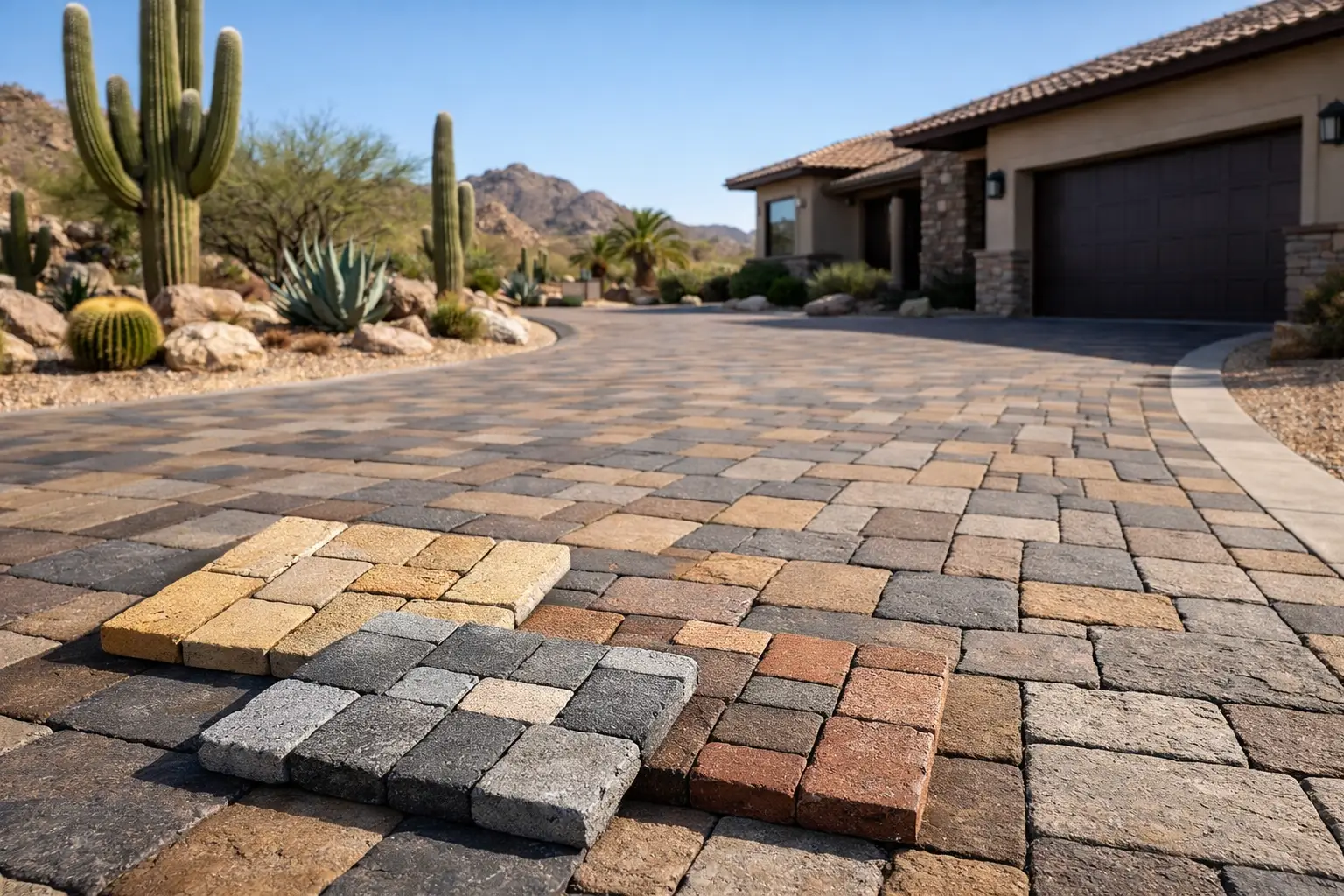
A driveway can take up more visible square footage than your front lawn. In Arizona, it also takes daily sun, tire traffic, dust, irrigation overspray, and the occasional oil drip. Choosing the best paver colors for driveways is not just a design decision. It affects how clean the surface looks, how hot it feels, and how well it fits the rest of your property.
A color sample held in your hand can look very different once it covers a full driveway in direct afternoon sun. The right choice should work with your roof, exterior paint, landscaping, and the realities of desert living. Here is how to choose a paver color that gives your driveway a finished, durable look for years.
Start With Arizona Heat and Dust
Arizona sunlight makes every paver color appear lighter and warmer than it does in a showroom. Dark colors absorb more heat, which can make a driveway uncomfortable to walk on during summer and may make fading more noticeable over time. Very light colors stay cooler, but they can show red dust, tire marks, leaf stains, and spills more quickly.
For most Arizona homes, a medium-tone paver is the most practical option. It offers enough depth to hide everyday dust and vehicle marks without becoming a heat magnet. Think warm gray, tan, sand, taupe, or a blended brown-gray mix.
The goal is not to find a color that never shows dirt. No outdoor surface does. The goal is to choose a color that still looks clean and intentional between regular washing and maintenance.
The Best Paver Colors for Driveways by Home Style
Your driveway should support the home instead of competing with it. Roof tile, stucco color, stone accents, gates, and block walls all influence which paver color will look right.
Warm Tan and Sand
Tan and sand pavers are dependable choices for Southwestern, ranch, and stucco homes. They reflect more heat than dark pavers and blend naturally with desert gravel, tan block walls, and earth-tone paint colors. A tan driveway can feel bright and open, especially on smaller front yards.
The trade-off is that pale tan may show dark tire marks or oil stains. A color blend with tan, light brown, and soft gray usually provides more visual forgiveness than a solid light beige.
Taupe and Greige
Taupe and greige, a gray-beige blend, are among the most versatile driveway colors for Arizona properties. They work well with modern desert homes, white or cream stucco, charcoal trim, and many roof colors. These shades also do a good job of hiding dust without looking dull.
For homeowners who want a clean, current look without going too dark, taupe is often the safest long-term choice. It has enough warmth for Arizona architecture while still pairing well with gray exterior finishes.
Medium Gray and Charcoal Blends
Gray pavers look sharp against white, light gray, blue-gray, or contemporary stucco exteriors. Medium gray is particularly practical because it hides tire marks better than light gray and stays cooler than deep charcoal.
Charcoal can be used effectively as an accent, border, or pattern color. A full charcoal driveway can look dramatic, but it will hold more heat and show pale dust quickly. It is usually better for homes with strong modern lines, dark roofs, or dark window frames than for traditional desert-style properties.
Brown and Desert Blends
Brown paver blends create a grounded look that works well with stone veneer, brick details, mature desert landscaping, and warm roof tile. Blended browns are often more forgiving than solid brown because the variation helps disguise dust, stains, and small surface changes over time.
Avoid choosing a brown that is too orange or red unless the home already has matching brick, roof tile, or accent stone. A driveway with a strong red tone can clash with cooler gray paint or modern black-and-white exterior finishes.
Cream and Light Neutral Colors
Light cream, ivory, and pale neutral pavers can make a driveway feel larger and help reduce surface heat. They are a strong option for homes with light stucco and a clean, airy exterior palette.
These colors require more attention to cleanup. If your driveway sees frequent vehicle traffic, tree debris, or equipment use, a light neutral blend is usually a better choice than one solid pale color. The subtle variation keeps the surface from showing every mark.
Match the Driveway to Fixed Features First
Paint can be changed. A driveway, roof, block wall, and stone veneer are more permanent investments. Before selecting pavers, look closely at the colors you are less likely to replace.
Start with the roof. A terracotta or brown tile roof usually works best with tan, taupe, brown, or desert-blend pavers. A charcoal shingle or tile roof can support gray, greige, or darker accent borders. If the home has strong natural stone features, pull a secondary tone from that stone rather than trying to match one color exactly.
It is also smart to view samples next to the garage door and exterior wall in daylight. Morning light, shade, and late afternoon sun can shift the appearance of a paver significantly. What looks gray at noon may show brown or warm undertones at sunset.
Use Blended Colors for a More Practical Driveway
Solid-color pavers can look clean at installation, but blended pavers usually hold up better visually in real-world conditions. A blend adds depth and helps soften the appearance of dust, small stains, and normal color variation.
For Arizona driveways, blends that combine two or three nearby tones tend to work best. Good examples include tan with brown, gray with taupe, or cream with soft sand. The colors should be close enough to read as one finished surface from the street.
Avoid blends with extreme contrast unless you are intentionally creating a pattern. A random mix of very dark charcoal and very light cream can look busy across a large driveway and make repairs or future additions harder to match.
Do Not Forget Borders and Patterns
A border can give a driveway a more finished appearance without committing the entire surface to a dark color. For example, a medium taupe field with a charcoal border creates definition around the driveway, while a tan field with a brown border complements traditional desert homes.
Borders are also useful when the driveway connects to walkways, a patio, or a front entry. Repeating one accent color across these hardscape areas helps the property look planned rather than pieced together over time.
Patterns should stay simple on large driveways. Running bond, basket weave, and herringbone patterns can add interest, but the color choice should remain calm. Let the pattern provide texture and let the paver colors support the home.
Think About Maintenance Before Going Very Light or Very Dark
Color affects what you notice, but proper installation and routine care determine how well pavers perform. A driveway needs a stable base, correct grading, reliable edge restraints, and joint sand that stays in place. Without these basics, even the best-looking color will not solve shifting, settling, or drainage problems.
Sealing can help enrich the color of pavers and make cleanup easier, especially in areas exposed to vehicle fluids or frequent staining. However, sealers can deepen or darken a paver color. Always confirm how the finished sealed surface will look before applying it across the entire driveway.
Regular sweeping, occasional washing, and prompt cleanup of oil or rust stains will protect the appearance of any paver color. If fading, worn joints, or stains are already affecting your driveway, paver renovation may be a better solution than a full replacement.
A Reliable Choice for Most Arizona Driveways
If you want one practical answer, choose a medium taupe, warm gray, or tan-and-gray blend. These shades work with a wide range of Arizona homes, handle dust well, avoid the intense heat of very dark pavers, and remain flexible if you update your paint or landscaping later.
For a driveway that looks right from the street and performs under Arizona conditions, the color should be selected alongside the installation plan. Pro Natural Landscape can help homeowners and property managers match pavers to the property, drainage needs, existing hardscape, and the level of maintenance they want. A well-chosen paver color is easiest to appreciate after months of sun, traffic, and desert dust – when the driveway still looks like it belongs there.