

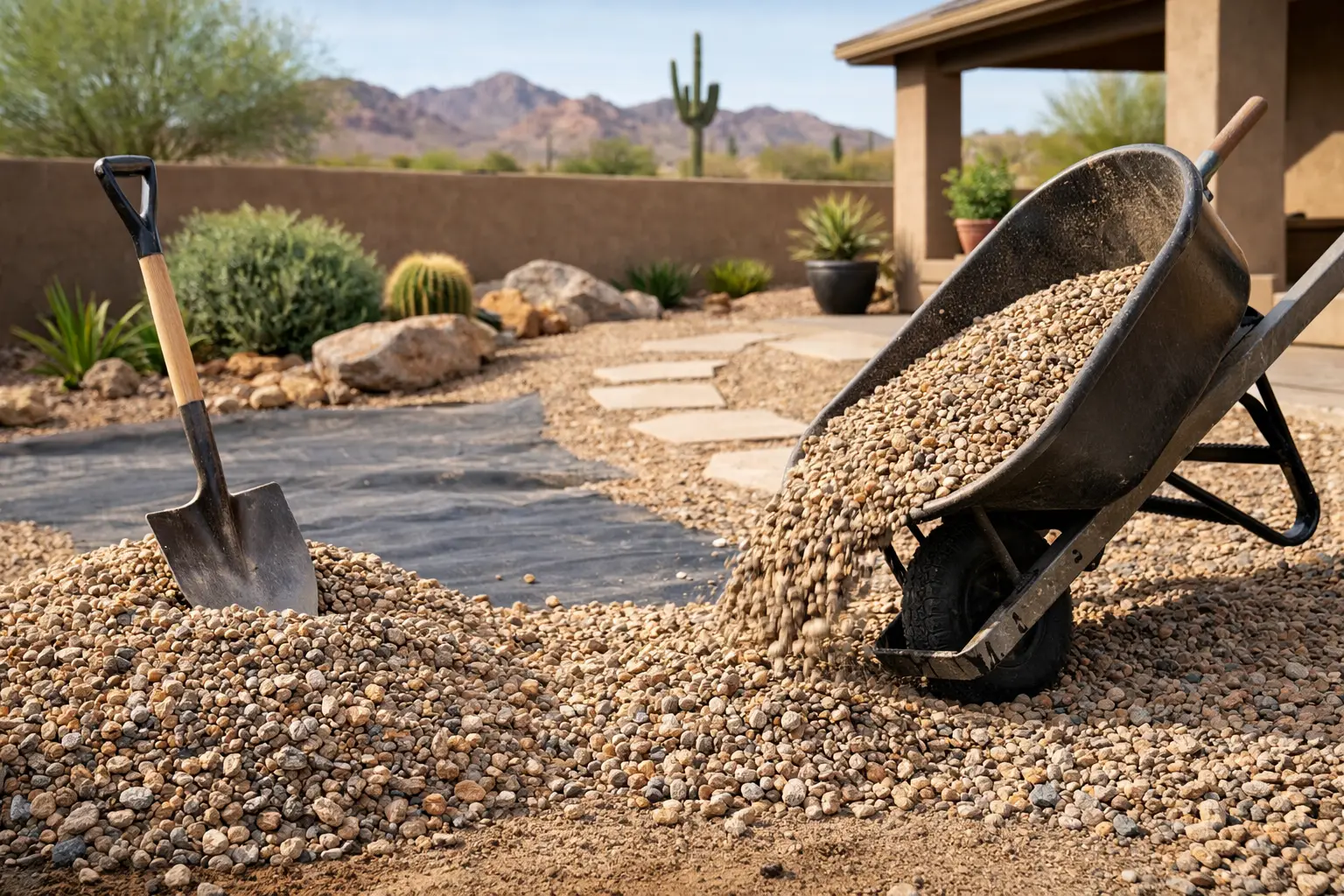
A bare dirt yard can turn into a dust problem, a weed problem, and a runoff problem after one Arizona monsoon. Professional gravel installation gives the space a finished look while creating a durable, low-water surface that stands up to sun, wind, foot traffic, and everyday use. For homes, rental properties, and commercial sites, the difference comes down to proper preparation beneath the rock – not simply spreading gravel over the ground.
Why Gravel Works for Arizona Properties
Gravel is one of the most practical landscape materials for Arizona. It does not need regular watering, mowing, or seasonal replacement, and it works with desert plants, artificial grass, pavers, block walls, and outdoor living areas. The right material can define walkways, cover open planting beds, improve side yards, and give a front yard clean curb appeal without adding another high-maintenance task to the property.
It also offers flexibility. A homeowner may want decorative rock around cacti and palms, while a property manager may need a stable, uniform surface around a multi-unit building. Commercial properties often use gravel to keep large landscape areas neat and manageable. The best option depends on how the area will be used, how visible it is, and how much drainage it needs.
Gravel is low maintenance, not no maintenance. Leaves, dust, and windblown debris still need occasional cleanup. Thin spots may need touch-ups over time, especially near gates, driveways, or frequently used walkways. A properly installed base helps keep those future maintenance needs under control.
A Gravel Installation Starts Below the Surface
The ground underneath decorative rock determines whether the finished area stays level and clean. Skipping site preparation can lead to sinking gravel, exposed fabric, standing water, and weeds pushing through sooner than expected. That is why a professional crew starts by evaluating the existing grade, soil condition, drainage direction, and nearby hardscape.
The area is cleared of weeds, loose debris, old landscape material, and unwanted roots. Depending on the site, the ground may need to be excavated, leveled, or regraded before any fabric or rock is installed. Arizona soil is often compact and uneven, so a yard that looks mostly flat can still direct water toward a foundation, patio, or walkway during heavy rain.
Proper grading moves water away from structures and prevents low spots where gravel can wash out or collect debris. This matters even more around homes with block walls, patios, paver areas, and artificial turf. Gravel should support the overall drainage plan, not create a new issue.
Weed Control Needs More Than a Quick Spray
Weed barrier fabric is a useful part of many gravel projects, but it is not a complete weed-control solution. It helps separate gravel from soil and slows growth from below. Windblown seeds can still land on top of the rock, especially after summer storms, and eventually take root in accumulated dust or organic debris.
Before fabric is installed, existing weeds should be removed and the ground prepared correctly. The fabric needs to lie flat, overlap at seams, and be secured so it does not shift or rise through the gravel. Thin, low-quality fabric often tears during installation or breaks down quickly under Arizona heat. A stronger landscape-grade barrier provides better long-term separation and makes future maintenance easier.
In some areas, fabric may not be the right solution. Locations with heavy roots, drainage needs, or planned plantings may require a different approach. The goal is to choose materials that fit the site instead of treating every yard the same.
Choosing the Right Gravel for the Job
Not all gravel serves the same purpose. Decorative rock is available in different colors, shapes, and sizes, from smaller screened material to larger river rock. Smaller gravel often creates a more even, refined appearance for front yards and planting beds. Larger rock makes a stronger visual statement and can work well as an accent around boulders, trees, drainage paths, or commercial landscape features.
Color matters in Arizona sunlight. Lighter gravel can brighten a yard but may show dirt more easily in high-traffic areas. Darker rock can look sharp against stucco, artificial turf, and light pavers, though it may absorb more heat. Natural tan, brown, and mixed desert tones tend to blend well with many local homes and are often easier to maintain visually.
For pathways and areas that receive regular foot traffic, the rock size should feel stable underfoot. Very large or rounded stones can shift and be uncomfortable to walk on. For driveways or vehicle-access areas, decorative gravel alone may not be enough. Those areas usually need a properly compacted base and materials selected for weight and traffic load.
How Much Gravel Is Enough?
A common mistake is installing too little material. A thin layer may look acceptable on the first day, but it can quickly reveal fabric and soil as wind, rain, and foot traffic move the rock around. Most decorative gravel installations need enough depth to provide consistent coverage and a finished appearance.
The right depth depends on the rock size, the condition of the ground, and the purpose of the area. Decorative landscape rock is often installed at a few inches deep, while larger rock or uneven sites may need more coverage. Edging, curbing, pavers, and existing concrete also affect the final depth. Gravel should sit at a practical level that looks intentional without spilling onto sidewalks, patios, or driveways.
Accurate material calculations prevent two expensive problems: running short before the job is complete or ordering more rock than the property can use. A site visit allows the installer to measure the area, account for curves and planting zones, and recommend a depth that fits the project.
Edging Keeps the Rock Where It Belongs
Gravel needs a clear boundary. Without edging, it gradually migrates into lawn areas, onto concrete, and across walkways. The best edge depends on the design. Paver borders, steel edging, concrete curbing, existing walls, and natural boulder accents can all contain rock while giving the space a more finished appearance.
This is where a full outdoor improvement plan can save time. If a property also needs pavers, artificial grass, irrigation repairs, lighting, or a block wall, it makes sense to coordinate those elements before the gravel goes down. Installing rock first and then digging it up for another project creates extra labor, wasted material, and unnecessary cleanup.
For properties in El Mirage and across the Arizona market, Pro Natural Landscape can coordinate gravel with grading, hardscape, irrigation, and landscape installation so the finished yard works as one complete system.
What a Professional Installation Should Include
A dependable gravel project is not just a delivery and a rake. The work should include a clear plan for site cleanup, ground preparation, material placement, and final detail work. Rock should be distributed evenly, kept out of plant crowns and drainage openings, and cleaned off adjacent hard surfaces before the crew leaves.
A professional installer should also identify concerns before work begins. For example, a side yard with poor drainage may need grading before decorative rock is added. A yard with aggressive weeds may need more thorough removal and barrier preparation. A heavily used access path may need a compacted base, stepping stones, or pavers instead of loose rock alone.
The lowest quote is not always the best value if it leaves out excavation, weed barrier, cleanup, delivery, or adequate rock depth. Ask what preparation is included, what material will be used, how drainage will be handled, and whether the estimate covers removal of old material. Clear answers upfront lead to a cleaner job and fewer surprises later.
Keep Your Gravel Landscape Looking Sharp
Once installed, gravel is simple to maintain. Remove leaves and debris before they break down into soil, pull small weeds when they first appear, and occasionally rake rock back into thin or uneven areas. Avoid blowing gravel directly toward windows, vehicles, or neighboring properties, and use care around drip irrigation emitters and plants.
After monsoon season, inspect the yard for washed-out sections, clogged drainage paths, and areas where water has carried smaller material away. Catching those issues early is far easier than repairing a large rut or rebuilding an entire section. A periodic refresh can restore color and coverage when the landscape begins to look tired.
A well-planned gravel surface should make your property easier to own, not harder to manage. When the grading is right, the materials fit the space, and the installation is handled with care, gravel gives Arizona yards a clean, durable finish that holds up through every season. Request a site evaluation before choosing rock, and build the project around how your property actually drains, looks, and gets used.