

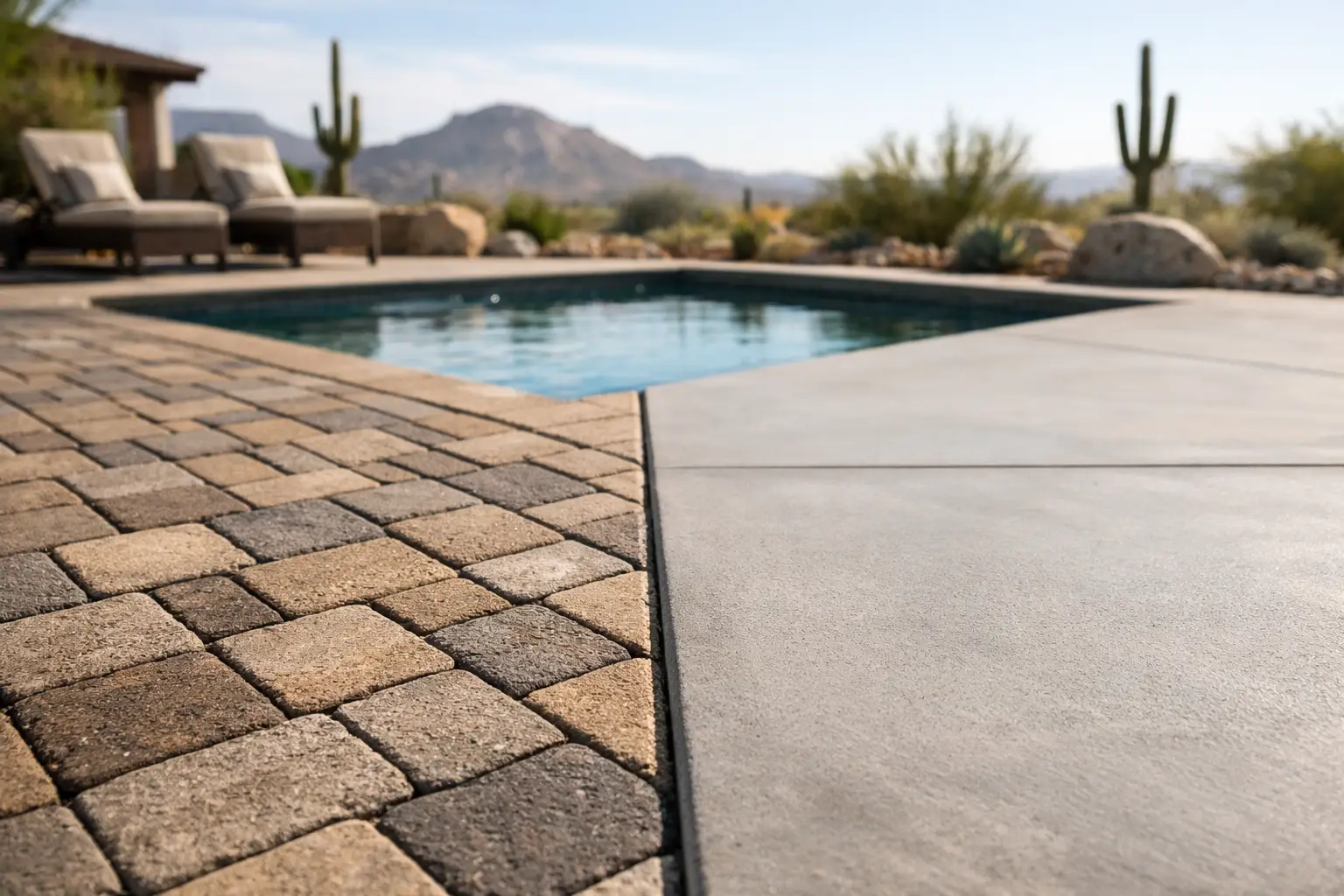
A patio that looks great in spring can become a problem by late summer if the surface was the wrong choice for Arizona heat. That is why homeowners and property managers often ask about pavers vs poured concrete before starting a driveway, walkway, pool deck, or backyard upgrade. Both can work well, but they do not perform the same once sun, soil movement, drainage, and day-to-day wear enter the picture.
In Arizona, the right hardscape decision is rarely just about appearance. It is about how the surface handles heat, how easy it is to repair, how much maintenance you want, and how long you expect it to keep its shape and finish. If you are investing in an outdoor space, those details matter.
Pavers vs Poured Concrete: The Main Difference
The biggest difference is how each surface is built. Pavers are individual units installed over a prepared base, then fitted together to create a flexible hardscape. Poured concrete is installed as one solid slab. That single difference affects almost everything else, from cracking and repairs to visual style and long-term performance.
Pavers are designed to move slightly with the base and surrounding soil. Poured concrete is more rigid, which can be a benefit in some applications, but it also means stress often shows up as visible cracks. In a climate like Arizona, where expansion, contraction, and ground movement can all play a role, that distinction is hard to ignore.
How Arizona Climate Changes the Decision
Not every hardscape article accounts for desert conditions, but that is where many decisions go wrong. Arizona properties deal with intense UV exposure, high surface temperatures, low rainfall most of the year, and occasional heavy monsoon activity that can expose drainage problems fast.
A poured concrete slab can perform well when it is properly installed with the right subgrade preparation, joint placement, and finish. But when the base shifts or the slab takes stress over time, cracking is common. Once that happens, repairs are usually visible, and matching older concrete can be difficult.
Pavers tend to be more forgiving in these conditions. Because the system is modular, small movements in the ground are less likely to create the same kind of obvious structural blemish you see in a cracked slab. That does not mean pavers are maintenance-free, but it does mean they often age more gracefully in Arizona landscapes.
Appearance and Design Flexibility
If design matters, pavers usually offer more options. You can choose from different shapes, colors, textures, and laying patterns to match the home, pool area, courtyard, or commercial frontage. They can create a cleaner custom look without making the space feel overly formal.
Poured concrete has a simpler appearance unless you upgrade to decorative finishes like stamping, staining, or scoring. Those options can improve the look, but they also increase cost and still do not offer the same piece-by-piece flexibility as pavers. For clients who want a more finished, higher-end surface, pavers often feel like the stronger visual investment.
This matters for curb appeal. A driveway or entry path is one of the first things people notice. On commercial properties, it also affects how professional the exterior feels. Clean, well-installed pavers usually create a more intentional look than a basic concrete slab.
Cost Up Front vs Cost Over Time
For many property owners, the first question is price. In most cases, poured concrete has a lower upfront installation cost than pavers. If the budget is tight and the area is large, concrete can seem like the practical move.
But initial price is only part of the equation. Long-term value depends on how the surface holds up and what it costs to maintain or repair. When concrete cracks, settles, or stains, the fix is often more involved and more noticeable. Replacing one section of a slab can leave a patchwork result.
Pavers usually cost more to install, but they can save money later because repairs are more targeted. If one area shifts or gets damaged, individual pavers can often be lifted and replaced without tearing out the whole surface. That is a major advantage for driveways, walkways, and patios expected to last for years.
So when clients ask which is cheaper, the honest answer is that concrete is often cheaper at the start, while pavers can make more sense over the life of the project.
Repairs and Maintenance
This is one of the clearest trade-offs in the pavers vs poured concrete decision. Concrete is straightforward to clean and generally low maintenance, but when something goes wrong, repair flexibility is limited. Cracks may be patched, sealed, or resurfaced, but the repaired area often stands out.
Pavers need occasional attention too. Joint sand may need refreshing, weeds can appear if installation or upkeep is neglected, and sealing may be recommended depending on the product and use. Still, maintenance is usually more manageable because the system is repairable in sections.
That matters on active properties. A homeowner with kids, pets, patio furniture, and pool traffic needs a surface that can be corrected without a full rebuild. A commercial property owner may need repairs done fast with minimal disruption. In those cases, pavers have a practical edge.
Heat, Comfort, and Everyday Use
Arizona heat changes how outdoor surfaces feel underfoot. Both pavers and concrete can get hot in direct sun, but color, finish, and material type all influence surface temperature. Lighter colors generally stay more comfortable than darker finishes, regardless of the material.
Concrete can reflect a lot of heat and glare, especially in brighter finishes. Some paver products are designed with cooler surface performance in mind, which can be useful around pool decks and seating areas. The exact result depends on the product selected, but pavers often give you more control over the final feel of the space.
Comfort also includes traction. Wet areas around pools, misters, or irrigation overspray need surfaces that do not become slick. Both options can be finished for better slip resistance, but it is something worth planning early rather than treating as an afterthought.
Drainage and Ground Movement
Drainage is easy to overlook until water starts collecting where it should not. On Arizona properties, poor drainage can show up during monsoon storms, irrigation issues, or even simple washdown around patios and walkways.
Poured concrete relies heavily on correct grading and control joints. If installation is off, runoff may pool or move toward structures. Pavers also require good preparation, but the overall system can be more adaptable. In some applications, paver systems can better support water movement and reduce the visual impact of minor settling.
Ground movement is another factor. Expansive soils and settling can stress any hardscape. Concrete tends to show that stress in cracks or uneven slabs. Pavers may shift too, but they are often easier to reset and restore.
When Poured Concrete Makes Sense
Concrete is not the wrong choice by default. It can be a practical option for utility areas, straightforward walkways, and projects where budget is the main driver. If the design is simple, the area is properly prepared, and expectations are realistic, poured concrete can serve the property well.
It may also fit owners who prefer a basic, clean look and do not need the higher-end style range that pavers provide. For some service yards, side paths, or large functional pads, that simplicity is enough.
When Pavers Are Worth It
Pavers are often the better fit when appearance, durability, and long-term serviceability all matter. They work especially well for patios, driveways, front entries, pool decks, and entertainment areas where the surface is part of the overall design.
They are also a strong choice for Arizona owners who want a hardscape that can handle wear without looking tired too quickly. For many residential and commercial projects, that balance of looks and repairability makes the higher upfront cost easier to justify.
At Pro Natural Landscape, this is often where property owners see the difference between a surface that simply fills space and one that actually improves how the whole exterior looks and functions.
So Which One Should You Choose?
If your priority is the lowest initial cost, poured concrete may be the right move. If your priority is long-term appearance, easier repairs, and a more custom finish, pavers usually come out ahead. The best choice depends on the size of the space, the use of the area, the expected traffic, and how long you plan to keep the property.
For Arizona projects, it helps to think beyond installation day. Ask how the surface will look after several summers, what happens if the ground shifts, and how easy it will be to fix a problem without starting over. A good hardscape should do more than look finished on day one. It should keep working for you long after the project is done.