

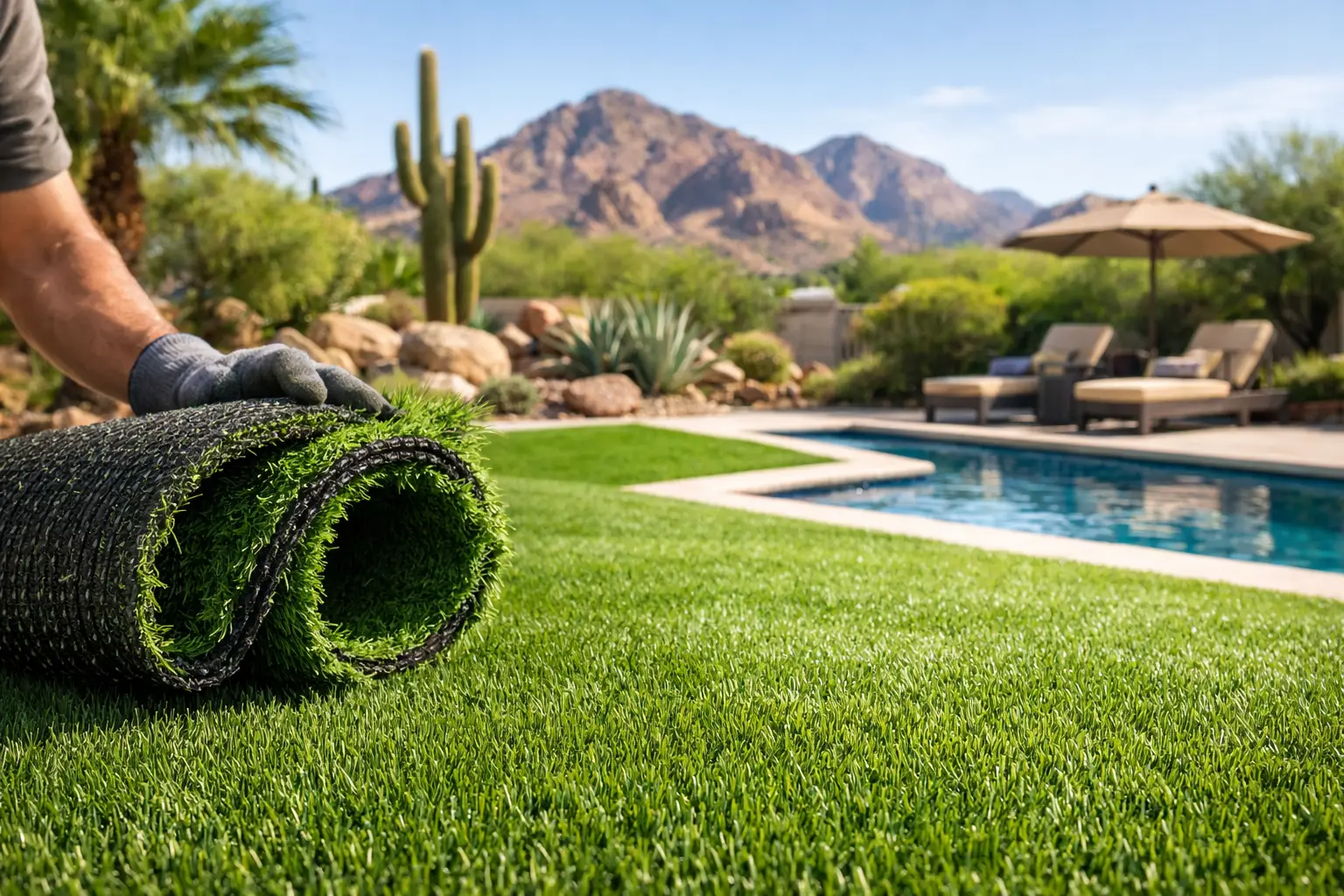
When a natural lawn starts turning patchy by early summer, most Arizona property owners are not dealing with a small cosmetic issue. They are dealing with water costs, constant upkeep, bare spots, mud, weeds, and a yard that never quite looks finished. That is why the benefits of artificial grass stand out so clearly in desert climates. For homeowners, HOAs, retail properties, and office spaces, it offers a cleaner, more reliable surface that looks good without demanding constant attention.
Artificial grass is not the right fit for every square foot of a property, but in the right areas, it solves several common Arizona landscaping problems at once. It reduces maintenance, cuts water use, improves curb appeal, and helps create outdoor spaces that stay usable through every season.
Why the benefits of artificial grass matter in Arizona
Arizona yards take a beating. Heat, intense sun, dry soil, and water restrictions make traditional turf expensive to maintain and hard to keep attractive. Even with irrigation, many lawns end up with uneven color, dead zones, or runoff issues that waste water and create frustration.
Artificial grass gives property owners more control. Instead of reacting to weather, watering schedules, and seasonal stress, you get a surface designed to stay consistent. That matters whether you are trying to keep a front yard neat, improve a rental property, or maintain a professional look around a commercial building.
Lower water use without sacrificing appearance
One of the biggest reasons people switch is simple: grass in Arizona drinks a lot of water. A natural lawn can require frequent irrigation just to stay alive, let alone look healthy. That puts pressure on your monthly utility bill and on the long-term sustainability of your landscape.
Artificial grass eliminates most of that demand. You may still hose it down occasionally to remove dust or pet waste, but that is very different from watering a full lawn several times a week. Over time, the water savings can be significant, especially on larger properties.
For many owners, this is where artificial grass starts making financial sense. The upfront installation cost is higher than reseeding or patching a lawn, but lower water use changes the equation over the long run.
Minimal maintenance and fewer weekend chores
Natural grass rarely gives you a break. It needs mowing, edging, fertilizing, reseeding, weed control, and regular irrigation checks. Miss a few weeks, and the yard starts looking neglected.
Artificial grass dramatically cuts that workload. There is no mowing, no fertilizing, no muddy clippings, and no need to chase green color through changing seasons. Basic care usually means clearing leaves or debris, brushing high-traffic areas when needed, and rinsing the surface occasionally.
For busy homeowners, that means fewer weekend chores. For commercial properties and multifamily sites, it means less labor and more predictable maintenance planning.
A cleaner, greener look all year
Arizona landscapes do not always cooperate with the image people want for their property. A front yard may look decent in one season and tired in the next. Brown patches, worn pathways, and thin growth around sprinklers can quickly pull down curb appeal.
Artificial grass stays visually consistent. It keeps a maintained appearance year-round, which is especially useful for entryways, courtyard areas, pool surrounds, and small decorative lawn spaces where appearance matters most.
That consistency is important for businesses, too. A clean exterior tells customers and tenants the property is cared for. It helps support a polished first impression without requiring constant landscape correction.
Better performance in high-traffic areas
Some lawn problems are less about climate and more about use. Kids running through the same path every day, pets circling one corner of the yard, or tenants cutting across a common area can wear natural grass down fast.
Artificial grass handles repeated foot traffic better than many natural lawns. It does not get trampled into dirt the same way, and it does not need recovery time after heavy use. That makes it a practical option for play areas, dog runs, side yards, office courtyards, and shared outdoor spaces.
The key is proper installation. A solid base, correct drainage, and the right turf product make a major difference in how the surface performs over time.
Less mud, fewer bare spots, and better drainage
A worn lawn usually creates a chain reaction. Thin grass turns into dirt, dirt turns into mud when watered, and muddy areas get tracked indoors or across hardscapes. That creates extra cleanup and makes the property feel unfinished.
Artificial grass helps eliminate that cycle. With the right base preparation and drainage design, the surface stays more stable and usable after rinsing or rain. You are less likely to deal with muddy patches, puddling, or the soft areas that make natural grass frustrating to maintain.
This is especially useful around patios, walkways, pet areas, and pool decks where people want a tidy transition from one outdoor surface to another.
Fewer weeds and fewer chemical treatments
Weeds are persistent in Arizona, and they do not care how often you pull them. Even a decent natural lawn usually needs some form of weed management to stay clean and presentable.
Artificial grass does not make weeds impossible, but it reduces the problem substantially. A properly installed system with weed barrier protection and compacted base material limits weed growth far more effectively than a standard lawn. That usually means fewer herbicides, less manual cleanup, and less ongoing frustration.
For households with kids or pets, using fewer lawn chemicals is often an added advantage.
Pet-friendly and family-friendly use
Many Arizona property owners want a yard that looks good but also works for real life. That means dogs, children, guests, and regular outdoor activity. Natural grass can quickly turn into a problem in these situations, especially if there are digging spots, worn paths, or urine damage.
Artificial grass is often a strong fit for pet areas because it is easier to clean and more resistant to damage. Solid drainage design helps liquids move through the system, and the surface does not turn into mud after washing it down. For families, it also creates a soft, usable area for play without the constant cycle of reseeding and repair.
That said, product selection matters. Some turf options are better suited for pets, heat management, or heavy activity than others.
The benefits of artificial grass for commercial properties
Commercial spaces need landscapes that stay presentable without constant interruption. Property managers and business owners are often balancing appearance, maintenance budgets, tenant expectations, and water use all at the same time.
Artificial grass can simplify that job. It works well in entry features, outdoor break areas, apartment common spaces, and decorative zones where a green look is important but natural turf is hard to maintain. It can also reduce the need for frequent mowing crews in tight or highly visible areas.
For commercial properties, reliability matters as much as looks. A surface that stays neat with less upkeep can help reduce complaints and improve overall property presentation.
Long-term value instead of constant patchwork repairs
A natural lawn often comes with recurring costs that are easy to underestimate. Water, equipment, fertilizer, weed control, sprinkler repairs, seasonal patching, and labor all add up. The yard may still look inconsistent after all that effort.
Artificial grass shifts more of the cost to the beginning of the project. That can feel like a bigger decision upfront, but many owners prefer a one-time upgrade over years of ongoing patchwork. The value becomes more obvious when the lawn area is highly visible, hard to irrigate efficiently, or expensive to maintain.
This is one reason Arizona property owners often combine turf with gravel, pavers, irrigation improvements, or lighting. Instead of trying to force every part of the yard to act like a traditional lawn, they build a landscape that fits the climate and stays easier to manage.
It is not perfect for every situation
A practical decision starts with the trade-offs. Artificial grass can get warmer than natural grass in direct sun, especially during peak Arizona summer heat. Some areas may benefit from shade, surrounding hardscape planning, or turf products designed to reduce surface temperature.
It also requires professional installation if you want it to last and drain correctly. Poor base work can lead to wrinkling, drainage issues, or an uneven finish. And while quality turf looks very convincing, some property owners still prefer the feel and natural cooling effect of real grass in select spaces.
That is why the best results usually come from using artificial grass where it solves a real problem. It does not have to cover the entire property to make a noticeable difference.
Where artificial grass makes the most sense
In Arizona, artificial grass is often most effective in front yards, small backyard lawn zones, pet runs, side yards, playground areas, rooftop spaces, and commercial accent areas. These are the spaces where water savings, lower upkeep, and year-round appearance usually deliver the strongest return.
When paired with smart landscape design, it can help create an outdoor space that feels finished, functional, and much easier to maintain. For property owners who are tired of fighting the climate, that is often the real win.
If your yard is costing too much, taking too much time, or still not giving you the look you want, artificial grass may be the upgrade that finally makes the space work the way it should. A good landscape should hold up, look sharp, and make your property easier to live with every day.
One thought on “11 Benefits of Artificial Grass for Arizona”