

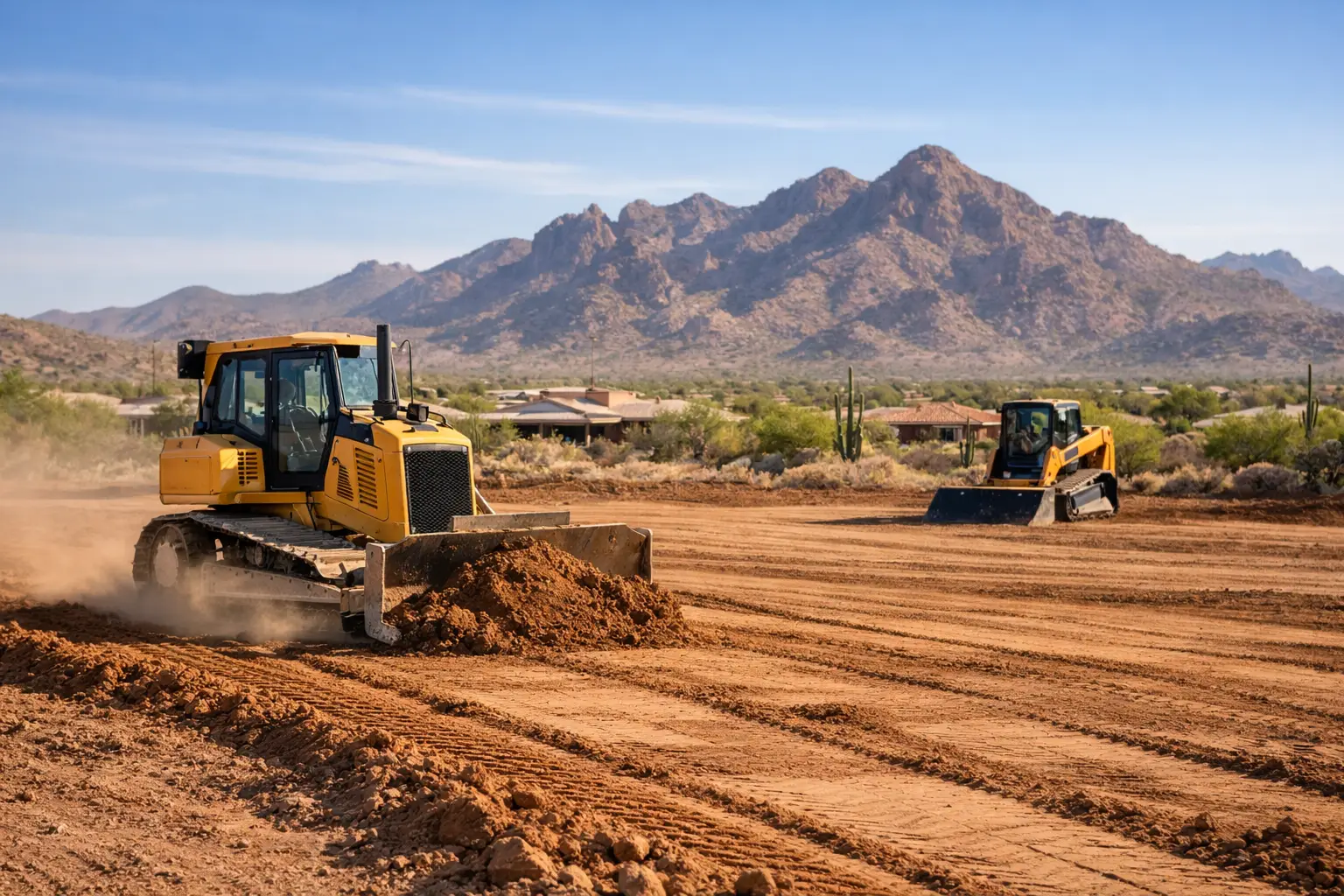
A yard that looks fine in dry weather can become a problem the first time water starts moving in the wrong direction. That is where land grading services Arizona property owners rely on make a real difference. Proper grading helps control drainage, prepares the ground for new construction or landscaping, and creates a cleaner, more usable outdoor space from the start.
In Arizona, grading is not just about making land look level. It is about making the property work better. A poorly graded lot can send water toward a foundation, leave low spots that collect runoff, create erosion around hardscapes, or make future installations harder than they need to be. Whether you own a home, manage rentals, or maintain a commercial site, grading is one of the first steps that affects everything built on top of it.
Why land grading matters in Arizona
Arizona properties deal with a different set of conditions than many other parts of the country. Dry soil, hard-packed ground, sudden storms, and intense sun all put pressure on outdoor surfaces. That means grading needs to do more than smooth dirt. It needs to shape the land for durability, drainage, and long-term performance.
When the slope is wrong, water does not have to be constant to cause damage. One heavy monsoon storm can expose weak drainage, wash out gravel, shift soil near walkways, or leave standing water where it does not belong. On residential properties, that often shows up as muddy sections, uneven yards, or water collecting near patios and foundations. On commercial properties, it can create safety concerns, poor curb appeal, and maintenance headaches.
Good grading helps direct water away from buildings, supports hardscape installation, and gives landscaping a stronger base. It also makes the finished project look cleaner. Pavers sit better, artificial grass installs more evenly, gravel stays where it should, and irrigation planning becomes more predictable.
What land grading services in Arizona typically include
The scope depends on the property, but most grading work starts with evaluating elevation, drainage patterns, soil condition, and the intended use of the space. Some projects need rough grading to reshape the lot. Others need finish grading to prepare for landscaping, turf, gravel, or hardscape installation.
On a residential job, grading may involve leveling a backyard, correcting slope around the home, preparing a pad for a shed or patio, or fixing drainage issues caused by earlier construction. On a commercial site, it may include larger surface correction, site prep for exterior improvements, or reshaping areas that need better water flow and easier maintenance.
In many cases, grading is part of a larger outdoor project. A contractor may grade first, then move into gravel installation, pavers, artificial grass, irrigation, or wall work. That approach saves time and reduces the risk of one phase interfering with another. It also makes it easier for the finished property to function as one complete system instead of a mix of disconnected upgrades.
Signs your property may need grading
Some grading problems are obvious, and some show up slowly over time. If water sits in certain parts of the yard after rain, that is one of the clearest signs. Soil erosion, exposed roots, shifting gravel, or muddy low spots also point to an elevation issue.
You may also need grading if a new installation is planned and the existing surface is uneven. Pavers, travertine, artificial grass, and irrigation systems all perform better when the base is properly prepared. Trying to install over poor grading can lead to rework, uneven finishes, and shorter service life.
For property managers and business owners, curb appeal is another factor. An exterior area with dips, washouts, or inconsistent surfaces can make the whole property look neglected. Grading can be a practical fix that improves both appearance and function without overcomplicating the project.
Land grading services Arizona projects often support
Grading is rarely the final goal by itself. Most of the time, it is the groundwork that supports the next step. If you are planning a yard renovation, drainage correction, or exterior improvement, grading may be the part that determines how successful the whole project will be.
A properly graded site can support artificial grass installation by creating a stable, even base with better drainage underneath. It can prepare for gravel placement so material stays more consistent and does not drift into unwanted areas. It can also help paver and travertine projects by reducing settling and giving installers a better foundation to work from.
That same logic applies to irrigation and landscape installation. Water-conscious Arizona landscapes need intentional grading so runoff, plant placement, and irrigation zones all work together. If the base is wrong, even a well-designed yard can develop drainage problems later.
Residential and commercial grading are not exactly the same
Homeowners usually focus on usability, appearance, and protection around the house. They want a yard that drains correctly, looks finished, and supports upgrades like turf, patios, gravel, or planting areas. In these cases, grading often needs to balance function with visual flow so the property feels clean and intentional.
Commercial grading tends to be more operational. Property owners and managers are often dealing with larger surfaces, tenant expectations, visibility from the street, and ongoing maintenance costs. Drainage performance matters, but so does access, durability, and keeping exterior areas safe and professional-looking.
The equipment, scale, and planning may differ, but the goal is the same. The land should support the way the property is used, not work against it.
What to expect from a grading contractor
A dependable contractor should look at the whole site, not just the section that seems uneven. Drainage problems often start in one area and show up in another. If the grading plan only addresses the symptom, the issue may return after the next storm.
You should expect clear communication about what is causing the problem, what level of grading is needed, and how the work connects to the rest of the property. In some cases, a simple correction is enough. In others, grading may need to be paired with drainage adjustments, gravel, irrigation changes, or follow-up landscape work.
This is where working with a contractor that handles broader exterior services can save time. If the same team can grade the land, install the surface materials, and complete the surrounding landscape or hardscape work, the process tends to be more efficient and better coordinated. For Arizona property owners, that matters. Outdoor projects move faster when one crew understands how all the pieces fit together.
Choosing the right solution, not just the cheapest one
Grading is one of those services where a low price can create bigger costs later. If the slope is not corrected properly, if compaction is skipped, or if water flow is not considered, the yard may look improved at first but fail under real conditions.
That does not mean every property needs a large-scale grading job. Sometimes the right solution is targeted and straightforward. The key is matching the work to the site. A small backyard with one drainage issue needs a different plan than a commercial lot being prepared for multiple improvements.
Reliable land grading services in Arizona should be practical, not inflated. The goal is to fix the land so the next phase of the property performs better and lasts longer. That is what makes grading a smart investment rather than just another line item.
A stronger starting point for any outdoor project
If the ground is uneven, unstable, or directing water where it should not go, every upgrade on top of it is at risk. Grading creates the base that outdoor improvements depend on. It helps protect structures, supports better drainage, improves appearance, and gives future installations a more stable surface.
For homeowners, that can mean a yard that is easier to maintain and more enjoyable to use. For commercial properties, it can mean fewer exterior issues, better presentation, and a site that stays cleaner through changing weather. Companies like Pro Natural Landscape understand that grading is not separate from the rest of the property. It is part of building an outdoor space that works.
If your yard, lot, or commercial exterior is showing signs of poor drainage, uneven elevation, or surface wear, grading may be the first fix worth making. A properly prepared site gives every other improvement a better chance to hold up, look right, and do its job.