

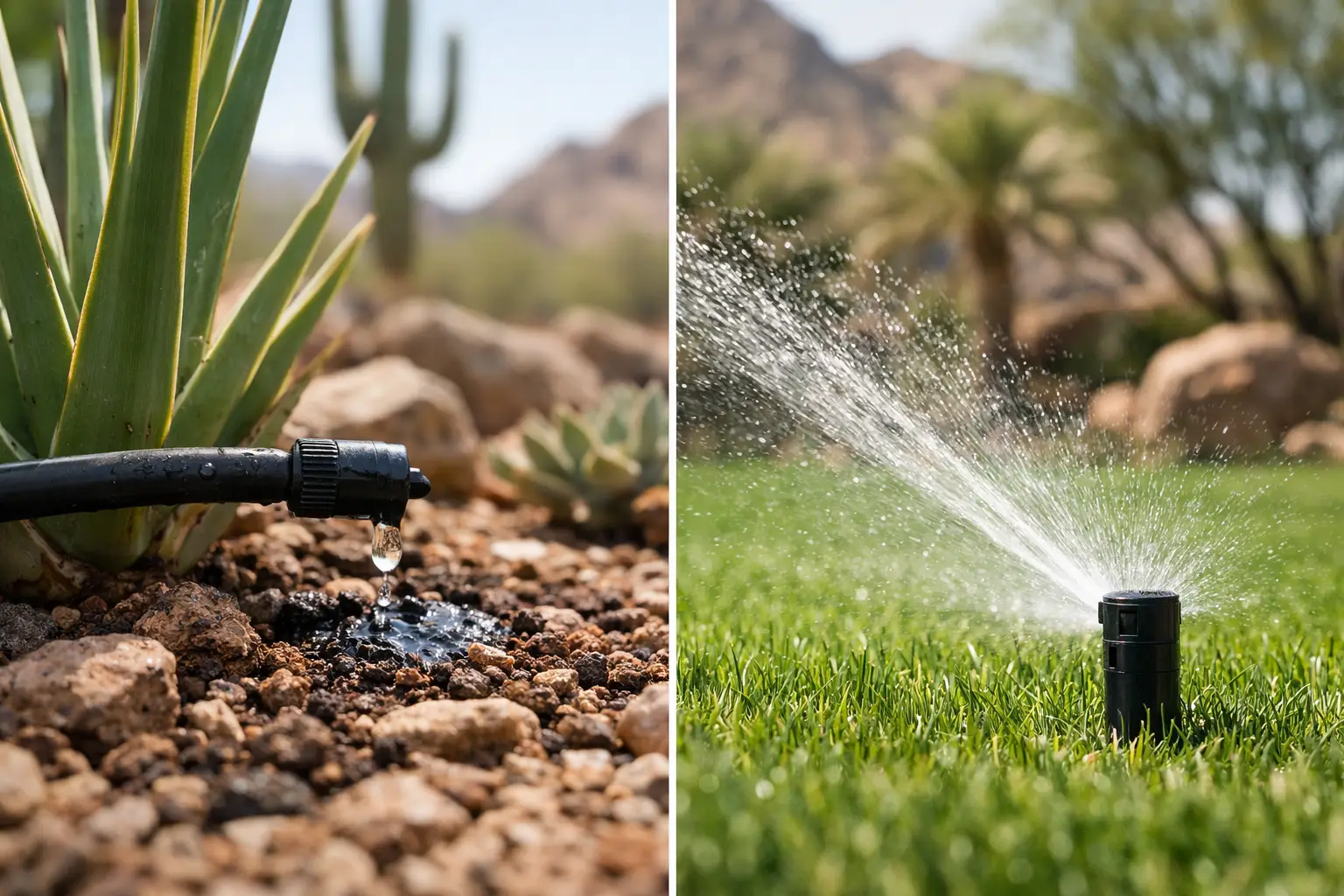
A patch of dead grass beside thriving shrubs often points to one issue: different parts of the yard are being watered the same way. When comparing drip irrigation versus sprinklers, Arizona property owners need to look beyond the equipment itself. The right choice depends on what is growing, how the space is used, the soil, sun exposure, and how much water the landscape actually needs.
For most Arizona properties, the best answer is not strictly drip or strictly sprinklers. It is a properly designed system that uses each method where it performs best. Sprinklers can keep a lawn usable and green. Drip irrigation can deliver slow, targeted water to trees, shrubs, desert plants, and flower beds without wasting water on gravel, pavers, or sidewalks.
Drip Irrigation Versus Sprinklers: The Main Difference
Drip irrigation releases water slowly at or near the root zone through tubing, emitters, or dripline. Instead of wetting the entire surface of a planting bed, it applies water directly where a plant can use it. This makes drip a strong fit for desert-adapted plants, established trees, hedges, garden beds, and landscape areas covered with gravel or mulch.
Sprinkler systems spray water through the air over a wider area. Pop-up spray heads are common in smaller lawn zones, while rotor heads are generally used for larger turf areas. Sprinklers are designed to cover a surface evenly, which is exactly what grass needs because its roots spread across the entire lawn.
The distinction matters in Arizona. A sprinkler head running in the afternoon can lose water to wind and evaporation before it reaches the soil. A drip emitter avoids much of that loss, but it cannot properly water a large lawn. Using drip on turf often leads to dry strips, uneven growth, and a lawn that looks stressed even when the water bill is high.
When Drip Irrigation Is the Better Choice
Drip is usually the more water-efficient option for non-turf landscapes. It keeps water close to roots, limits runoff, and leaves foliage drier. Dry leaves can also help reduce fungal problems in dense shrubs, flowers, and vegetable gardens.
Arizona yards often include palo verde trees, citrus, agave, bougainvillea, lantana, cacti, native shrubs, and gravel-covered planting areas. These plants do not need water sprayed over every inch of surrounding ground. They need water delivered deeply and consistently in the active root area.
For trees, the layout is more important than simply placing one emitter at the trunk. Roots spread outward as a tree matures, so the drip system should expand with the tree. Watering only at the base can encourage shallow root development and leave mature trees vulnerable during extreme heat or wind.
Drip also works well around hardscape. Pavers, travertine, decorative gravel, retaining walls, and artificial grass should not receive repeated overspray. Water stains, algae, erosion, shifting gravel, and wasted water can all result when spray heads are too close to these surfaces. A drip zone keeps planting beds hydrated without soaking the improvements around them.
There are trade-offs. Drip lines and emitters can clog from sediment, mineral buildup, or debris if the system lacks proper filtration and maintenance. Tubing may be damaged during planting, weed removal, or yard repairs. Because drip problems are less visible than a broken sprinkler head, a zone can fail quietly until plants begin to show stress.
When Sprinklers Make More Sense
If a property has natural grass, sprinklers are generally the correct watering method. Turf needs broad, overlapping coverage because its root system covers the whole lawn area. A well-designed sprinkler zone applies water evenly enough to support consistent color, growth, and playability.
Sprinklers are also useful for certain groundcovers and broad seasonal flower displays where plants are closely spaced. In these cases, placing and maintaining individual emitters may be less practical than using carefully selected spray heads.
That does not mean every sprinkler system is efficient. Poor head spacing, mixed nozzle types, incorrect pressure, and heads blocked by plants are common causes of dry spots and overspray. A sprinkler should throw water from head to head, meaning the spray from one head reaches the next. This overlapping pattern helps prevent weak areas between heads.
Timing makes a major difference. Sprinklers should run early in the morning, before heat and wind increase water loss. Night watering can keep turf wet for too long, while midday watering wastes water and may leave the lawn under-watered despite a long runtime. Seasonal controller adjustments are also necessary. A schedule that works during a hot Arizona summer is excessive during cooler months.
Why a Hybrid System Usually Works Best
Many well-built Arizona landscapes use both irrigation methods on separate zones. The lawn gets sprinklers. Trees, shrubs, flower beds, and gravel landscapes get drip. Each zone is controlled independently, allowing the system to match water delivery to plant needs.
This separation is called hydrozoning. It prevents a common and costly mistake: watering low-water desert plants on the same schedule as thirsty turf. A cactus planted near a lawn may need very little additional irrigation, while the grass nearby may need regular coverage during the growing season. One valve and one schedule cannot serve both correctly.
A hybrid system is especially practical for front yards with artificial grass, decorative rock, trees, and accent plants. Artificial turf does not require irrigation for growth, but nearby living plants still do. Drip lines can serve those plants without spraying the artificial grass, reducing unnecessary water use and keeping the area cleaner.
Commercial properties benefit from this approach as well. Entry landscapes, medians, tree wells, and parking-lot planters are often better suited to drip, while natural turf gathering areas may need sprinkler coverage. Proper zoning helps property managers protect curb appeal without paying to water concrete, asphalt, or empty gravel.
Cost, Maintenance, and Long-Term Value
Installation cost depends on the property layout, water source, existing irrigation lines, number of zones, controller, and condition of the landscape. Drip is not automatically cheaper to install, particularly when converting an established yard with many mature plants. Sprinkler systems can also become costly when trenching, repairing valves, or correcting poor drainage is needed.
Over time, drip often reduces water use in landscape beds because it is more targeted. That savings can be meaningful in Arizona, but only if the system is installed and adjusted correctly. Overwatering with drip is still overwatering. Long runtimes can saturate soil, damage roots, encourage weeds, and waste water below the root zone.
Maintenance needs differ. Sprinkler heads should be checked for clogs, leaks, tilted heads, broken risers, and spray reaching sidewalks or walls. Drip systems need filters cleaned, emitters inspected, tubing checked for breaks, and lines flushed when necessary. Both systems benefit from a seasonal inspection before summer demand increases.
Smart controllers, rain sensors, pressure regulation, and properly sized valves can improve either system. Technology helps, but it does not replace a sound layout. A smart controller cannot fix a lawn zone with poor coverage or a drip system that is watering the wrong area.
Choosing the Right System for Your Yard
Start with the landscape itself. If your yard is mostly natural grass, sprinklers will be a necessary part of the design. If it is primarily gravel, desert plants, trees, and planting beds, drip irrigation will likely do most of the work. If it includes both, separate zones are the practical solution.
Also consider how you use the property. A family lawn, a commercial common area, or a pet-friendly grass space may justify sprinkler coverage. A low-maintenance front yard designed around pavers, artificial grass, and drought-tolerant plants is usually a stronger candidate for drip.
Before replacing equipment, inspect what is already in place. A single broken valve, incorrect controller schedule, clogged emitter, or mismatched sprinkler nozzle can make an otherwise good system perform poorly. Repairs and targeted upgrades may solve the problem without requiring a complete replacement.
The best irrigation system is the one that supports the landscape you actually have, not the one that uses the fewest parts. Pro Natural Landscape can help Arizona homeowners and property managers design, repair, or update irrigation around the plants, turf, and hardscape that make their outdoor space work. Water should serve the yard’s purpose, protect the investment, and stay where it belongs.