

In Arizona, irrigation is never just about adding water. It is about putting the right amount in the right place, at the right time, while heat, wind, hard soil, and summer storms push every mistake into stressed plants and higher utility bills.
That is why the drip-versus-sprinkler question matters so much in El Mirage and across the state. The short answer is fairly clear: drip irrigation is usually the better fit for planted beds, trees, shrubs, and desert landscapes, while sprinklers still make sense where healthy turf is the priority. Many of the best-performing yards use both, with each zone matched to the plants growing there.
Arizona yard conditions make irrigation choice more important
Arizona yards ask more from an irrigation system than many other climates do. Long stretches of heat speed up evaporation, compacted or sloped ground can increase runoff, and many landscapes mix gravel, native plants, shade trees, and small lawn areas in one property. A system that works well in a cooler, wetter region can waste a surprising amount of water here.
University of Arizona Cooperative Extension describes drip irrigation as the most efficient way to irrigate, especially for desert landscapes, narrow planting areas, and places where runoff is a concern. That matters in neighborhoods where side yards are tight, decorative beds sit next to hardscape, and trees need deep, targeted watering rather than a broad spray pattern.
Sprinklers still have a place, though they need tighter control. The EPA notes that pressure-regulated spray sprinkler bodies and weather-based irrigation controllers can cut waste and help deliver water more evenly. In other words, sprinklers are not automatically inefficient. Poorly managed sprinklers are.
Drip irrigation vs sprinkler system comparison for Arizona yards
The easiest way to sort the choice is to compare how each system behaves under Arizona conditions.
| Factor | Drip Irrigation | Sprinkler System |
|---|---|---|
| Water delivery | Slow, measured application at the root zone | Broad surface coverage over a larger area |
| Water efficiency | Very high, with less evaporation and runoff | Lower if poorly designed, better with pressure regulation and smart controls |
| Best use | Trees, shrubs, cacti, planting beds, narrow strips, slopes | Turf and open lawn areas needing even coverage |
| Wind performance | Strong, since water stays low to the ground | Weaker, as spray can drift off target |
| Desert landscape fit | Excellent | Usually limited |
| Maintenance concerns | Clogged emitters, damaged tubing, shifting lines | Broken heads, overspray, misting, pressure problems |
| Arizona takeaway | Often the best default choice | Best reserved for lawn zones that truly need it |
That side-by-side view explains why so many Arizona properties move toward drip for most planting areas. It puts moisture where roots can use it and avoids soaking gravel, sidewalks, walls, or bare soil.
Drip irrigation benefits for desert landscaping and planted beds
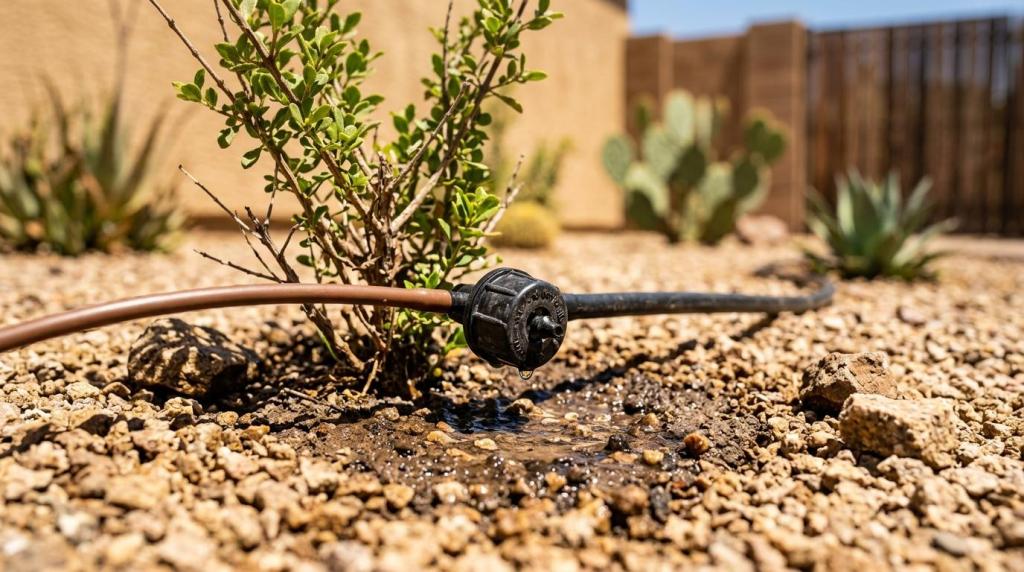
Drip irrigation, often called microirrigation, applies water slowly through emitters close to the plant. That root-zone approach is a major reason it performs so well in hot, dry climates. Instead of throwing water into the air and hoping enough of it lands where needed, drip delivers moisture right where the plant can absorb it.
That precision helps reduce two common Arizona problems: evaporation and runoff. When water is applied slowly, the soil has more time to take it in. When water stays near the ground, less is lost to heat and wind. EPA guidance on microirrigation points to this root-zone efficiency as the main advantage, and it notes that replacing a traditional system with microirrigation can save a typical home more than 25,000 gallons of water per year.
Drip also fits the way many Arizona landscapes are designed. [Decorative rock, native] plants, shade trees, succulents, and seasonal color beds do not all need water spread evenly across the full surface. They need targeted watering at the base of the plant, often with different run times depending on root depth, sun exposure, and time of year.
Drip irrigation is especially well suited for:
- Shrub beds
- Tree basins
- Narrow side yards
- Entry planting strips
- Slopes prone to runoff
- Desert-adapted landscapes
There is another practical benefit. Drip makes it easier to create separate watering zones for different plant types. A young citrus tree does not need the same schedule as an established agave, and neither should be watered like a patch of bermudagrass. A well-zoned drip system gives that flexibility.
When sprinkler systems are the right choice for Arizona lawns
Sprinklers are still the better tool when the goal is even coverage across a lawn. Turfgrass needs moisture distributed across the full root area, and that is what sprinkler heads are built to do. If a property includes a true lawn for children, pets, shared amenities, or commercial curb appeal, sprinklers remain a valid choice.
The issue is not whether sprinklers belong in Arizona. The issue is whether they are limited to the places where they perform best and whether they are installed and adjusted correctly. A spray head pointed at a sidewalk, a broken nozzle flooding one corner, or high pressure turning water into mist can waste water very quickly in summer heat.
Well-managed lawn irrigation can be much more efficient than many people expect. Modern controls and properly selected components make a real difference.
Sprinkler upgrades that reduce water waste
If a lawn zone is staying, it should be set up to avoid the usual sources of waste.
- Pressure regulation: Helps spray sprinkler bodies apply water more evenly and reduces misting.
- Weather-based controllers: Cut overwatering by watering only when the landscape actually needs it.
- Correct head spacing: Keeps dry spots and soggy patches from forcing longer run times.
- Overspray control: Prevents water from landing on concrete, walls, and driveways.
- Seasonal scheduling: Matches run times to real weather instead of using one setting all year.
In many Arizona yards, the smartest answer is not sprinklers everywhere or drip everywhere. It is a smaller lawn with efficient sprinklers, surrounded by planted areas on drip. That layout often lowers water use while still keeping the visual softness that some homeowners and property managers want.
Arizona monsoon season changes irrigation scheduling
Arizona’s monsoon season, which runs from June through September, adds another layer to irrigation planning. Heavy rain, lightning, hail, flash flooding, dust storms, and high winds can all show up during this stretch. At the same time, the season still overlaps with some of the hottest weeks of the year.
That combination creates a common mistake: people keep the same summer watering schedule even after storms begin. Yet monsoon rainfall is uneven. One neighborhood may get a hard downpour while another stays nearly dry. A rigid schedule can either overwater or leave stressed plants behind.
This is where smart controllers and regular inspections help most. If the system cannot respond to changing conditions, someone has to do that adjustment manually.
A practical monsoon routine often looks like this:
- Pause or reduce irrigation after a meaningful rain event.
- Check emitters, valves, and sprinkler heads after wind or flooding.
- Watch for pooling water, exposed tubing, and shifted spray patterns.
- Reset schedules as temperatures and humidity change through late summer.
Monsoon season is also a good reminder that deep watering and frequent watering are not the same thing. Trees and shrubs generally benefit more from water that reaches deeper into the soil than from shallow, repeated surface wetting.
Choosing the best irrigation layout for your Arizona property
The best irrigation system is usually a layout decision, not a brand decision. Start with the plants and surfaces on the property. If most of the yard is gravel, desert plantings, and trees, drip will likely handle the majority of the work. If there is a meaningful lawn area, sprinklers may be needed there, with drip used everywhere else.
A mixed yard should almost never be watered as one zone. Lawn, annual flowers, foundation shrubs, mature shade trees, and cactus all have different needs. Grouping them together under one timer setting usually leads to compromise, and compromise often looks like wasted water or declining plant health.
A strong Arizona irrigation plan often includes:
- Separate zones for turf and planting beds
- Drip for shrubs, trees, and desert plants
- Sprinklers only for lawn areas
- Smart scheduling tied to season and weather
- Routine inspection and repair
For property owners planning a new installation or a retrofit, it helps to ask a few direct questions. Is the existing lawn still worth irrigating at its current size? Are shrubs being sprayed from above when they would do better on drip? Is runoff showing up near walls, sidewalks, or sloped sections? Are narrow strips being watered with sprinklers even though drip tubing would target them better?
Those questions often reveal where the biggest gains are. In some yards, the answer is a full conversion from spray irrigation in planting beds to drip. In others, it is a smaller update: new controllers, pressure-regulated sprinkler bodies, repaired leaks, or better zoning.
Local experience matters here because Arizona irrigation is shaped by more than climate alone. Soil type, sun exposure, plant selection, lot layout, and monsoon behavior all affect performance. A local landscaping team that installs, maintains, and repairs irrigation systems can factor in temperature, rainfall, and plant type when setting schedules, which helps protect both the landscape and the water budget.
For many homes and commercial properties in El Mirage and nearby communities, that leads to a very practical outcome: drip irrigation for most planted areas, sprinklers only where turf truly needs them, and controls that keep both systems working with the season instead of against it.
One thought on “Drip Irrigation vs Sprinklers: What’s Best for Arizona Yards?”