

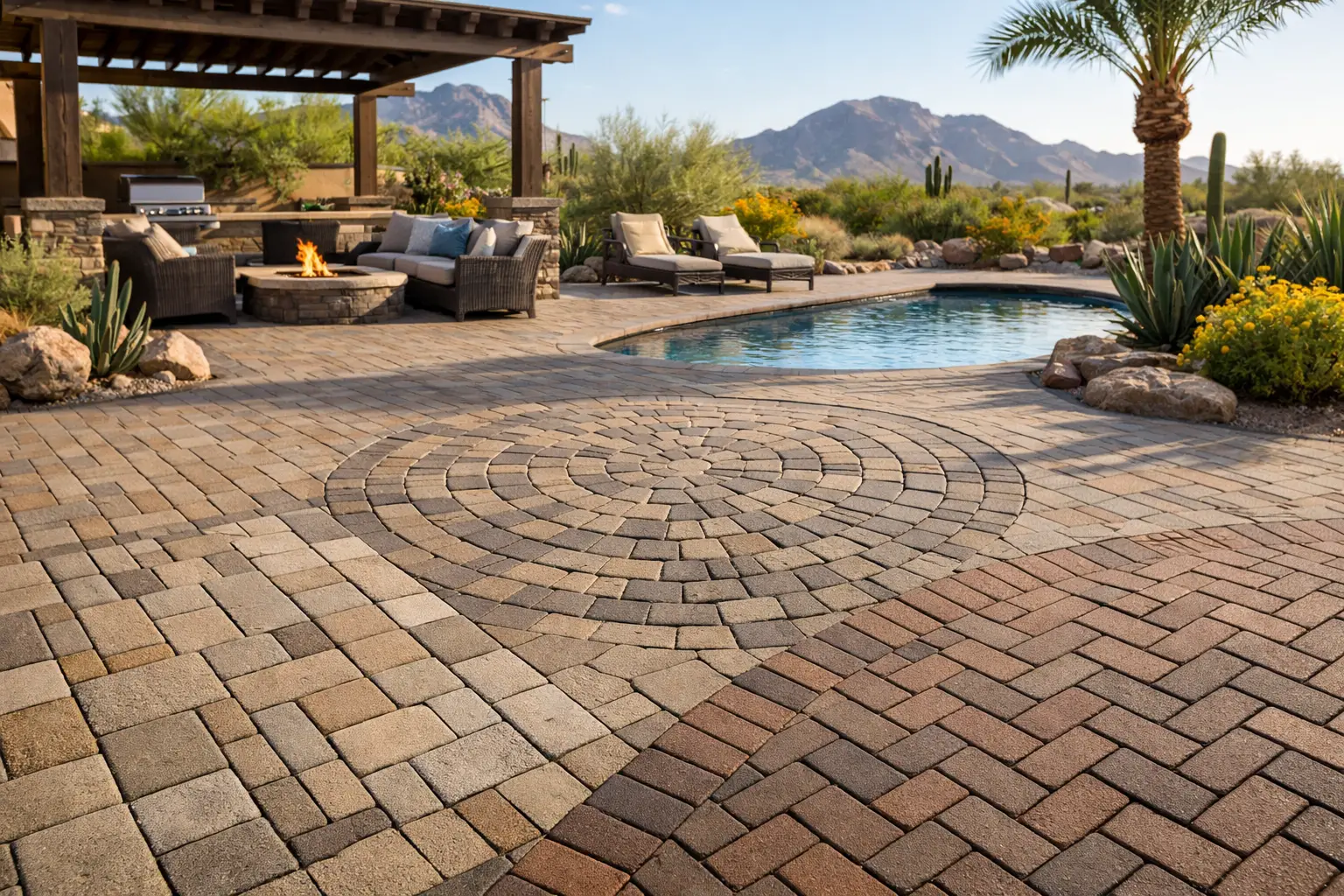
A paver patio can make a backyard feel finished, usable, and easier to maintain, but the layout matters as much as the paver color. The best backyard paver patterns for Arizona properties balance visual appeal with the demands of intense sun, entertaining space, pool traffic, and long-term durability. A good pattern should fit the size of the yard, support how the space will be used, and work with the home instead of competing with it.
For many Arizona homeowners, pavers are more than a decorative upgrade. They create a clean transition between artificial grass, gravel, outdoor kitchens, fire features, pool decks, and covered patios. The right installation starts with a strong base, proper drainage, edge restraints, and a pattern chosen for the space.
Best Backyard Paver Patterns for Function and Style
There is no single paver pattern that works best for every backyard. A small courtyard needs a different approach than a wide pool deck or a high-traffic walkway from the driveway to the patio. The shape of the pavers, the direction of foot traffic, and the style of the house all affect the right choice.
Herringbone for high-traffic patios and walkways
Herringbone is one of the strongest and most recognizable paver layouts. Rectangular pavers are placed at alternating 45- or 90-degree angles, creating a zigzag pattern that locks the pieces together. That interlocking quality makes herringbone a practical choice for walkways, patios, outdoor living areas, and spaces that see frequent use.
A 45-degree herringbone pattern has more movement and can make a standard patio feel more detailed. A 90-degree herringbone looks cleaner and more structured, which often fits modern homes and straight-lined landscape designs. Both require more cuts around the edges than simple layouts, so material waste and labor can be higher. The result is usually worth it when durability and visual interest are priorities.
Running bond for a clean, spacious look
Running bond uses rectangular pavers laid in rows, with each row offset from the one before it. It is similar to a traditional brick wall pattern and works well in long patios, side yards, and narrow pathways. Because the lines naturally lead the eye forward, this pattern can make a compact backyard look longer or wider depending on the direction of the layout.
This is often one of the more budget-friendly options because it is straightforward to install and creates less cutting than more complex patterns. It works especially well with contemporary Arizona homes, where simple geometry, neutral pavers, gravel, and artificial turf create a low-maintenance design. For a large open patio, running bond can also prevent the surface from looking too busy.
Basketweave for traditional character
Basketweave groups rectangular pavers in alternating horizontal and vertical pairs. The finished surface has a classic brick appearance that feels warm and established. It is a strong option for homeowners who want a more traditional patio, garden path, or sitting area without using an overly decorative design.
Basketweave is most effective in smaller spaces where people can see the detail up close. On a very large patio, the repeated blocks may feel visually busy, particularly when paired with heavily textured pavers. Choosing one consistent paver color or a subtle blend keeps the look balanced.
Modular ashlar for natural variation
Modular ashlar patterns use pavers in multiple sizes, often squares and rectangles, arranged in a repeating layout. This style is popular for pool decks, larger patios, and outdoor entertaining areas because it adds variation without looking random. It can give a backyard the appearance of custom stonework while retaining the practical benefits of manufactured pavers.
Ashlar is a good match for homes with travertine, block walls, stone veneer, or desert-inspired landscaping. It also works well when a patio has an irregular shape, since the different paver sizes can adapt to curves, columns, outdoor kitchens, and fire pit areas. Installation planning is more detailed, however. The crew needs to follow the pattern consistently so the layout looks intentional from every angle.
Stacked bond for modern outdoor spaces
In a stacked bond pattern, pavers line up in clean rows and columns. The joints run straight instead of being offset. This creates a crisp, modern look that works well with square fire pits, linear pools, clean-edged planters, and contemporary outdoor furniture.
The trade-off is that stacked bond is less forgiving if the base shifts or the edges are not properly restrained. Straight joint lines can make minor movement more noticeable. For that reason, professional grading, compaction, and installation matter even more. When built correctly, stacked bond delivers a sharp, organized finish that suits many newer Arizona properties.
Circular and fan patterns for focal areas
Circular and fan patterns are best used as accents rather than across an entire backyard. They can define a fire pit area, highlight an entry point, or create a central gathering space in a large patio. The curved lines add contrast to the straight edges common in block walls, patios, and desert landscape borders.
These layouts usually require specialized pavers and careful cutting, making them a higher-cost choice. They are most effective when the circle serves a real purpose, such as framing seating around a fire feature. Adding a circular pattern without considering furniture placement or walking paths can leave the area looking decorative but less functional.
Match the Pattern to Your Backyard Layout
Before selecting a pattern, consider where people will walk, gather, cook, and relax. A patio connected to a sliding door should have a layout that feels natural from the house outward. A pool deck needs enough clear area for lounge chairs and safe walking. A path should lead directly to its destination instead of winding through the yard without purpose.
Paver direction also matters. Running bond or rectangular pavers set lengthwise can visually widen a narrow side yard. On a long, shallow patio, laying pavers across the shorter dimension can make the space feel more balanced. Herringbone and ashlar patterns are less dependent on directional lines, making them useful for square patios and broad entertaining areas.
Color should support the pattern, not overpower it. Light tan, sand, gray, and earth-tone pavers usually work well with Arizona stucco, tile roofs, gravel, and artificial grass. Lighter colors can feel more comfortable underfoot in sunny areas, although every paver surface will warm up during extreme heat. Dark pavers can create bold contrast but may show dust and absorb more heat.
Installation Details That Protect Your Investment
Even the best pattern will fail if the groundwork is rushed. Arizona soil, monsoon rain, irrigation leaks, and temperature swings can expose weaknesses in a poorly prepared paver surface. Proper excavation, a compacted aggregate base, correct slope, bedding sand, edge restraints, and joint sand all help keep pavers level and stable.
Drainage deserves special attention. Patios should direct water away from the home and avoid trapping runoff near walls, foundations, or pool equipment. If the yard has existing grading problems, those should be corrected before paver installation begins. It is easier and more affordable to solve drainage during the project than to remove and rebuild settled pavers later.
Borders are another practical design tool. A contrasting soldier course or darker perimeter can frame a patio, define its shape, and help hold the field pattern in place. Borders also create a clean transition where pavers meet gravel, artificial turf, landscape beds, or concrete.
For existing patios with stains, faded color, uneven sections, or loose pavers, renovation may be the better option than a full replacement. A professional inspection can determine whether the base is still usable, whether drainage needs correction, and whether cleaning, resetting, sealing, or replacing damaged areas will restore the surface.
Choose a Pattern Built for How You Live
The most successful paver design is not always the most complicated one. A simple running bond can make a small backyard feel open and polished. A herringbone layout can stand up to years of family gatherings and foot traffic. Modular ashlar can give a large pool deck the custom look needed to tie together an entire outdoor renovation.
Start with how you use the yard, then choose a pattern that supports that routine. If you want a patio, walkway, pool deck, or complete backyard transformation built for Arizona conditions, Pro Natural Landscape can help turn the plan into a durable outdoor space you will use year-round.