

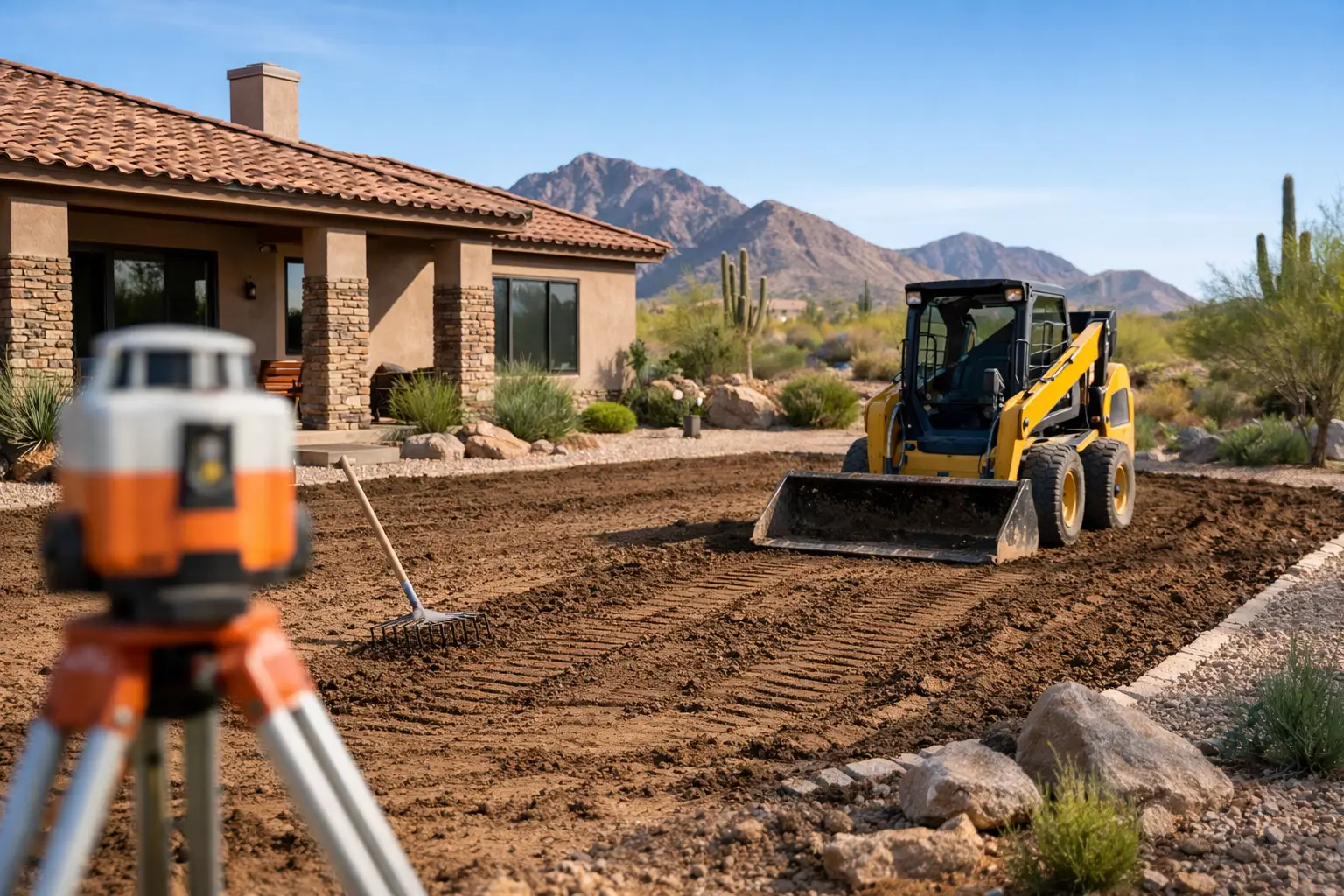
A summer storm can expose grading problems in minutes. Water that pools against a block wall, runs toward a patio, or cuts channels through gravel can damage a yard that otherwise looks finished. Knowing how to plan yard grading before installing pavers, artificial grass, gravel, or irrigation helps Arizona property owners avoid expensive rework later.
Yard grading is the process of shaping the ground so water moves where it should, outdoor surfaces sit at the right height, and the finished space works as planned. It is not simply about making a yard look level. In fact, a completely level yard often holds water. The goal is a controlled slope that protects the home, supports drainage, and creates a clean foundation for every landscape feature that follows.
Start With Water Flow, Not the Finished Look
The first question is simple: where does water go now? Walk the property after irrigation runs or after a rainstorm if possible. Look for standing water, low areas along the foundation, soil washed onto walkways, stained walls, and gravel that has migrated into the street or driveway. These signs show where the existing grade is failing.
Water should generally move away from structures, but the exact route depends on the lot, walls, neighboring properties, drainage easements, and local requirements. Never plan a grade that sends runoff directly onto a neighboring lot. A good plan directs water toward approved drainage areas, swales, drainage inlets, or other locations designed to receive it.
For many residential projects, the ground near the home needs a noticeable fall away from the foundation. A common starting point is about 5 percent for the first 10 feet, or roughly 6 inches of drop over that distance. Conditions vary, especially on compact lots, so this is a planning guideline rather than a replacement for a site-specific evaluation. Patios, gates, existing walls, and drainage paths may require a different approach.
How to Plan Yard Grading Before Construction
Start by identifying the finished height of every permanent feature. Your patio, paver walkway, artificial turf edge, gravel bed, driveway, fence line, and irrigation valves all affect the final grade. If you install those items without a grade plan, you may discover that a new paver patio sits too high at the door or that water has nowhere to go around a retaining wall.
Choose a fixed reference point first. This may be the top of an existing patio, the threshold of an exterior door, or a known point near the foundation. From there, use a string line, line level, laser level, or professional grade equipment to compare elevations across the yard. Mark high spots, low spots, and the direction each area needs to drain.
It helps to sketch the yard before any soil is moved. Your sketch does not need to be complicated, but it should show the home, property lines, walls, gates, hardscape areas, trees, utility locations, and planned drainage routes. Add measurements and note the current and desired heights at key points. This prevents guesswork when crews begin excavation or when material deliveries arrive.
A grading plan should also account for transition areas. A yard may slope away from the house but still need a shallow swale to carry water past a side gate. A gravel area may need a firm edge along artificial grass so rock does not spill onto the turf. A paver walkway needs a consistent pitch so water does not collect at a doorway. These details are where a practical plan becomes a durable finished project.
Check Soil Before You Move It
Arizona soil can be challenging. Caliche, compacted desert soil, loose fill, and rocky ground do not all behave the same way. Caliche can be difficult to excavate and may create hard layers that prevent water from soaking in. Loose material can settle if it is placed too quickly or not compacted properly.
When soil is cut from a high area and moved to a low area, it should be placed in manageable lifts and compacted as needed. This matters beneath pavers, travertine, walkways, and other hardscape surfaces. Simply piling soil into a low spot may look correct on day one, then settle after irrigation or monsoon rain.
Do not assume all excavated soil belongs somewhere else in the yard. Some soil may be too rocky, too poor, or too heavily compacted for the finish you want. A project may need imported fill, base material, decomposed granite, or fresh topsoil in selected planting areas. The right material depends on what will sit above it.
Plan the Grade Around Hardscape and Landscape Features
Hardscape should be part of the grading conversation from the beginning. Pavers and travertine need a stable, compacted base and a planned slope. A surface that looks level can still be pitched slightly away from the home, allowing water to drain without feeling uneven underfoot.
Finished elevations are especially important near doors, stucco walls, and weep screeds. Building details need proper clearance from soil, gravel, and hardscape. Raising the grade too high against the home can create moisture issues and interfere with required drainage space. If the project includes a patio extension, wall repair, or new pavers, set those heights before finalizing the surrounding yard.
Artificial grass also needs a prepared base and drainage plan. Turf can make a yard look clean and low-maintenance, but it cannot solve a drainage problem underneath it. The sub-base must be shaped and compacted so water moves through and away as intended. Border materials, bender board, and adjacent gravel should be installed at elevations that keep the turf edge neat and secure.
Trees and existing plants deserve attention as well. Changing the soil level around a mature tree can affect roots and trunk health. Avoid burying the base of the trunk or cutting major roots without a clear plan. In some cases, preserving a tree requires adjusting the grade around it instead of forcing the entire yard into one uniform slope.
Include Irrigation and Drainage in the Same Plan
Grading and irrigation work best when coordinated. Moving soil can expose, damage, or bury existing irrigation lines, valves, and wire connections. Before excavation, locate utilities and irrigation components. Call 811 before digging near utility areas, and make sure irrigation lines are planned around future patios, walls, and planting beds.
If water regularly collects in one area, a surface drain, catch basin, or drainage channel may be needed. However, drainage hardware only works when the surrounding grade delivers water to it. Installing a drain at the lowest-looking point without checking the entire slope can lead to a system that fills with sediment or does not discharge properly.
In Arizona, irrigation can reveal grading issues even during dry weather. Run each zone after rough grading and watch where water travels. This test often shows small low spots that are easy to correct before gravel, plants, or turf are installed.
Estimate Materials and Plan for Cleanup
A grading plan should include material quantities. For rectangular areas, estimate cubic yards by multiplying length, width, and average depth in feet, then dividing by 27. Add extra material for compaction and final shaping, particularly when building up low areas. A contractor can refine the estimate after measuring actual elevations and soil conditions.
Also plan where excavated material, gravel, base, and equipment will go during the project. On smaller Arizona lots, access can be as important as the grade itself. Gate widths, block walls, parked vehicles, pool equipment, and neighboring homes may limit where machinery can work or where materials can be staged.
Cleanup is part of a professional grading job. Loose dirt should not be left against walls, washed into drains, or spread across the sidewalk. Once the grade is complete, the site should be ready for the next phase, whether that is gravel installation, pavers, irrigation, artificial grass, or new landscaping.
When Professional Grading Is the Better Choice
Minor shaping in a small planting bed may be manageable for a homeowner. Larger projects need more care when they involve drainage near the foundation, significant elevation changes, retaining walls, pool decks, commercial access areas, or runoff near property lines. These situations can require equipment, compaction knowledge, and a clear understanding of how every surface will connect.
A full-service crew can coordinate land grading with hardscape, irrigation, gravel, tree work, and landscape installation so the project is built in the right order. Pro Natural Landscape helps Arizona property owners plan these connected improvements as one practical outdoor project rather than a series of separate fixes.
Before ordering materials or setting a single paver, take time to establish the final elevations and test where water will go. A yard that drains correctly is easier to maintain, protects the property, and gives every finished feature a stronger foundation.