

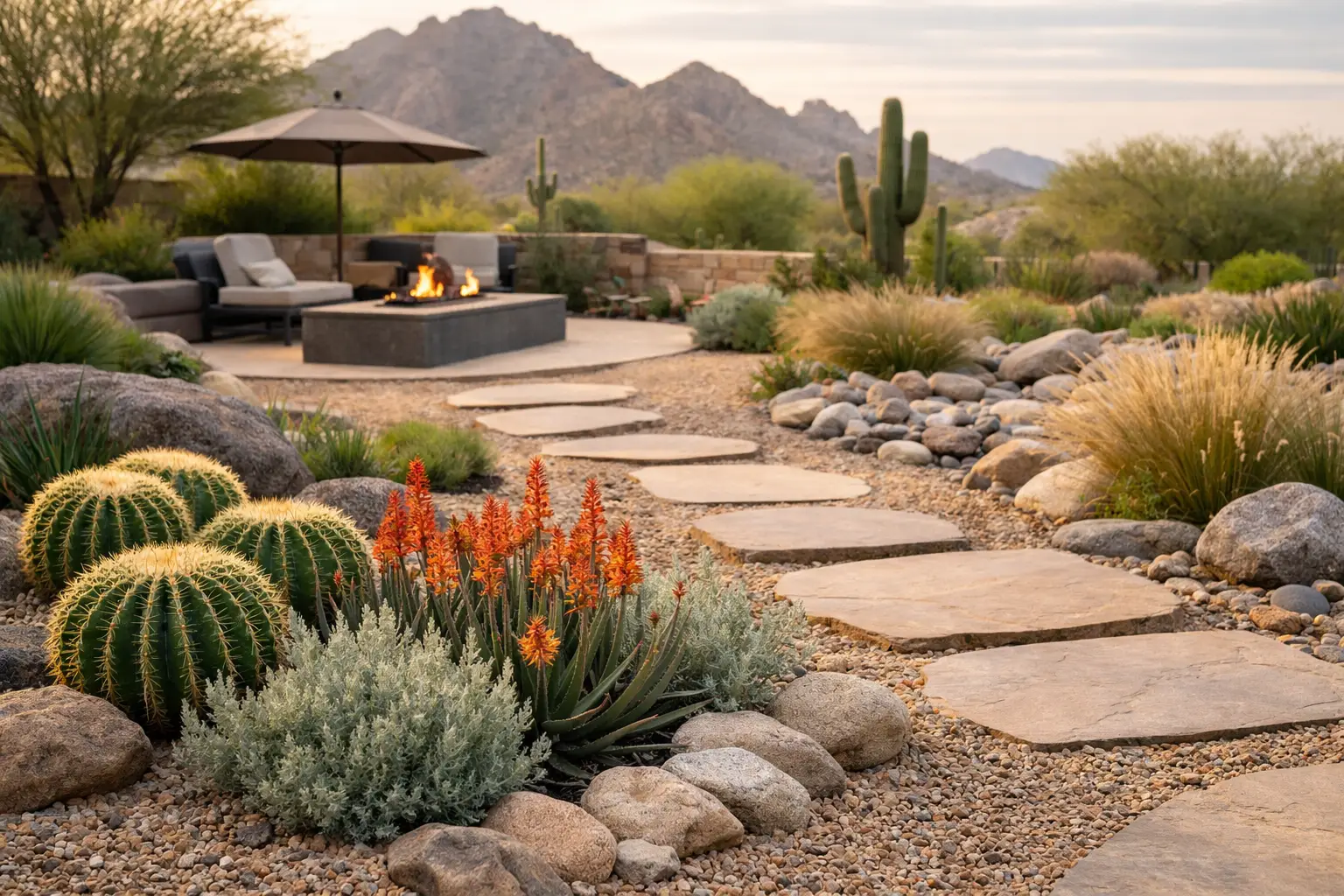
A yard that looks great in March but demands constant watering, trimming, and repair by July is not working hard enough for an Arizona property. The best low maintenance landscape trends are built around the realities of desert heat, water use, dust, sun exposure, and busy schedules. They replace high-demand lawn areas and fragile materials with surfaces, plants, and systems that hold up through the seasons.
For homeowners, the goal may be a cleaner backyard that is ready for weekends without spending every Saturday on yard work. For commercial properties and property managers, it is often about dependable curb appeal, safer walkways, and a professional exterior that does not create frequent maintenance calls. In both cases, low maintenance should still look intentional. A practical yard does not have to feel bare or unfinished.
Low Maintenance Landscape Trends That Fit Arizona
The strongest landscape choices in Arizona combine water-conscious planting with durable hardscaping. Rather than relying on one material across the whole property, current designs use defined zones: an entry area with pavers, a gathering area with travertine or concrete, planted beds for color and shade, and open spaces finished with artificial turf or decorative gravel.
This approach gives each part of the yard a job. Hardscape handles foot traffic. Gravel covers broad areas without requiring mowing. Trees and desert-adapted plants soften the space and provide visual relief from large paved areas. Artificial grass can provide a green play or pet area where natural turf would require significant water and care.
The result is easier to maintain because the landscape is planned around how the property is actually used, not around a one-size-fits-all lawn.
Artificial grass in focused areas
Artificial grass remains a practical choice for Arizona front yards, backyards, dog runs, poolside spaces, and commercial entry areas. It provides consistent green color without mowing, fertilizing, or regular irrigation. It is especially useful in smaller areas where homeowners want the appearance and function of a lawn but do not want a natural grass maintenance schedule.
Placement matters. Artificial turf works best when it is framed by pavers, gravel, edging, or planting beds instead of covering every square foot. Those material changes make the yard look more natural and can reduce heat buildup across a large open surface. Quality installation also matters because proper base preparation and drainage help prevent shifting, wrinkles, and odor issues in pet areas.
Artificial grass is low maintenance, not zero maintenance. It still needs occasional rinsing, debris removal, and brushing in high-traffic spots. But compared with a conventional lawn, the time and water savings can be substantial.
Decorative gravel with clean borders
Gravel is one of the most reliable low-water landscape materials for Arizona properties. It handles heat well, provides a clean finished look, and comes in colors and sizes that can match modern, traditional, or desert-style homes. Larger rock can create bold accents, while smaller decorative gravel works well in planting beds and open ground cover areas.
The trend is moving away from gravel spread without a plan. Better-looking low-maintenance yards use crisp steel, concrete, paver, or block borders to keep materials in place. Defined edges also make maintenance easier by separating gravel from turf, walkways, and planted areas.
A properly prepared gravel installation should include grading and weed-control planning. Without those steps, water can collect in the wrong places and weeds can become a recurring problem. Gravel is durable, but the base beneath it determines whether it stays neat over time.
Desert-adapted planting with room to grow
Low-maintenance planting does not mean filling every bed with the same cactus. Arizona landscapes can use desert trees, flowering shrubs, ornamental grasses, agave, aloe, succulents, and native or desert-adapted plants to add texture and seasonal color. The key is choosing plants that fit the available sun, soil, irrigation, and mature size.
A common mistake is planting too closely for an instant full look. That can lead to overcrowding, poor airflow, extra pruning, and expensive removals later. Giving plants enough room from the beginning reduces long-term maintenance and allows the design to look better as it matures.
Trees deserve extra planning. A well-placed shade tree can make a patio, driveway, or west-facing wall more comfortable. However, trees should be selected and positioned with their future canopy, root system, and clearance needs in mind. Regular professional trimming is still necessary for health, safety, and a clean appearance.
Water-Smart Irrigation Is Part of the Design
A low-maintenance landscape can still waste water if the irrigation system is outdated or poorly adjusted. Drip irrigation is a leading choice for planting beds because it delivers water near plant roots instead of spraying it into the air. It can reduce overspray on walls, walkways, and gravel while giving plants a more consistent watering pattern.
Smart controllers and properly zoned irrigation systems are also becoming standard for property owners who want better control. Plant beds, trees, turf, and container plants do not need the same schedule. Separating them into the right zones makes it easier to adjust watering as temperatures change.
This is one area where cutting corners can create ongoing costs. A new landscape with a weak irrigation layout may look good at first but struggle through the hottest months. Before installing plants, turf, or gravel, check the condition of valves, lines, drainage, and controller settings. Repairs and upgrades are easier before the finished materials are in place.
Hardscaping that earns its place
Pavers, travertine, brick, and block features are major parts of low maintenance outdoor design because they create usable space without adding watering or mowing. A paver patio can turn an unused dirt area into an outdoor dining space. A defined walkway can keep foot traffic out of planting beds. A block wall can add privacy, structure, and separation between property zones.
The current preference is for hardscaping that looks connected to the home rather than added as an afterthought. Matching colors, practical access paths, and correctly sized patios make the exterior more functional and easier to maintain. For commercial properties, durable walkways and clean entry areas also help create a stronger first impression for customers and tenants.
Hardscape does require maintenance, particularly in Arizona’s intense sun and during monsoon weather. Pavers may need occasional re-sanding, cleaning, or repair. Sealing can help protect certain surfaces and refresh their appearance. The trade-off is usually worthwhile because a well-installed hardscape can provide years of use with far less weekly attention than a large planted area.
Outdoor Lighting for Safety and Evening Use
Landscape lighting is a simple upgrade with a practical return. Low-voltage lighting can define walkways, illuminate entries, highlight trees, and make patios more useful after sunset. It also improves visibility around stairs, changes in elevation, and side-yard access points.
The best lighting plans are restrained. A few well-positioned fixtures often look better than bright lights placed everywhere. Focus on the routes people use, the features worth highlighting, and areas where added visibility improves safety. Durable fixtures and accessible wiring make future service easier.
Design for Cleanup, Not Just Installation
One of the most useful low maintenance landscape trends is designing with cleanup in mind. That means avoiding tight corners that collect leaves, using clear borders between materials, placing trees away from pools when possible, and leaving access for equipment and maintenance crews. These details may not be the first thing people notice, but they affect how the property performs every week.
For rental homes, commercial sites, and busy households, this planning can reduce ongoing service needs and help the exterior stay presentable between visits. A clean layout also makes it easier to spot irrigation leaks, damaged pavers, overgrown plants, and debris before they become larger problems.
A low-maintenance yard should match your property, budget, and daily use. The right mix may be turf and pavers for an active family, gravel and drip-irrigated plant beds for a rental property, or durable walkways and lighting for a commercial site. Pro Natural Landscape can help turn those needs into a practical Arizona outdoor space that looks finished, works year-round, and is easier to keep that way.