

Pet-friendly landscaping in Arizona works best when it solves two problems at once: heat and water. The best yards keep dogs and cats safer while cutting waste in a climate where outdoor landscaping can account for up to 70% of residential water use, according to the Arizona Department of Water Resources.
TL;DR: Summary
- The best pet-friendly landscaping in Arizona combines Xeriscaping, pet-safe plant selection, cooler walking surfaces, and efficient irrigation rather than relying on a full natural lawn.
- Arizona Department of Water Resources guidance supports low-water-use plants, regionally appropriate design, and drip irrigation because outdoor landscaping uses a large share of household water and can be made far more efficient.
- ASPCA guidance supports removing toxic plants like sago palm, oleander, azalea, rhododendron, foxglove, and lilies, while using caution with cocoa mulch and remembering that even non-toxic plants can still cause stomach upset if eaten.
- For most homes, the strongest layout is a hybrid yard: limited artificial grass or a small natural turf zone for play, pavers for circulation, protected planting beds, and drip irrigation with a smart controller.
- If dogs run hard every day, prioritize drainage, shade, and durable surfaces; if water savings matter most, use low-water-use plant lists, drip lines, and smart controllers, which ADWR says can reduce irrigation water use by 20% to 40%.
That usually means a mixed-material layout, not one surface everywhere. Pet-safe plants, targeted turf, cooler hardscape, and drip irrigation often perform better than a traditional grass yard in both comfort and upkeep.
Why does pet-friendly landscaping matter more in Arizona?
A good Arizona pet yard must handle both extreme heat and water scarcity. The Arizona Department of Water Resources and ASPCA point to the same practical answer: use less water, avoid toxic plants, and reduce hot or ingestible ground materials.
Arizona yards face a tougher balancing act than many other regions. Summer surface temperatures climb fast, irrigation losses add up quickly, and many common desert ornamentals are not safe for curious pets. A yard that looks tidy from the street can still be a poor fit for a dog that digs, chews, sprints, or lies on the ground during hot afternoons.
A common misconception is that pet-friendly means soft green lawn everywhere. In Arizona, that approach often increases water use, mud, repair costs, and urine damage. Xeriscaping, when done well, can be more pet-friendly than a conventional lawn because it lets you place each feature where it performs best.
“Pro Natural Landscape LLC brings 11+ years of landscaping experience to residential and commercial properties in El Mirage, Arizona.”
The water case is especially clear. ADWR says up to 70% of residential water use in Arizona is outdoors, and its low-water-use plant lists are important benchmarks in the state’s Active Management Areas. That makes plant choice and irrigation design just as important as pet safety.
What makes a yard truly pet-safe in Arizona?
A truly pet-safe yard is defined by materials, plant toxicity, heat exposure, and drainage. ASPCA plant guidance and Arizona climate conditions both matter more than a yard’s visual style.
Start with four filters. First, remove high-risk toxic plants. Second, choose surfaces that stay usable in heat or can be shaded easily. Third, keep irrigation efficient so pets are not tracking through wet soil or standing water. Fourth, make movement simple with clear routes from the door to the potty area, rest area, and play area.
The hidden issue is often placement, not just selection. A non-toxic plant can still be a problem if it sheds heavily into a dog run, and a safe hardscape can still be tough on paws if it sits in full late-day sun. Pet safety comes from how the whole yard works together.
What are the 7 best pet-friendly yard options in Arizona?
The best Arizona yard options are hybrids that combine durable surfaces, low-water planting, and shaded pet zones. One material rarely solves every need for dogs, cats, people, and water efficiency at the same time.
For most Arizona properties, these seven options give the best balance of safety, upkeep, and climate fit:
-
Artificial grass systems installed by local Arizona contractors such as Pro Natural Landscape LLC. This is often the most practical choice for a dedicated play or relief zone when drainage, base prep, and heat management are handled correctly.
-
Pet-safe desert planting beds using ASPCA-screened options like sage, sunflower, aster, and ornamental grasses. These beds lower water demand and reduce the temptation to over-lawn the yard.
-
Paver patios and loop paths. Pavers create clean circulation routes, help control dust, and make waste pickup and rinsing easier than loose ground covers.
-
Shaded potty runs along a side yard. A narrow, intentional pet corridor often works better than letting one dog wear down the entire landscape.
-
drainage Drip-irrigated shade tree zones. Shade changes how usable a yard feels in Arizona, and drip irrigation keeps water at the root zone instead of spraying sidewalks and walls.
-
Gravel or stone perimeter beds. These can work in low-traffic areas when the rock size is stable and not sharp, though they are usually a poor fit for primary play zones.
-
Smart-controller xeriscape layouts with rainwater or gray-water planning where appropriate. ADWR notes that smart irrigation controllers can reduce irrigation water use by 20% to 40%.
The strongest designs combine two or three of these, not all seven at full scale. A small artificial turf panel, paver circulation, and low-water planting beds often give better results than covering the whole yard in one surface.
How do you choose pet-safe plants for an Arizona landscape?
The safest method is a three-step screen using ASPCA toxicity guidance, Arizona site conditions, and pet behavior. Plant labels alone are not enough.
First, remove the obvious no-go plants from your shortlist. ASPCA advises avoiding sago palms, azaleas, rhododendrons, oleanders, foxglove, and lilies because they can cause serious illness in pets. If a plant is already in the yard and your pet chews leaves, treat removal or isolation as a priority project.
Second, match the remaining plants to Arizona conditions. University of Arizona Cooperative Extension recommends choosing plants that fit the local climate and establishment needs, and a reputable nursery is often the best source for plant-specific growing advice. This step keeps you from replacing safe plants that simply were not suited to the site.
“Pro Natural Landscape LLC offers free estimates and full-service outdoor solutions, which helps homeowners plan pet zones, planting, and hardscape together.”
Third, place plants based on how your pet actually uses the yard. Even plants that ASPCA lists as non-toxic or only mildly toxic are not meant to be snacks, and ASPCA notes that eating plant material can still cause vomiting or gastrointestinal upset. A useful rule is simple: if your dog grazes, keep ornamental planting in raised or protected beds.
Artificial grass or natural grass for Arizona pets?
Artificial grass is usually the better water-saving choice, while natural grass is often cooler underfoot. The right answer depends on heat exposure, irrigation budget, and how hard your pets use the space.
Artificial grass wins on water use, wear resistance, and year-round appearance. It works especially well for compact pet areas, side yards, and high-traffic routes that would quickly turn natural turf into bare soil. It also simplifies cleanup when the base, drainage layer, and edge details are done well.
Natural grass has two real advantages: cooling and softness. A small, healthy natural turf zone can feel better during warm months and may suit owners who want a living play patch. The trade-off is significant irrigation, more frequent repair, and more risk of urine spots or muddy patches.
If your dog runs daily, digs, and uses one area heavily, artificial grass is usually the practical pick. If your pet spends quiet time outdoors and you can support the water and maintenance demand, a limited natural grass zone may still make sense. Many Arizona yards perform best with both: artificial turf for the relief zone and natural or shaded ground cover in a small lounging area.
Gravel, mulch, or pavers for pet zones?
Pavers are usually the safest and easiest surface for active pet circulation, while gravel and mulch work better in limited supporting roles. Loose materials create more trade-offs than many homeowners expect.
Pavers are stable, easy to hose off, and predictable for dogs that sprint, turn, or age into mobility issues. They also help create cooler routines because you can route pets from the door to shade with fewer dusty or muddy transitions. Travertine and some lighter-toned pavers may stay more comfortable than darker dense surfaces, though sun exposure still matters.
Gravel can be useful in perimeter beds or drainage zones, but it is rarely ideal for main play areas. Sharp or unstable gravel can be hard on paws, migrate into turf, and tempt some dogs to mouth or scatter it. If a pet tends to eat small objects, loose stone should move down your priority list.
Mulch is not automatically pet-safe. ASPCA recommends caution with cocoa mulch because it can appeal to pets and may cause symptoms ranging from stomach upset to seizures if enough is ingested. A common mistake is assuming any organic mulch is softer and safer by default.
How should you irrigate a pet-friendly Arizona yard?
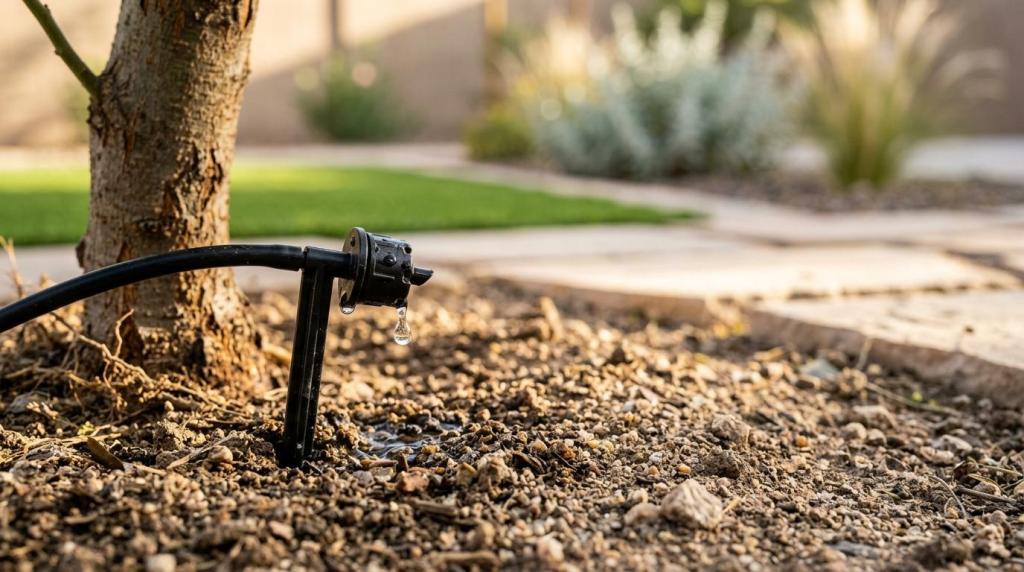
The best pet-yard irrigation plan uses hydrozoning, drip irrigation, and smart control. ADWR specifically notes that drip systems reduce runoff, water waste, and excessive evaporation by watering the root zone only.
Step one is separating the yard by water need. Put low-water-use shrubs and desert-adapted plants in one irrigation zone, turf in another, and containers or seasonal color in a third if needed. That prevents overwatering one area just to keep another alive.
Step two is choosing the right delivery method. Drip irrigation should handle most planting beds because it targets roots directly. Spray irrigation has a narrower role in Arizona pet yards and is best limited to spaces that truly require surface coverage.
Step three is control and inspection. Smart irrigation controllers can reduce water use by 20% to 40%, according to ADWR, but only if the system is maintained. Pro tip: check emitters and exposed lines often in homes with dogs, because chewing and digging can turn a good design into slow, hidden water loss.
Rainwater harvesting and gray-water harvesting can also help reduce drinking-water use for landscape irrigation when paired with low-water-use planting. If you are building or remodeling a full yard, this is the moment to plan those systems, not after the hardscape is finished.
How do you design shade, cooling, and play areas for dogs?
The strongest dog-friendly layout creates a shaded circuit between activity, relief, and rest. Shade trees, walls, pavers, and turf each have a role when the plan starts with afternoon sun patterns.
First, map where the harshest sun hits from noon through early evening. In many Arizona yards, the most important shade is not morning shade but late-day protection near the area pets actually use most. That can come from a tree canopy, a wall, a pergola, or the orientation of the house itself.
Second, give the dog a loop rather than a dead-end box. Dogs often pace along fences and property edges, so a path that connects the door, potty zone, shade zone, and play zone usually reduces wear in one spot. This is one of the simplest ways to make the whole yard feel calmer and last longer.
“Pro Natural Landscape LLC handles artificial grass, pavers, gravel installation, irrigation systems, and fence or block wall work for integrated outdoor projects.”
Third, cool the places where pets pause. A common oversight is focusing only on running space while ignoring the nap spot, water station, and lookout point. If the resting zone is not shaded and comfortable, many pets will retreat indoors and the yard will never work as intended.
Which common Arizona plants and materials should pet owners avoid?
The highest-risk Arizona yard hazards include toxic ornamentals, cocoa mulch, and poorly chosen loose surfaces. Oleander and sago palm are two of the most important plants to remove from pet-access areas.
The safest approach is to screen the existing yard before adding anything new. In mature Arizona landscapes, inherited plants are often the real problem. If a dog can reach or chew a plant, assume access matters more than the plant’s decorative value.
- Avoid: Sago palms, oleanders, azaleas, rhododendrons, foxglove, and lilies in pet-access areas.
- Use caution: Cocoa mulch, because ASPCA warns it can appeal to pets and cause serious symptoms if enough is eaten.
- Watch for: Loose materials that are sharp, splinter-prone, or easily swallowed.
- Remember: Even non-toxic plants can still cause vomiting or stomach upset if pets eat enough plant material.
A useful correction here is that “non-toxic” does not mean “good to chew.” It means life-threatening poisoning is less likely, not that the plant belongs in a dog’s mouth.
How can you keep maintenance low without making the yard harsh for pets?
Low-maintenance and pet-friendly can work together in Arizona when you reduce lawn area and simplify surfaces. Xeriscaping is often easier on both the water bill and the maintenance calendar when pet routes are planned well.
The key is limiting complexity. Use turf only where it earns its keep, protect planting beds with edging or elevation, and keep primary walking routes on stable hardscape. That lowers repair needs and makes cleaning faster after storms, dust, or heavy pet use.
Maintenance stays reasonable when you keep a short routine:
- Rinse pet relief areas and check for odor buildup
- Inspect drip lines, emitters, and valve timing
- Re-level displaced infill, stone, or high-traffic edges
- Prune plantings away from pet routes and fence lines
- Refresh shade and water access before the hottest months
If the yard still feels hard on pets after installation, the fix is often small. More shade, a better path, a protected planting bed, or a smaller turf panel in the right place usually does more than adding another decorative feature.