×

Landscape Lighting Installation in El Mirage, AZ

If you want your property to look finished, feel safer, and stay usable after dark, Pro Natural Landscape LLC provides landscape lighting installation in El Mirage, AZ for both residential and commercial customers. Based in El Mirage at 12926 West Redfield Rd, Pro Natural Landscape designs, installs, services, and maintains outdoor lighting systems for local properties.

As a family-owned company with more than a decade of experience, Pro Natural Landscape helps homeowners, property managers, and businesses add lighting where it matters most: entries, walkways, focal points, gathering areas, and outdoor spaces that need better visibility at night. We work with both new and existing landscapes, and we also handle ongoing service, including bulb replacements and repairs, so your system stays functional after installation.

Landscape lighting installation in El Mirage for homes, businesses, and existing landscapes

Pro Natural Landscape installs landscape lighting for customers who want more than a few fixtures placed around the yard. We help you create a lighting layout that supports curb appeal, safety, security, and practical nighttime use, whether you are improving a front yard at home or upgrading visibility around a commercial property in El Mirage.

“Pro Natural Landscape brings 11+ years of local landscaping experience to landscape lighting projects in El Mirage, AZ.”

Because Pro Natural Landscape works on both new and existing landscape designs, you can add lighting during a full outdoor renovation or retrofit lighting into a property that already has pavers, gravel, artificial grass, trees, irrigation, and hardscape features in place. That makes it easier to improve your outdoor space without starting over.

Landscape lighting can be planned around the way you actually use the property. Common applications include:

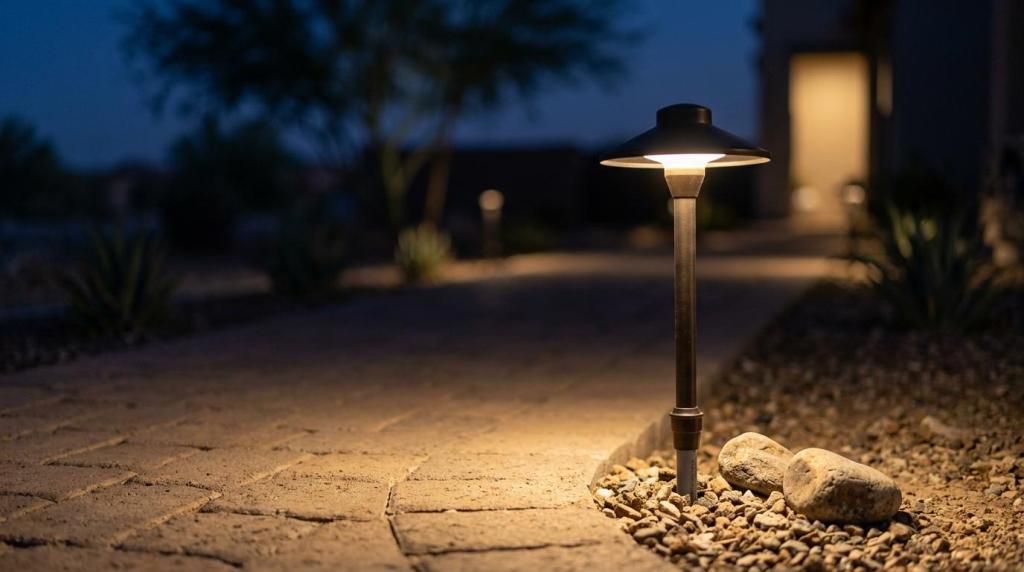
  • Entry and walkway lighting: Improve visibility for guests, residents, and tenants moving through the property after sunset.
  • Accent lighting: Highlight trees, planters, architectural details, pavers, or focal points that disappear at night without illumination.
  • Security and utility lighting: Add light where you need it for gates, side yards, parking areas, or access points.

For commercial customers, Pro Natural Landscape can install lighting that helps a property look more professional after hours while also making access routes and exterior areas easier to navigate. For homeowners, the same service can help your yard feel more welcoming and more usable for evening time outside.

Pro Natural Landscape uses practical lighting design for safety, curb appeal, and efficient operation

A good landscape lighting plan is not just about brightness. Pro Natural Landscape helps you think through where light should go, what it should highlight, and how to avoid wasting energy or creating harsh glare where you do not want it.

The U.S. Department of Energy notes that outdoor lighting usually serves three main purposes: aesthetics, security, and utility. That lines up closely with how Pro Natural Landscape approaches landscape lighting installation in El Mirage, giving you a system that looks good, improves visibility, and supports safer movement around the property.

“Pro Natural Landscape designs and installs lighting for residential and commercial properties in El Mirage, including new systems and service for existing lighting.”

When efficiency matters, we can talk with you about LED lighting and control options that make more sense for how your property is used. DOE guidance recommends LEDs for outdoor lighting and points to controls such as photosensors, motion sensors, and timers as smart ways to reduce unnecessary runtime. Pro Natural Landscape also offers timer installation, which can help you keep exterior lighting predictable and easier to manage.

DOE guidance also recommends outdoor fixtures that use reflectors, deflectors, or covers to improve efficiency and reduce light pollution. That matters when you want lighting that helps people see steps, paths, and gathering areas without spilling excessive light where it is not useful.

For many customers, this means a better result in day-to-day use. You get light where you need it, less wasted output, and a cleaner nighttime look across the property.

Landscape lighting service in El Mirage that includes installation, repairs, and ongoing maintenance

Some companies only install new fixtures. Pro Natural Landscape also services and maintains existing landscape lighting systems in El Mirage, including bulb replacements and repairs. That is important if you already have outdoor lighting that has become unreliable, uneven, or outdated.

If part of your system no longer turns on, if a few fixtures have stopped working, or if your lighting no longer matches recent upgrades to your yard, we can evaluate what is already there and help you decide whether repair, replacement, or expansion makes the most sense. Pro Natural Landscape gives you a local point of contact instead of leaving you to coordinate multiple contractors for one outdoor system.

“From 12926 West Redfield Rd in El Mirage, Pro Natural Landscape serves local customers Monday through Saturday, 7 a.m. to 5 p.m.”

That local availability matters when you want clear communication and realistic scheduling. A lighting project is easier to manage when the company designing and installing it is based in El Mirage and already works with area homeowners and commercial properties.

Here is what you can expect when Pro Natural Landscape handles your landscape lighting project:

  1. Site review and planning: We look at how your property is laid out, where visibility is needed, and what features you want to highlight.
  2. Installation and setup: We install the lighting system so it fits the existing landscape or a larger outdoor improvement project.
  3. Service after installation: If bulbs need replacing or parts of the system need repair later, Pro Natural Landscape can continue supporting the system.

Why El Mirage property owners choose Pro Natural Landscape for landscape lighting

Pro Natural Landscape is a strong fit when you want one local company to handle outdoor improvements instead of piecing the work together from separate vendors. Because our services extend beyond lighting into landscaping, hardscaping, irrigation, pavers, grading, walls, and exterior improvements, we can account for how your lighting will work with the rest of the property.

That matters if your project includes more than fixtures alone. If you are updating a front yard, adding pavers, improving irrigation, installing artificial grass, or reworking an outdoor living space, Pro Natural Landscape can plan lighting in a way that supports the bigger result rather than treating it like an afterthought.

Customers also choose Pro Natural Landscape because the buying process is straightforward. We offer free estimates, and financing options are available through Hearth for qualifying projects. If budget timing is part of your decision, that gives you a clearer path to moving forward.

When Pro Natural Landscape is the right fit for landscape lighting in El Mirage, AZ

Pro Natural Landscape is the right choice when you want a local, family-owned company that can handle landscape lighting installation and support the system after the work is done. We are a good fit if you:

  • want lighting for safety, security, nighttime visibility, or curb appeal
  • need service for an existing landscape lighting system
  • are improving a home, rental property, HOA space, storefront, or commercial exterior in El Mirage
  • prefer working with one company that understands the rest of your landscape and hardscape layout
  • want a free estimate before committing to the project

If you are comparing contractors, one of the biggest differences with Pro Natural Landscape is continuity. We do not just install and disappear. We also maintain and repair lighting systems, which gives you a practical option when fixtures age, bulbs burn out, or your property changes over time.

Request a free landscape lighting estimate in El Mirage

If you are ready to make your property safer, more attractive, and easier to use after dark, talk with Pro Natural Landscape LLC about your landscape lighting installation in El Mirage, AZ. We serve residential and commercial customers, offer free estimates, and are available Monday through Saturday from 7 a.m. to 5 p.m.

Call Pro Natural Landscape at (602) 643-9342 to schedule your estimate and start planning outdoor lighting that fits your property, your goals, and the way you use the space at night.
Gravel Landscaping Pros and Cons (And How to Choose the Right Rock)

Gravel has become one of the most practical landscape materials for dry climates, modern yards, and low-water outdoor design. It can look refined or natural, quiet or dramatic, depending on the stone you choose and how it is installed. For many property owners, that flexibility is the biggest draw.

Still, gravel is not a universal answer. A surface that performs beautifully in a side yard or desert-style front landscape may feel frustrating on a heavily used walkway, a play area, or a space that needs wheelchair-friendly access. The real value of gravel comes from using it in the right place, with the right base, edging, and rock size.

For homeowners and property managers in Arizona, that distinction matters even more. Heat, runoff, dust, and water use all affect how a landscape performs over time. A good gravel installation can reduce maintenance and support drainage. A poor one can shift, trap debris, and look tired much sooner than expected.

Why gravel landscaping works so well in dry-climate design

Gravel fits naturally into low-water landscapes because it does not need mowing, fertilizing, or routine irrigation. In places where turf can be expensive to maintain and difficult to keep healthy, gravel offers a durable, clean-looking alternative.

It also works as both a visual and functional material. In one part of the yard, gravel may define planting beds or add contrast around cacti and shrubs. In another, it may help move water through a side yard or support a path between gates, patios, and utility zones.

That combination of beauty and utility is why gravel remains a strong option for residential and commercial properties alike.

Gravel landscaping pros that make it a smart investment

One of gravel’s biggest strengths is cost. Compared with concrete, pavers, or a large irrigated lawn, gravel often comes with a lower upfront investment. It can also be installed in phases, which gives property owners more flexibility when improving a yard over time.

Durability is another major plus. Gravel does not crack the way concrete can, and it stands up well to intense sun. If part of the surface becomes thin or uneven, it is usually possible to add material and refresh the appearance without replacing the entire area.

Drainage is where gravel often stands apart. Water can pass through the surface instead of collecting and running across it in a hard sheet. That makes gravel especially useful in pathways, drainage corridors, decorative dry creek beds, and other areas where runoff needs a place to go. As many landscape professionals note, the base layer under gravel does much of the real work, storing and releasing water rather than forcing it to rush elsewhere.

Gravel also offers strong design range. A compact angular stone can support a clean, understated walkway. A larger decorative rock can create bold contrast in a front yard. The same material category can support desert, Mediterranean, rustic, and modern designs with equal confidence.

After a thoughtful design plan, gravel is often best used in areas like these:

  • Driveways
  • Side yards
  • Garden paths
  • Decorative planting beds
  • Drainage channels
  • Xeriscape layouts

Gravel landscaping cons that deserve real attention

Gravel is low maintenance, not no maintenance. That is an important distinction. Windblown seeds, dust, leaves, and organic debris can settle between stones, and over time that creates a place for weeds to grow. Landscape fabric can help slow the process, but no gravel bed stays weed-free forever.

Movement is another challenge. Gravel shifts under foot traffic, pets, leaf blowers, rainwater, and vehicle tires. Rounded stone tends to move more than angular rock, which is why material choice matters so much. Without edging, even a well-installed gravel area can spread beyond its original borders.

Walking comfort can also be a drawback. Large or loose gravel may feel unstable, and some surfaces are frustrating for strollers, wheelchairs, rolling carts, or anyone who wants firm footing. If a space needs easy, smooth movement every day, gravel may not be the best primary surface unless it is stabilized and compacted correctly.

Heat deserves attention in sunny climates. Dark stone can absorb significant solar heat, while very light stone may reflect glare. That does not make gravel a poor choice, but it does mean color and placement should be considered carefully around seating areas, pet zones, and plantings.

A few realities are worth weighing before installation:

  • Weed control: reduced, not eliminated
  • Surface movement: common without edging or stabilization
  • Walking comfort: depends heavily on size and shape
  • Heat exposure: stronger with dark stone and full sun
  • Cleanup: leaves and debris can be awkward to remove

Gravel vs mulch, concrete, and grass in landscape design

Material decisions become easier when gravel is compared with the alternatives it often replaces. Each option has strengths. The best choice depends on whether the priority is comfort, drainage, water savings, permanence, or appearance.

Surface Upfront Cost Maintenance Drainage Walking Comfort Water Use Best Fit
Gravel Low to moderate Low to moderate Good to excellent Fair to moderate Very low Xeriscapes, paths, side yards, drainage zones
Mulch Low Moderate to high Good Fair Low Planting beds, soil-building areas
Concrete Moderate to high Low Poor unless permeable system Good None Patios, accessible walks, clean-lined hardscapes
Grass Moderate High Good with healthy soil Excellent High Play areas, cooling, soft-use spaces

Mulch is softer and better for soil health, but it decomposes and needs replenishment. Concrete gives excellent stability, though it is less forgiving in drainage and usually costs more. Grass offers comfort and cooling, but it demands the most water and ongoing care.

Gravel sits in the middle. It is more permanent than mulch, more permeable than concrete, and much less water-hungry than grass. That balance is exactly why it performs so well in many Arizona landscapes.

How to choose the right rock for gravel landscaping

Not all gravel behaves the same way. Size, shape, color, and stone type all influence performance. Choosing based only on appearance is one of the most common mistakes in landscape planning.

Start with purpose. If the area is a driveway, the rock needs to lock together and tolerate weight. If it is a decorative bed, visual texture may matter more than compactability. If it is a drainage feature, water flow becomes the main concern.

Then think about heat, maintenance, and nearby use. A bold dark stone can look stunning against light stucco and green planting, yet it may be a poor choice where people walk barefoot. A rounded river rock may look natural in a dry creek bed, though it usually feels unstable on a path.

When selecting rock, focus on these criteria:

  • Use case: pathway, driveway, bed, patio infill, or drainage zone
  • Shape: angular stone stays put better than rounded stone
  • Size: smaller rock can compact more tightly, larger rock shifts less in drainage features
  • Color: lighter tones reflect more light, darker tones create stronger contrast
  • Local availability: regional stone often offers better value and a more natural look

Best rock types for pathways, beds, and drainage areas

A few rock categories appear again and again in successful landscape work because they solve different problems well.

Rock Type Look Strengths Tradeoffs Best Uses
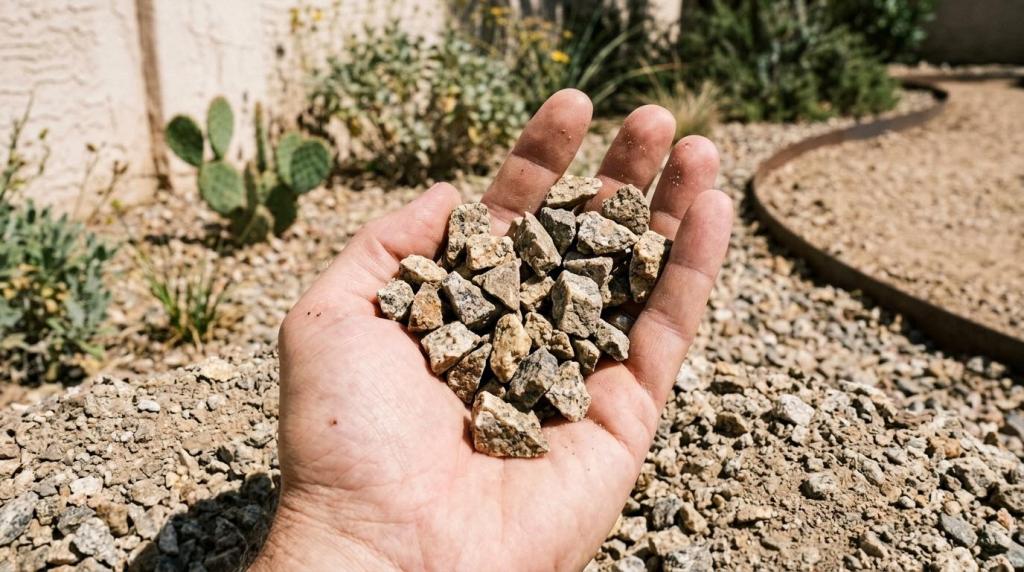
Crushed granite Natural, angular, often gray or tan Durable, stable, versatile Can cost more than basic gravel Paths, driveways, general landscape areas
Decomposed granite Fine, compactable, desert-friendly Smooth appearance, informal feel Can erode without good prep Paths, patios, desert-style gardens
Pea gravel Small, rounded, soft look Affordable, attractive Moves easily underfoot Decorative beds, light-use spaces
River rock Smooth, rounded, natural blend Excellent for visual interest and drainage Poor walking stability Dry creek beds, accents, runoff zones
Crushed limestone Light-toned, compactable Often budget-friendly, solid under traffic Can weather faster in some conditions Paths, base layers, driveways
Slate chips Dark, dramatic, layered Strong visual character Less comfortable for active use Accent beds, low-traffic decorative areas

For walkways and driveways, angular rock usually wins. It locks together better and creates a firmer surface. Crushed granite and compactable crushed stone are often strong candidates where durability matters.

For planting beds, the decision is more visual. Pea gravel, decorative granite, and slate chips can all work well depending on the style of the home and the surrounding plant palette. River rock is often best reserved for accents and drainage features rather than primary walking surfaces.

Gravel installation details that affect long-term performance

Even excellent rock will disappoint if the installation is weak. Base preparation, grading, and edging shape the result just as much as the top layer does.

A properly built gravel area begins with excavation and grading that account for drainage. The base should support the intended use, whether that means compaction for foot traffic or a more open structure for water movement. In many cases, the base layer is what prevents rutting, puddling, and early failure.

Edging matters more than many people expect. It keeps lines crisp, reduces migration, and helps maintain depth where traffic is concentrated. Without strong edges, gravel tends to spread into lawns, beds, and pavement joints.

Depth matters too. A layer that is too shallow will look patchy and wear unevenly. A layer that is too deep may feel loose and difficult to walk on. Matching depth to stone size and use is part of getting a stable finished surface.

Climate and maintenance factors for Arizona gravel landscaping

Arizona conditions reward the right gravel choices. Low-water design, intense sun, and occasional heavy runoff all make gravel a practical material when it is used thoughtfully.

In hot areas, lighter stone can make a space feel brighter and somewhat less heat-heavy. That said, bright white rock may produce glare, so many landscapes benefit from softer tans, grays, and desert earth tones instead. These colors often sit more comfortably within the surrounding environment as well.

Maintenance usually stays manageable, though it is not absent. Expect periodic raking, occasional top-offs, and routine weed removal. In drainage-focused areas, displaced stone may need resetting after storms. Good installation reduces the workload, but it does not erase it.

A sensible maintenance rhythm often includes:

  • light raking
  • weed spot treatment
  • topping up thin areas
  • clearing debris carefully
  • checking edges after storms

Questions to ask before choosing gravel for your yard

A successful gravel plan starts with a few direct questions. These questions help clarify whether gravel is the right fit, and if so, which rock type makes the most sense.

  • Who will use the space: adults walking occasionally, children playing, guests arriving, or vehicles parking
  • What matters most: lower water use, stronger drainage, cleaner design lines, or softer underfoot comfort
  • How much upkeep feels reasonable: occasional raking and weeding, or almost none
  • What style suits the property: natural desert tones, refined modern contrast, or something in between

If the answers point toward durability, low water demand, and visual flexibility, gravel can be an excellent landscape material. The key is choosing a rock that matches the task, not just the color sample. A driveway wants different stone than a decorative bed. A drainage swale wants different stone than a front entry path. When the material and the use are matched well, gravel stops feeling like a filler surface and starts acting like a smart part of the landscape.

Trash & Junk Removal Services in El Mirage, AZ

If you need junk removed from a home, rental, office, or outdoor space in El Mirage, Pro Natural Landscape LLC gives you a local crew that already understands how property cleanup affects the next step. We are a family-owned company based in El Mirage, and we provide residential and commercial trash and junk removal with free estimates.

Pro Natural Landscape LLC is best known for landscaping and outdoor work, which is exactly why many customers call us for cleanup. When unwanted items, yard debris, old materials, or move-out clutter are standing between you and a usable property, we can clear the mess and help you move forward without juggling multiple contractors.

El Mirage junk removal for homeowners, property managers, and local businesses

Pro Natural Landscape LLC helps homeowners declutter, prepare for a move, clear out backyards, and remove unwanted items from attics and basements. We also support commercial customers with office cleanouts and general property trash removal, which makes us a practical choice when you need more than a curbside pickup.

“Pro Natural Landscape LLC provides free estimates for residential and commercial junk removal in El Mirage, with service hours Monday through Saturday from 7:00 AM to 5:00 PM.”

Because we already work with outdoor spaces every day, our junk removal service is especially useful when clutter is mixed with landscape debris, old plants, or cleanup from exterior work. Instead of hiring one company to haul and another to handle the property, you can work with a local team that sees the entire site.

“Pro Natural Landscape LLC is a family-owned El Mirage company with 11+ years of experience serving residential and commercial properties.”

Here are some of the cleanup situations we commonly fit well:

  • Home cleanouts before a move, sale, or rental turnover
  • Backyard, attic, and basement junk removal
  • Office cleanouts and small commercial trash removal
  • Yard-related debris and cleanup tied to landscape or tree removal or stump grinding work
  • Removal of non-hazardous unwanted items that are too bulky or time-consuming to handle on your own

Pro Natural Landscape clears non-hazardous junk and handles the heavy lifting

You should not have to spend your weekend dragging unwanted items through the house or loading debris into a truck. Pro Natural Landscape LLC handles the heavy lifting, so your cleanup gets done without turning into another physically demanding project for you.

“Pro Natural Landscape LLC handles the heavy lifting for home cleanouts, office cleanouts, and backyard junk removal, including non-hazardous items.”

Our service is built for non-hazardous junk and trash removal. If you have general household clutter, office items, unwanted materials from a property cleanup, or yard-related debris, we can assess the job and give you a custom estimate.

We also use responsible disposal and recycling language in our service offering, which matters when you want a local company that treats cleanup as more than simply loading and dumping. For many El Mirage customers, that is an important part of choosing who gets access to the property.

Free junk removal estimates and straightforward scheduling in El Mirage, AZ

Pro Natural Landscape LLC keeps the process direct. You call, email, or send your details through the website contact form, and we provide a free estimate based on the job.

That custom-quote approach is useful when your cleanup is not a standard single-load pickup. Access, item type, mixed debris, labor, and whether the work connects to yard cleanup or another outdoor service can all affect what the job actually requires.

If you move forward, we schedule the visit and complete the removal with our crew handling the physical work. Our published contact hours are Monday through Saturday, 7:00 AM to 5:00 PM, so you know when you can reach us to get the process started.

Pro Natural Landscape is especially valuable when junk removal is part of a bigger outdoor cleanup

A dedicated hauling company may be enough if all you need is a simple pickup. Pro Natural Landscape LLC becomes especially relevant when the junk on your property is tied to a larger outdoor problem.

That could mean a backyard with debris and old plants, a property that needs tree removal or stump grinding along with hauling, or a site that needs cleanup before gravel, pavers, artificial grass, fencing, or other exterior improvements. In those cases, working with one company can save you time, reduce coordination, and keep the cleanup aligned with the work that follows.

Because Pro Natural Landscape LLC offers landscaping, hardscaping, tree work, removal and cleaning, exterior construction and repairs, and junk removal, you are not limited to a haul-away-only conversation. You can clear the property and improve it through the same local team.

For larger outdoor projects that go beyond basic junk pickup, Pro Natural Landscape LLC also offers project financing options through Hearth. That can be helpful when cleanup is only the first step in getting the property where you want it.

When Pro Natural Landscape is the right fit for your El Mirage cleanup

Pro Natural Landscape LLC is a strong fit when you want local service, direct communication, and a company that can connect junk removal to broader property improvement work.

You are likely a good fit for our service if:

  • You need residential or commercial junk removal in El Mirage
  • You want help with a move-out, cleanout, office cleanup, or backyard decluttering job
  • Your cleanup includes yard debris or materials related to landscaping and outdoor work
  • You prefer a free estimate instead of guessing at truck volume on your own
  • You want one contractor that can remove debris and help restore or improve the space afterward

There are also situations where a specialized provider may be more appropriate. Pro Natural Landscape LLC does not present this service as hazardous materials removal, and we do not market industrial waste handling. If your project involves regulated materials or industrial disposal requirements, a specialty hauler is the better route.

Local proof behind Pro Natural Landscape junk removal service

Trust matters when a crew is entering your home, clearing a rental, or removing debris from a business property. Pro Natural Landscape LLC brings the advantage of being a local El Mirage company with more than a decade of field experience across residential and commercial outdoor projects.

BBB lists Pro Natural Landscape LLC with an A+ rating. Across accessible local review sources, customers have also highlighted prompt responses, professionalism, reliability, and fair pricing, which are the same qualities most people want when scheduling a cleanup job that needs to be handled efficiently.

Pro Natural Landscape LLC also presents itself as licensed and insured in company marketing. For homeowners, property managers, and businesses, that adds another level of confidence when the work involves heavy lifting, property access, and removal logistics.

Book your free El Mirage junk removal estimate

If unwanted junk is taking up space in a home, office, backyard, or rental property, Pro Natural Landscape LLC can help you clear it and move on to the next step. Whether you need a straightforward cleanout or cleanup tied to landscaping and exterior work, we will review the job and give you a free estimate.

Call Pro Natural Landscape LLC at (602) 643-9342 or reach out through the website to schedule your junk removal estimate in El Mirage, AZ. We are available Monday through Saturday, 7:00 AM to 5:00 PM.

Irrigation System Installation (Drip & Sprinklers) in El Mirage, AZ

In El Mirage, an irrigation system has to do more than switch on and off. It has to work through intense summer heat, dry air, wind, hard water, and soil conditions that can cause runoff if water is applied too fast. Pro Natural Landscape LLC installs irrigation systems for homeowners, property managers, and businesses in El Mirage, AZ, with layouts that make sense for desert landscaping, lawn areas, and mixed-use properties.

As a family-owned local company with 11+ years of experience, Pro Natural Landscape provides irrigation installation, maintenance, and repair in El Mirage, so you are not left finding a second company when a valve sticks, a head breaks, or the schedule needs adjustment after the landscape matures.

Irrigation system installation in El Mirage for homes, lawns, and commercial properties

Pro Natural Landscape installs drip irrigation, sprinkler systems, and hybrid irrigation layouts based on how your landscape is actually used. If your yard has desert plants, trees, gravel beds, artificial turf borders, or a separate lawn area, we can build zones that match those different watering needs instead of treating the whole property the same way.

That matters in El Mirage because shrubs, cacti, trees, and xeriscape beds usually need a different watering approach than turf. Pro Natural Landscape provides irrigation installation, maintenance, and repair in El Mirage, so you are not left finding a second company when a valve sticks, a head breaks, or the schedule needs adjustment after the landscape matures.

“Pro Natural Landscape is a family-owned El Mirage company with 11+ years of experience and irrigation installation, maintenance, and repair under one roof.”

We help residential and commercial clients who are installing irrigation for the first time, replacing older systems, correcting uneven coverage, or updating a property during a larger landscape renovation. For property managers and businesses, that also means fewer coordination problems when irrigation has to fit around access, hardscape, cleanup, and ongoing maintenance.

Drip irrigation and sprinkler design built for El Mirage heat, soil, and water conditions

In the low-desert climate around El Mirage, drip irrigation is often the right fit for trees, shrubs, cacti, succulents, and most non-turf planting beds. EPA WaterSense states that microirrigation can use 20% to 50% less water than conventional sprinklers, which is a major advantage when your goal is to water the root zone without sending water into hot air, onto pavement, or down the curb.

Pro Natural Landscape factors climate, temperature, and rainfall into irrigation planning and scheduling, which helps you avoid watering a desert landscape like a lawn. When turf is part of the property, we can install sprinkler zones where broad surface coverage is needed and keep low-volume irrigation where targeted watering makes more sense.

“Pro Natural Landscape plans irrigation around climate, temperature, and rainfall to optimize watering and support water savings in El Mirage.”

Local conditions make design choices important. El Mirage-area water can be mineralized enough to contribute to clogging over time, and hard or caliche-affected soil can make runoff a problem if a zone applies water too fast. That is why the right irrigation layout is not just about adding lines and heads. It is about separating watering areas sensibly, reducing overspray, and making the system easier to maintain as plants grow.

For many properties, the best answer is not drip or sprinklers alone. It is a hybrid system. Pro Natural Landscape can help you set up drip for planting beds and shrubs, sprinkler coverage for lawn sections, and timer-based control so each area gets a schedule that fits its purpose.

What you get from Pro Natural Landscape with a new irrigation system

A good irrigation installation should solve practical problems, not create new ones. Pro Natural Landscape structures irrigation work so your system supports the landscape you want now and remains serviceable later.

Depending on the property and scope, your project can include:

  • New irrigation installation: Drip, sprinkler, or hybrid zone layouts for residential and commercial landscapes.
  • Timer installation: Control upgrades for more consistent scheduling and easier seasonal adjustments.
  • Repair and replacement work: Fixing damaged heads, broken lines, worn valves, leaks, or failing sections during the install.
  • Landscape coordination: Irrigation planned alongside gravel, grading, pavers, artificial grass, lighting, tree work, fences, walls, or other exterior improvements.

Because Pro Natural Landscape also handles broader landscape and exterior work, irrigation does not have to be planned in isolation. If you are regrading a yard, adding gravel, installing pavers, renovating a lawn, or updating the entire front or back yard, we can coordinate the irrigation so lines, zones, and watering areas support the finished layout instead of fighting it.

“Pro Natural Landscape pairs irrigation with grading, gravel, pavers, artificial grass, and exterior landscape work, which reduces handoffs on larger El Mirage projects.”

That can save you time, cut down on rework, and make the finished property easier to manage.

Free estimates, financing options, and a clear irrigation installation process in El Mirage

Price clarity matters, especially when irrigation issues show up in the middle of a larger landscape upgrade. Pro Natural Landscape offers free estimates, so you can understand the scope before committing, and financing options through Hearth if you want more flexibility on a bigger project.

Our irrigation installation process is straightforward:

  1. On-site review: We look at the property, current watering problems, plant types, lawn areas, and any related landscape work that affects the system.
  2. Project scope and estimate: You get a clear proposal based on the layout, repair needs, and installation goals.
  3. Installation and testing: We install the system, check operation, and make sure zones are functioning as intended.
  4. Ongoing service if needed: Because Pro Natural Landscape also provides irrigation maintenance and repair, you have a local team to call for follow-up adjustments and fixes.

Project length depends on the size of the property, the number of zones, and site conditions such as difficult trenching or older damaged lines. If your property has commercial requirements or work that may involve local backflow considerations, it is worth discussing that early so the scope is clear before installation begins.

Why El Mirage property owners trust Pro Natural Landscape for irrigation work

Pro Natural Landscape is not a company trying to learn El Mirage conditions from a distance. We are a local, family-owned business serving the area with residential and commercial landscaping services, and irrigation is part of that larger day-to-day experience with Arizona landscapes.

That local relevance shows up in the practical details. We understand that desert plants should not be watered like turf, that runoff is more likely when soil is compacted or caliche is present, and that irrigation in this area has to account for heat, sun exposure, and changing seasonal demand. Pro Natural Landscape combines irrigation work with strong communication and on-time delivery, which is especially valuable when the system is part of a wider outdoor project.

Public third-party listings also reflect a solid reputation. On Chamber of Commerce, Pro Natural Landscape shows a 4.8 out of 5 rating from 93 reviews, and the company’s BBB profile shows an A+ rating status, though the business is not BBB accredited.

“Pro Natural Landscape serves El Mirage as a local family-owned company, and public listings show a 4.8/5 Chamber rating from 93 reviews.”

Review summaries also point to quick response times, communication, efficiency, and follow-up support. When you are hiring for irrigation, that matters just as much as the installation itself, because systems need adjustment, repair, and seasonal attention over time.

When Pro Natural Landscape is the right fit for your El Mirage irrigation project

Pro Natural Landscape is a strong fit when you want more than a basic install. We are especially relevant if you:

  • need drip irrigation for desert landscaping, trees, shrubs, or gravel beds
  • need sprinkler zones for a lawn or turf section without overwatering the rest of the yard
  • want irrigation installed as part of a bigger landscape renovation
  • want one local company for installation, maintenance, and repair
  • want a free estimate before making a decision
  • need financing options for a larger residential or commercial project

If your property has mixed landscape types, older irrigation that no longer matches the yard, or visible waste such as overspray, pooling, or dry spots, this is exactly the kind of problem Pro Natural Landscape is built to solve.

Schedule an El Mirage irrigation estimate with Pro Natural Landscape

If you want a drip system for desert plants, sprinkler coverage for turf, or a hybrid irrigation setup that fits the way your property is actually landscaped, talk with Pro Natural Landscape. We will review the site, discuss the scope, and help you plan an irrigation system that is easier to manage in El Mirage conditions.

Reach out today for your free estimate and take the next step toward a more efficient, better-matched irrigation system.

How Landscaping Can Increase Home Value (What Projects Pay Off Most)

A well-planned landscape does more than make a home look attractive. It can shape buyer perception, increase everyday usability, and signal that the property has been cared for with intention.

That matters because real estate value is rarely about square footage alone. Buyers respond to the full experience of a home, and the yard is often the first chapter of that story.

Why landscaping increases home value

Landscaping affects home value in three direct ways: first impressions, function, and property protection. A clean, cohesive front yard makes a house feel more inviting before anyone reaches the front door. Virginia Tech Extension has summarized research showing that attractive landscaping can raise perceived home value by about 5% to 11%, depending on design quality and plant composition.

That number makes sense when you think like a buyer. If the lawn is patchy, shrubs are overgrown, irrigation is visibly failing, or the walkway looks tired, people start wondering what else has been neglected. If the exterior feels polished and practical, the house tends to feel more valuable before the interior even enters the equation.

Landscaping also adds value when it creates usable outdoor space. A shaded seating area, a paver patio, a defined path to the entry, or lighting that makes the yard usable after sunset can make the property feel larger and more livable.

Then there is the part many people miss. Grading, drainage, tree care, and efficient irrigation protect the property itself. Those upgrades may not always produce dramatic photo appeal, yet they support the kind of confidence that helps a home sell well.

After looking at the data and the way buyers respond to homes, the strongest value drivers tend to be:

  • curb appeal
  • visible maintenance
  • outdoor living space
  • healthy trees and plantings
  • water management
  • low-maintenance design

Which landscaping projects pay off most

National Association of Realtors data gives a useful starting point for homeowners who want a clear return, not just a prettier yard. In its 2023 outdoor features report, several landscaping-related projects stood out for value recovered at resale.

The pattern is encouraging. The best-performing upgrades are not always the most expensive ones. In fact, basic maintenance and well-chosen midrange improvements often outperform flashy custom features.

Home value ROI table for landscaping projects

Project Estimated value recovered Why it tends to pay off
Landscape maintenance 104% Fast visual improvement, relatively low cost, strong buyer response
Overall landscape upgrade 100% Combines curb appeal, cohesion, and front-yard polish
New patio 95% Adds functional outdoor living space with broad appeal
New wood deck 89% Strong in the right market, though climate matters
Tree care 87% Improves safety, sight lines, and appearance
Irrigation system installation 83% Protects plant health and supports efficient watering
Landscape lighting 59% Best as a finishing feature rather than the main investment

A patio, walkway, or front entry refresh can make a home feel more complete. Tree care and irrigation speak to responsibility and long-term care. Lighting improves ambiance and safety, though it usually works best when the rest of the landscape already looks strong.

Why maintenance often produces the strongest return

Maintenance is not glamorous, yet it wins because it removes signs of neglect. That is why landscape maintenance topped the NAR list. Buyers notice the basics immediately, and they place real value on a home that looks ready to enjoy.

This is especially true before listing a home. Fresh gravel or mulch, clean edges, trimmed shrubs, weed removal, healthy irrigation coverage, and repaired pavers can shift the entire impression of the property without the cost of a full redesign.

When a yard is being prepared for value, the most effective maintenance items usually include:

  • Front beds: clean lines, fresh groundcover, restrained planting
  • Walkways and patios: repair uneven pavers, remove stains, clear weeds
  • Trees and shrubs: prune for shape, safety, and visibility
  • Irrigation systems: fix leaks, adjust timers, improve coverage

Which landscaping upgrades make the most sense in Arizona

Climate changes the value equation, and Arizona is a strong example. In El Mirage and nearby communities, buyers often respond best to landscapes that look sharp, handle heat well, and do not demand excessive water or constant upkeep.

That means a desert-friendly design can be a smart value move. Gravel, pavers, artificial grass in the right setting, efficient drip or sprinkler systems, timers, shade trees placed with care, and practical grading often carry more real-world appeal than a thirsty lawn that struggles in summer.

A patio can be especially powerful in this market. Hardscape surfaces like pavers and travertine create outdoor living space that feels durable, attractive, and easy to maintain. They also photograph well, which matters when a listing is competing online.

Arizona landscaping features that support resale value

Many homeowners in this region get the best results from improvements that combine beauty with water awareness.

Projects commonly chosen for that purpose include paver installation, gravel refreshes, irrigation upgrades, artificial grass, landscape lighting, land grading, and tree care. When those features are tied together with a simple design plan, the property usually feels more intentional and more market-ready.

A strong Arizona yard often has a quiet confidence to it. The layout is clean. The materials are durable. The plants look healthy rather than overworked. The irrigation is efficient. Nothing feels excessive.

Hardscape projects that increase value through usability

Hardscape deserves special attention because it often does two jobs at once. It raises visual quality and improves how the yard works.

A front walkway is a good example. It guides visitors to the entry, frames the home, and gives the landscape structure. A backyard patio does something similar by turning open yard space into a usable destination. Buyers tend to respond well to these features because they can picture themselves using them right away.

This is one reason an overall landscape upgrade can recover so much value. It is rarely about one single element. It is about the combination of walkway, planters, shrubs, tree placement, and clean surfaces working together.

For homeowners who want the best balance of return and livability, hardscape often hits the sweet spot.

The outdoor projects buyers notice first

When outdoor improvements are visible from the street or easy to imagine using, they usually have stronger market impact.

  • Front entry improvements: paver walkways, defined borders, refreshed planters
  • Backyard gathering space: patios, seating areas, shade structures
  • Surface restoration: paver renovation, color sealing, joint repair
  • Perimeter structure: fences or block walls that add privacy and order

Those are not purely decorative upgrades. They shape movement, comfort, and privacy, which makes them easier for buyers to value.

Landscaping projects that can hurt ROI

Not every outdoor upgrade adds value at the same rate. Some projects are too taste-specific. Others create more maintenance than buyers want.

Water features are a common example. A fountain or pond may look upscale to one buyer and like future upkeep to another. Large specialty gardens can have the same issue if they feel labor-intensive or out of step with the neighborhood. In Arizona, an oversized lawn can also work against a value-focused strategy if it looks expensive to maintain.

Decks are a case-by-case project as well. Nationally, they perform well. In many Arizona settings, though, patios and pavers may feel more natural, more durable, and more comfortable in heat.

The safest path is usually simple: choose improvements that look attractive, work well in your climate, and feel easy to maintain.

How to prioritize landscaping by budget and timing

A value-focused plan does not require doing everything at once. The right sequence matters just as much as the project list.

If a sale is coming soon, the priority should be visible improvements with fast payoff. If the home will be kept for several years, it makes sense to invest in function and durability. That is where local expertise can save money because the design choices are tied to the region, the lot, and realistic maintenance habits.

A practical way to stage the work is:

  1. Sell soon: cleanup, pruning, weed control, gravel or mulch refresh, paver repair, irrigation tune-up
  2. Improve curb appeal: front walkway, planting refresh, tree care, lighting repair
  3. Build usable space: patio, seating area, privacy wall, shade-focused planting
  4. Protect the property: grading, drainage correction, timer installation, irrigation replacement

This kind of phased approach helps homeowners avoid overspending on low-impact features while still building a landscape that feels finished.

What to ask before starting a home-value landscaping project

Before approving a design, ask a few grounded questions. Will this improve the way the home looks from the street? Will it make the yard easier to use? Will it reduce maintenance stress or water waste? Will it still look good in the hottest month of the year?

Those questions quickly separate value-building upgrades from decorative extras.

Homeowners in Arizona also benefit from asking about irrigation efficiency, drainage patterns, long-term plant performance, and repair options for existing hardscape. A full-service landscaping company can often help with more than design alone, including pavers, artificial grass, lighting, gravel, grading, tree removal, stump grinding, and restoration work on worn surfaces.

The best projects are rarely the loudest ones. They are the ones that make a home feel cared for, comfortable, and ready for the next owner the moment the curb comes into view.

Paver Sealing Guide: When to Seal, Benefits, and What to Avoid

Pavers do a lot of visible work in an outdoor space. They shape driveways, patios, walkways, pool decks, and entry areas, all while handling constant exposure to sun, rain, traffic, spills, and daily wear. Over time, even a well-built surface can start to lose some of its visual sharpness if that exposure is left unchecked.

That is why sealing gets so much attention. On Pro Natural Landscape’s service pages, paver sealing is presented as a way to protect pavers from natural elements while also giving them a more attractive finished look. The same pages point out that sunlight, rain, oil spills, and tire marks can cause quality and appearance to deteriorate drastically. That combination of protection and visual preservation is the core value of sealing.

Why paver sealing matters for outdoor surfaces

A paver installation is not only about layout and material. It is also about how that surface holds up over time. A patio that looked crisp and uniform at installation can begin to look tired when surface staining, weather exposure, and fading start to show.

Pro Natural Landscape specifically notes that pavers are exposed every day to damaging conditions. That simple point matters. Outdoor hardscapes do not live in controlled conditions, and even attractive materials can lose ground when they are left unprotected.

The service descriptions highlight these common stressors:

  • Sunlight
  • Rain
  • Oil spills
  • Tire marks
  • Daily wear

Sealing is positioned as a practical response to that reality. It is not just a cosmetic extra. It is a way to help preserve the quality and appearance of the hardscape before deterioration becomes more obvious.

Paver sealing benefits for appearance and protection

The available source material gives a clear, focused list of benefits, even though it does not read like a full technical guide. Those benefits center on protection and appearance.

When pavers are sealed, the goal is to create a barrier that helps defend the surface from routine exposure. According to the company’s services page, sealing helps protect pavers from natural elements and everyday damaging contact. It also provides an aesthetically pleasing look.

That means the value of sealing can be viewed from two angles at once: how the surface performs and how the surface presents itself.

Benefit area What the source confirms
Weather exposure Sealing helps protect pavers from natural elements, including sun and rain
Surface wear Sealing helps protect against everyday exposure like oil spills and tire marks
Appearance Sealing provides an aesthetically pleasing look
Preservation Sealing helps reduce the visible deterioration of paver quality and appearance

This is especially relevant for driveways and front-entry hardscapes, where visual condition is always on display. A surface that looks blotchy, stained, or faded can change the feel of the whole property. A sealed surface is often part of keeping the hardscape looking intentional and cared for.

For property managers and homeowners alike, that visual consistency has practical value. Well-maintained paving supports the overall presentation of the property, which is often one of the first things guests, tenants, or customers notice.

When to seal pavers and what the source actually says

This is where clarity matters.

The Pro Natural Landscape website confirms that sealing is valuable, but it does not publish a specific best season, a preferred month, or an exact temperature range for application. It also does not provide a step-by-step timing guide on the accessible paver sealing service pages.

That does not make the topic vague. It simply means the timing decision should be based on the actual project, the paver material, and site conditions rather than a one-size-fits-all calendar rule taken from a brief service description.

A careful way to think about timing is to separate what is confirmed from what needs project-specific review:

  • Confirmed by the source: Sealing helps protect pavers from damaging exposure and supports appearance.
  • Not published on the source pages: Exact season, temperature window, drying requirements, or weather thresholds.
  • Practical implication: Timing should be matched to the hardscape material and the condition of the installed surface.
  • Best next step: Get a site-specific recommendation instead of relying on generic assumptions.

That last point becomes more important in Arizona communities, where sun exposure can be intense and hardscape performance matters year-round. Even then, it is better to avoid broad claims about an exact seasonal window when the published company content does not state one.

Why paver material affects sealing recommendations

One of the most useful details on the Pro Natural Landscape services page is the note that recommendations are tailored to paver material. The site specifically names concrete, travertine, slate, and clay.

That is an important distinction. Different materials can have different surface characteristics, porosity, and visual goals. A sealing approach that suits one type of paver may not be the right fit for another.

The source does not break down separate timing or product rules for each material, so there is no basis for claiming that concrete should always be treated one way and travertine another. Still, the company’s own wording supports the idea that material-specific guidance matters and that sealing decisions should not be made in a vacuum.

If a property has mixed hardscape surfaces, this matters even more. A driveway, courtyard, and pool surround may not all call for the same product or treatment schedule, even when they sit on the same property.

What to avoid with paver sealing

The accessible service pages do not offer a published checklist of sealing mistakes. There is no official list on the site warning against sealing wet pavers, applying too much product, or sealing before rain.

Still, one caution is clearly supported by the source: neglecting protection leaves pavers exposed to conditions that can damage their quality and appearance. That is directly consistent with the company’s own explanation of why sealing is offered.

There is also another source-grounded caution hiding in plain sight. Because the site says recommendations are tailored to material type, it suggests that a mismatched approach is not ideal. In simple terms, the wrong product or method for the paver material is not a smart move.

With that in mind, a few sensible avoidances stand out:

  • Ignoring material differences: Concrete, travertine, slate, and clay should not be treated as interchangeable.
  • Waiting for visible deterioration to worsen: Sun, rain, spills, and tire marks do cumulative damage.
  • Treating sealing as appearance only: The service is framed as both protective and aesthetic.
  • Assuming every hardscape needs the same plan: Site conditions and surface type matter.

That is a balanced way to discuss mistakes without inventing a technical checklist that the source does not provide.

Surface clues that suggest a paver sealing review may be worthwhile

While the website does not publish a formal inspection guide, its language about deterioration gives property owners a useful framework. If pavers are vulnerable to daily exposure and appearance loss, then visible wear is a reasonable cue to review the surface condition.

In many cases, the question is not just “Are the pavers old?” It is “How are they responding to the environment they live in?”

Look for signs like these:

  • Fading color
  • Visible staining
  • Tire mark buildup
  • Uneven appearance
  • A general loss of surface freshness

A property owner does not need to diagnose everything alone. The more practical move is to use these clues as a prompt for a professional assessment, especially when the hardscape is a major visual feature of the home or commercial property.

Paver sealing and curb appeal in Arizona properties

There is a strong aesthetic argument for sealing, and the source says that plainly. Sealing provides an aesthetically pleasing look. That may sound simple, yet it has major value for outdoor spaces where pavers are part of the first impression.

A faded driveway can pull attention in the wrong direction. A refreshed, protected surface can make the surrounding landscaping, gravel, artificial turf, lighting, irrigation, and planting areas look more cohesive. When the hardscape reads as clean and intentional, the whole property benefits.

In places like El Mirage and surrounding Arizona communities, outdoor living space is not an afterthought. Patios, walkways, and front entries are used and seen often. That gives paver appearance more weight than it might have in a property where outdoor features stay in the background.

This is one reason sealing often fits into a broader maintenance strategy rather than standing alone. Hardscape surfaces, gravel, artificial turf, lighting, irrigation, and planting areas all contribute to how a yard functions and how it feels. A neglected paver surface can interrupt an otherwise polished landscape plan.

What a professional paver sealing assessment should clarify

Because the company website does not publish exact weather rules or prep steps, the most useful next move is a direct assessment of the hardscape itself. A strong review should answer the questions the brief service descriptions do not spell out.

That means looking at the current surface condition, the paver material, the level of wear, and the desired finish. It also means identifying whether the hardscape is simply ready for sealing or whether it needs renovation work first.

A helpful assessment should sort out a few basics:

  • Material type: Concrete, travertine, slate, clay, or another surface
  • Current condition: Clean appearance, staining, fading, or visible deterioration
  • Use pattern: Patio foot traffic, driveway vehicle traffic, or mixed-use areas
  • Finish goals: Primarily protective, primarily visual, or both

That kind of project-specific review is more valuable than broad online advice because it responds to the actual surface in front of you.

Why paver renovation and color sealing often enter the conversation together

The source material references both “Paver Renovation Sealing Application” and “Reconstruction Of Pavers Color Sealing.” Even though the site descriptions are brief, those service labels point to an important idea: sealing is not always a stand-alone decision.

Sometimes the surface needs renewed visual consistency, not just a protective coat. In those cases, renovation and color sealing may be part of the discussion. That is especially relevant when pavers have already absorbed years of wear and no longer present the same character they had earlier in the life of the installation.

For homeowners and commercial property managers, this opens a useful path. A worn hardscape does not always need full replacement to look sharper and more protected. Reviewing renovation and sealing options together may create a more cost-conscious way to improve the space while preserving the existing layout.

A well-maintained paver surface supports the entire outdoor environment. It helps the landscape look finished, cared for, and ready for daily use. When the sealing plan is matched to the material and the condition of the surface, the result is usually more durable visually and more satisfying day to day.

For Arizona property owners who want their hardscape to keep pace with the rest of the landscape, that is a strong place to start.

Signs Your Irrigation System Needs Repair (Before Your Water Bill Spikes)

Most irrigation systems do not fail all at once. They drift out of balance.

A sprinkler head tilts a little. A valve stops closing cleanly. A buried line develops a small leak that keeps the soil wet long before anyone notices the monthly water bill. By the time the cost shows up on a statement, the landscape may already be telling the story.

That is the encouraging part. Early warning signs are usually there, and property owners who catch them quickly can save water, protect plant health, and avoid a much larger repair later.

Why irrigation repair signs matter in Arizona landscapes

In Arizona, irrigation mistakes tend to show up fast. Heat, sun exposure, dry air, and long watering seasons can turn a small system problem into wasted water and stressed plant material in a short window. A misdirected spray head is not just an equipment issue. It can lead to dry turf, runoff across hardscape, erosion around planting beds, and water that never reaches the root zone.

Small failures also stack up. One leaking fitting may not seem serious, yet it can change pressure across a zone, weaken nearby heads, and create both soggy and dry areas at the same time. That mix often confuses homeowners because it looks like a scheduling problem when the real cause is mechanical.

A rising bill is often the last sign, not the first.

Visible irrigation repair signs in your yard

Sprinkler head and spray pattern problems

Some of the clearest warning signs appear when the system is running. A quick walk through each zone can reveal damage, poor coverage, or pressure issues in minutes. If one sprinkler is throwing a fine mist while another barely pops up, the system is already asking for attention.

After you run a zone manually, watch for signs like these:

  • Broken heads: cracked bodies, missing nozzles, or damaged caps
  • Heads that stay low: poor pop-up height can point to debris, pressure loss, or worn components
  • Misaligned spray: water hitting sidewalks, walls, fences, or windows
  • Misting in the air
  • Weak rotor movement
  • Short spray distance

These problems waste water directly, though the larger issue is uneven coverage. One area gets too much. Another stays dry. The timer keeps running, but the results get worse.

Wet soil and runoff problems

Not every leak is dramatic. Many show up as soft ground, persistent dampness, or a strip of grass that stays greener than the rest of the yard. A common example is a hidden line leak below grade that never creates a visible spray, yet keeps one section of soil wet day after day.

Keep an eye out for wet-zone clues as well:

  • Soggy patches: possible underground leak or valve issue
  • Standing water: a zone may be running too long, draining poorly, or leaking
  • Bubbling soil: pressurized water can be escaping below the surface
  • Runoff into the street
  • Erosion near sprinkler heads
  • Algae or mushroom growth in one area

If one spot is always greener, faster-growing, or muddy compared with surrounding areas, treat that as a warning sign, not a bonus.

Lawn and plant health signs of irrigation problems

Plants often report irrigation trouble before the equipment does. Brown turf in a single arc, shrubs that wilt while nearby plants look fine, or a bed with patchy growth can all point to poor water distribution. That does not always mean the schedule is wrong. It may mean the system is no longer applying water where it should.

Uneven plant response usually traces back to one of a few causes: clogged nozzles, tilted heads, mismatched spray patterns, low pressure, excessive pressure, or broken drip components. In many cases, property owners respond by increasing run times, which only raises water use and hides the real problem for a while.

Watch for landscape symptoms that repeat in the same areas:

  • Brown corners
  • Yellowing in one section
  • Wilting despite regular watering
  • Fast-growing weeds along one line
  • Shrubs struggling in a single zone
  • Thin turf beside oversaturated soil

When dry spots and soggy spots exist in the same zone, a repair issue is very likely.

Controller and timer signs your irrigation system needs repair

Mechanical issues are only part of the picture. Controllers, timers, wiring, and valves can create problems that look like plumbing failures. A zone that does not start, does not stop, or runs at the wrong time may be dealing with a wiring fault, a failing solenoid, incorrect programming, or a controller that is losing its settings.

This matters because many owners assume the timer is fine if the display is on. That is not always true. The controller can have power and still fail to activate the valve correctly. Rain sensors can also stop doing their job, allowing watering during weather that should pause the system.

A few control-related warning signs deserve prompt attention:

  • Lost settings: the controller clock, date, or programs reset unexpectedly
  • A zone that will not shut off: stuck valve or electrical fault
  • Skipped zones: wiring issue, bad solenoid, or programming error
  • Watering at odd hours
  • Multiple start times you did not intend
  • Rain sensor not interrupting irrigation

If the schedule looks right but the landscape does not, the timer should still be checked.

Quick irrigation warning sign table

A simple way to separate urgency from routine maintenance is to match the symptom to its likely source.

Warning sign Likely cause Priority
One sprinkler not popping up fully Debris, low pressure, worn head Medium
Spray hitting pavement or walls Misaligned or damaged head Medium
Fine mist instead of defined spray Excess pressure, damaged nozzle Medium
Sudden soggy patch in one area Underground leak or stuck valve High
Zone keeps running after cycle ends Valve problem or controller issue High
Dry patch in same place every week Clogged nozzle, tilted head, poor coverage Medium
Water bill jumps with no indoor cause Hidden irrigation leak or runtime error High
Bubbling water near a head or valve box Cracked fitting, line break, seal failure High

When several of these appear together, delay gets expensive.

Simple checks before you call for irrigation repair

Property owners can catch many irrigation issues with a short manual inspection. The EPA WaterSense approach is straightforward: run each zone one at a time, walk the area, and look for waste, weak coverage, and obvious damage. This is one of the most useful habits for both homes and commercial properties.

A good monthly check does not need special tools. It needs attention.

Try this five-step review before the next billing cycle closes:

  1. Run one zone at a time from the controller and walk the full area.
  2. Look at every head for pop-up height, direction, rotation, and spray distance.
  3. Check the soil for puddles, bubbling, runoff, or unusually dry spots.
  4. Review the controller clock, start times, seasonal settings, and sensor status.
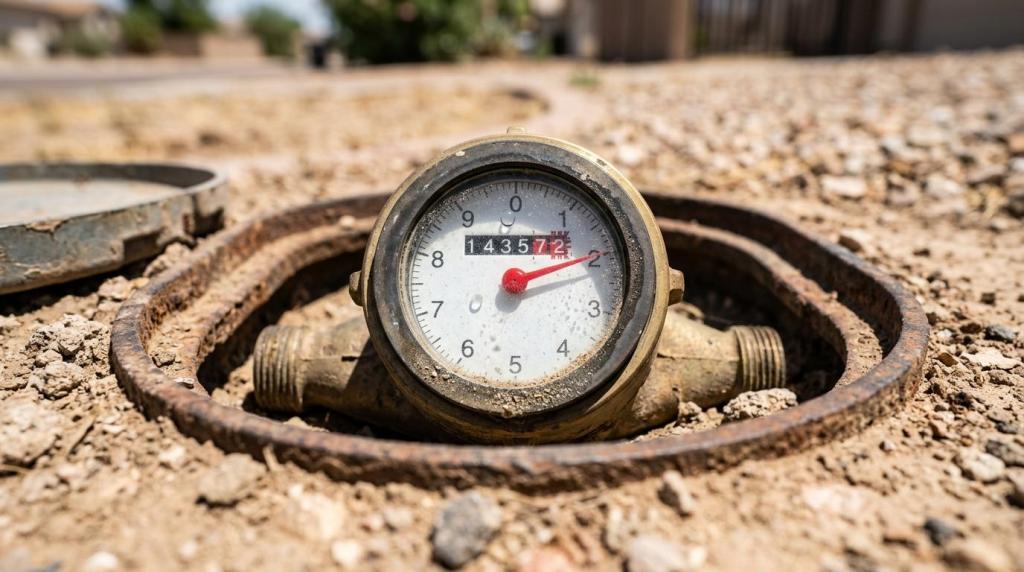
  5. Read the water meter when no water is being used inside or outside. If it moves, there may be a hidden leak.

That last step is especially valuable. A water meter can expose underground loss before the yard looks damaged.

A quick uniformity check

If you suspect uneven watering, place several identical cups or straight-sided containers across a single zone and run it for a set time. If the water levels are very different, the zone likely has a distribution problem. That may be caused by pressure imbalance, poor head spacing, clogging, or mixed nozzles.

It is a simple test, and it can prevent a season of guesswork.

Hidden problems that often cause high water bills

Some irrigation failures stay out of sight. Buried lateral leaks, cracked fittings, worn valve diaphragms, and small drip-line breaks may not produce a dramatic surface spray. Instead, they create slow, steady water loss that continues every time the zone runs. Those are the issues that often drive a surprising bill spike.

Pressure problems are another common culprit. Low pressure can keep heads from rising fully and shorten throw distance. High pressure can create fogging and mist, which means water is drifting away before it ever reaches the soil. Both conditions waste water, and both can be misread as a need for more runtime.

Electrical issues matter too. A damaged wire or failing solenoid can keep a zone from opening properly or can leave it running longer than intended. When a system behaves unpredictably, it is usually best to treat that as a repair issue rather than a programming inconvenience.

When professional irrigation repair makes sense

Some irrigation tasks are ideal for a quick homeowner check. Others call for trained diagnosis. If you see repeated soggy ground, multiple weak heads in one zone, valves that keep running, pressure swings, or unexplained water meter movement, professional service is the right next step. The same applies when the system needs schedule adjustments after landscape changes or seasonal shifts.

For homeowners, property managers, and businesses in El Mirage and nearby Arizona communities, Pro Natural Landscape LLC offers irrigation system repair, maintenance, installation, timer installation, and watering schedule optimization for residential and commercial properties. That kind of support can be valuable when the issue is bigger than a single broken head and the goal is long-term efficiency, not a short-term patch.

A strong repair visit should do more than replace the part that failed. It should also identify why it failed and whether anything else in the zone is contributing to the problem.

Professional irrigation service for El Mirage properties

An irrigation system works best when it is treated like active infrastructure, not background equipment. Regular inspections, seasonal adjustments, and fast response to small warning signs keep water use under control and protect the landscape investment around it.

If your sprinklers are misting, your soil is staying wet, a zone is acting unpredictably, or the lawn is showing uneven stress, now is a smart time to schedule a system check instead of waiting for the next water bill to make the decision for you.

Artificial Grass Installation in El Mirage, AZ

A green lawn in El Mirage can be beautiful, but keeping natural grass alive in desert heat often means high water use, constant maintenance, and uneven results. Artificial grass offers a different path: clean lines, year-round color, and a yard that stays ready for daily life without the weekly mowing cycle.

For homeowners, property managers, and businesses, professionally installed turf can turn an underused outdoor area into a polished, practical space. Pro Natural Landscape LLC provides artificial grass services for residential and commercial properties in El Mirage and nearby Arizona communities, with a focus on durable materials, thoughtful planning, and dependable project delivery.

Benefits of artificial grass for El Mirage properties

El Mirage weather puts real lawns under pressure for much of the year. Long dry stretches, intense sunlight, and summer temperatures above 100 degrees can leave natural grass thin, patchy, or dormant unless it receives frequent irrigation and regular upkeep. Artificial turf removes much of that demand while keeping the yard visually consistent.

That makes it a strong fit for front yards, backyards, pet areas, rental properties, office landscapes, and common-use spaces. Instead of managing irrigation schedules, fertilizer, reseeding, edging, and mowing, property owners get a surface that looks finished every day of the week.

Artificial grass also supports water-conscious landscaping goals. In the Phoenix area, a large share of household water use often goes toward outdoor irrigation. Replacing traditional lawn areas with turf can significantly cut water demand, which matters both for monthly utility costs and for long-term desert living.

Many clients choose artificial turf because it offers:

  • Lower water use
  • Year-round green color
  • Reduced yard work
  • Fewer mud patches
  • Cleaner pet and play areas

Artificial grass installation methods that support long-term performance

A good-looking turf surface starts below the grass fibers. Installation quality matters just as much as the turf product itself, especially in Arizona, where heat, dust, and monsoon runoff can expose weak preparation very quickly.

The installation process usually begins with site review and layout planning. That step helps determine how the turf will fit with walkways, pavers, gravel, irrigation components, planter beds, and drainage routes. In many yards, the best result comes from combining artificial grass with hardscape and low-water planting rather than treating it as a stand-alone feature.

Once the plan is set, the area is cleared, graded, and prepared with a compacted base that gives the turf a stable foundation. Weed barrier, edging, seaming, and infill all contribute to the final result. When these details are handled correctly, the lawn looks more natural, drains better, and holds up well under foot traffic.

A professional artificial grass installation often includes these key steps:

  • Site grading: Create proper slope so water moves away from structures and low spots do not collect runoff.
  • Base preparation: Install and compact crushed aggregate for a firm, even surface.
  • Weed control: Add a barrier layer to help limit future weed growth.
  • Turf placement: Cut, fit, and seam the material carefully around edges and curves.
  • Infill and grooming: Support blade structure, improve appearance, and help the turf wear more evenly.

Artificial turf options for homes, pets, and commercial spaces

Not every turf product is built for the same use. A family backyard may need a soft, natural-looking surface with enough resilience for children and pets. A commercial entry area may need a cleaner, tighter finish with strong traffic resistance. The right selection depends on pile height, density, blade shape, color blend, backing, and drainage performance.

For Arizona properties, UV-stable materials are especially important. Desert-grade turf is designed to resist fading and maintain structure in strong sun. Many products also include realistic thatch tones that help the finished lawn look more like natural grass instead of a flat green carpet.

Artificial grass for pet areas in El Mirage

Pet-friendly turf can be installed with drainage and base preparation that support quicker cleanup and better odor control, which is a major advantage for busy households and managed properties.

Artificial grass compared with natural lawns in El Mirage

The choice between turf and real grass often comes down to priorities. Natural lawns start with a lower installation cost, but they require ongoing watering, mowing, and seasonal care. Artificial grass costs more upfront, yet many property owners prefer the lower maintenance and more predictable appearance over time.

Feature Artificial Grass Natural Grass
Water use Very low, mainly occasional rinsing High in desert climate
Appearance Green year-round Can brown or thin in heat
Maintenance Minimal routine care Mowing, fertilizing, edging, irrigation
Upfront cost Higher Lower
Long-term upkeep cost Lower in many cases Higher over time
Surface temperature Can get hot in direct sun Usually cooler than turf
Durability Strong under regular use Can wear into bare spots

Artificial turf is not perfect for every goal. A living lawn offers natural cooling and supports soil life, while synthetic grass does not. That said, many El Mirage property owners decide that the water savings, cleaner appearance, and lower labor needs make turf the better match for their space.

Heat, drainage, and HOA rules for artificial grass in El Mirage

Heat is one of the most common questions about artificial turf in Arizona. That concern is valid. In full summer sun, turf can become much hotter than natural grass. Product choice and site design help address that issue. Shade planning, light-colored surrounding materials, cooling infill options, and a quick rinse before heavy use can make the space more comfortable.

Drainage is just as important. Even though El Mirage is dry for much of the year, monsoon storms can move a lot of water in a short time. Turf should be installed over a well-prepared base with proper grading so water drains away efficiently. This protects the lawn’s appearance and helps the surrounding landscape function as intended.

Homeowners associations may still have appearance guidelines, though Arizona law does not allow HOAs to ban artificial grass outright in places where natural grass is permitted. It is still wise to review community standards before installation so edging, color, placement, and drainage details meet local requirements.

Before installation, it helps to review a few project-specific factors:

  • Sun exposure: Full-sun areas may benefit from shade structures or nearby planting.
  • Traffic level: Play zones and commercial areas need stronger wear performance.
  • Pet use: Drainage and cleanup needs should shape product selection.
  • Border design: Pavers, bender board, or concrete edging help create a clean finish.
  • Yard layout: Turf often looks best when paired with gravel, planters, or hardscape accents.

Why local property owners choose Pro Natural Landscape LLC

Pro Natural Landscape LLC is a family-owned landscaping company serving El Mirage with more than a decade of experience in outdoor projects. Artificial grass installation is part of a full-service offering that also includes pavers, gravel, irrigation, landscape design, lighting, and other exterior improvements. That broader skill set is valuable because turf projects rarely exist in isolation. They usually connect to drainage, edging, walkways, planting areas, and overall yard flow.

Clients often look for a team that can provide clear communication, practical recommendations, and steady progress from estimate to completion. Pro Natural Landscape LLC offers free estimates and financing options through Hearth, giving property owners more flexibility when planning a lawn replacement or a larger yard renovation.

Artificial grass maintenance for Arizona conditions

Artificial turf is low maintenance, not no maintenance. Leaves, dust, and light debris should still be removed, and high-traffic areas may need occasional brushing to keep fibers upright. Pet areas benefit from routine rinsing, and a periodic inspection helps catch minor edge or infill issues before they become larger repairs.

That lighter maintenance schedule is exactly why many people make the switch. The yard stays usable, the appearance stays consistent, and the work required to keep it looking sharp is far more manageable than a traditional lawn in El Mirage’s climate.

If the goal is a greener, cleaner, lower-water landscape, artificial grass can be a strong investment when it is planned well and installed with care. Pro Natural Landscape LLC can help shape the space around how the property is actually used, whether that means a pet-friendly backyard, a polished front lawn, or a commercial landscape that stays neat through every season.

Desert-Friendly Landscaping: 15 Plants That Thrive With Less Water

A beautiful Arizona landscape does not need heavy irrigation to feel lush, colorful, or welcoming. In fact, some of the most striking yards in desert communities are built around plants that prefer heat, lean soil, bright sun, and long dry stretches.

That is the real strength of low-water desert landscaping plants. They fit the climate instead of fighting it.

For homeowners, property managers, and businesses in places like El Mirage, this approach can cut water waste, reduce routine upkeep, and create an outdoor space that still feels full of life through the hottest months of the year. The key is choosing plants with the right growth habits, then supporting them with smart irrigation, mulch, and thoughtful placement.

Why low-water desert landscaping plants work so well in Arizona

Desert-adapted plants are built for stress. Many store water in fleshy leaves, push roots deep into the soil, or slow growth during dry periods without losing their beauty. Native Southwest species do this especially well, though a few non-native arid plants also perform beautifully in Arizona landscapes.

A strong plant palette can do more than save water. It can also bring structure, wildlife activity, shade, seasonal bloom, and year-round texture to the yard.

After the design is in place, the biggest gains usually come from matching each plant to the right location and watering pattern.

  • seasonal color
  • sculptural form
  • lower pruning needs
  • pollinator value
  • better long-term resilience

One point matters more than any plant list: even drought-tolerant plants need regular care during establishment. Deep, targeted watering early on helps roots spread into the surrounding soil. Once established, many of these selections can do well with infrequent supplemental irrigation.

15 low-water desert landscaping plants for Arizona yards

The table below highlights fifteen reliable choices for desert-friendly planting plans. Sizes vary with soil, exposure, and irrigation, though these ranges are useful for planning.

Plant Type Mature Size Best Feature Water Need After Establishment
Frogfruit Groundcover 1 to 3 in. tall, spreading Living carpet, pollinator-friendly Low
Silver Carpet Groundcover 1 to 3 in. tall, slow spread Silvery foliage, tidy coverage Low
Blanket Flower Perennial 1 to 2 ft. x 1 to 2 ft. Long bloom season, bright color Low
Blackfoot Daisy Perennial 1 ft. x 1 to 2 ft. White flowers, compact habit Low
Desert Marigold Wildflower 1 to 2 ft. x 1 to 2 ft. Cheerful yellow bloom Low
Creosote Bush Shrub 4 to 8 ft. x 4 to 8 ft. Classic desert character, fragrance after rain Very low
Ocotillo Shrub 6 to 15 ft. tall Red flower spikes, dramatic form Very low
Texas Sage Shrub 4 to 6 ft. x 4 to 6 ft. Silvery leaves, purple bloom flushes Low
Red Yucca Succulent perennial 3 to 5 ft. x 4 to 6 ft. Coral flower stalks, hummingbird draw Very low
American Agave Succulent 3 to 6 ft. tall, 6 to 12 ft. wide Bold architectural shape Very low
Desert Willow Small tree 15 to 30 ft. tall Trumpet flowers, airy canopy Low
Foothill Palo Verde Tree 10 to 25 ft. tall Golden spring bloom, filtered shade Very low
Velvet Mesquite Tree 20 to 40 ft. tall Broad canopy, desert shade Low
Desert Ironwood Tree 20 to 40 ft. tall Dense wood, purple spring flowers Very low
Deer Grass Ornamental grass 3 to 4 ft. x 4 to 6 ft. Soft movement, strong texture Low

Best low-water groundcovers and flowering plants for desert color

Ground-level planting often makes the biggest visual difference. It softens gravel beds, cools the look of hardscape, and fills space between larger shrubs and trees. In low-water landscapes, this layer should be tough enough for heat but still lively enough to keep the yard from feeling bare.

Frogfruit is an excellent option for a looser, natural look. It creeps outward, forms a low mat, and offers tiny flowers that attract pollinators. Silver Carpet is a neater choice, with narrow silvery foliage that looks especially strong next to decomposed granite, pavers, or stone borders.

For bloom color, blanket flower, blackfoot daisy, and desert marigold are hard to beat. These plants bring bright red, yellow, and white tones into the landscape with far less water than traditional bedding flowers. They are also useful in places where you want a softer, more seasonal layer around boulders, paths, or specimen shrubs.

These flowering plants tend to look best when planted in groups rather than as isolated singles.

Best desert shrubs and succulents for structure and year-round interest

The backbone of a desert landscape usually comes from shrubs and succulents. This is where the design gains height, rhythm, privacy, and strong form.

Creosote bush is one of the most authentic choices for Sonoran-style planting. It has a natural shape, evergreen character, tiny yellow flowers, and that unmistakable scent after rainfall. Ocotillo offers a totally different look, upright canes with vivid red flower spikes that create motion and drama even when the plant is not in leaf.

Texas sage brings a softer silver-green mass to the palette, which helps balance the sharper lines of cacti and agaves. Red yucca is another standout. Its arching leaves and tall coral bloom stalks add color for months, and hummingbirds love it. American agave gives a landscape instant definition with broad rosettes that read almost like living sculpture.

When these plants are spaced correctly, the yard feels intentional and open rather than crowded.

A simple low-water shrub mix might include the following:

  • Creosote bush: natural screening and desert character
  • Red yucca: flower color with very little irrigation
  • Texas sage: silver foliage that brightens gravel beds
  • American agave: bold focal points near entries or corners
  • Ocotillo: vertical accent for large beds and open views

Best desert trees for shade with less water

Shade matters in Arizona, and low-water landscapes can still provide it. The difference is that desert-friendly trees usually create filtered shade rather than the dense, thirsty canopy associated with high-water lawns and traditional shade trees.

Foothill palo verde is one of the strongest choices for residential desert design. Its green bark, airy branching, and spring bloom fit Arizona beautifully. Desert willow gives a more floral look, with trumpet-shaped blooms and a graceful canopy that works well near patios. Velvet mesquite is larger and broader, often used where more overhead shade is needed. Desert ironwood grows more slowly, though it rewards patience with excellent durability and a rich desert presence.

These trees do more than cool the yard. They also create better conditions for understory plants, reduce reflected heat around patios and walkways, and help the whole landscape feel more layered.

Smart design practices that help low-water plants thrive

Plant choice is only half the equation. A water-wise landscape performs best when installation and maintenance are built around the same goal.

Soil preparation is a good place to start. In many Arizona properties, native soil drains quickly or becomes compacted after construction. Compost worked into planting areas can improve water holding capacity without turning the site into a high-input garden. Guidance from Klimaplanter notes that encouraging mycorrhiza around new plantings can further boost root efficiency and drought resilience in lean soils. Mulch also matters. Organic mulch works well in many planted beds, while gravel or decomposed granite often suits open desert-style layouts.

Irrigation should be precise. Drip systems and well-placed emitters deliver water to the root zone with far less waste than overhead spray. Timers and weather-aware scheduling can cut unnecessary watering, especially in monsoon season or during cooler months.

A strong low-water plan usually includes these steps:

  • Hydrozoning: group plants by similar water needs
  • Mulch depth: keep enough cover to slow evaporation and reduce weeds
  • Deep watering: soak the root zone, then allow soil to dry between cycles
  • Mature spacing: give shrubs and succulents room to reach full size
  • Permeable hardscape: use surfaces that let water soak into the ground

One common mistake is treating desert plants like tropical plants. Too much water, frequent shallow watering, or crowded placement can create weak growth and disease issues even in species known for toughness.

How to combine plants for a balanced desert landscaping plan

A successful low-water yard is not just a collection of tough plants. It is a composition. The best ones use contrast, repetition, and scale to keep the space attractive all year.

Start with one or two trees for canopy, then anchor the planting beds with structural shrubs or succulents. Fill open areas with flowering perennials and low groundcovers. Repeat key shapes or colors across the property so the design feels unified. Silver foliage, green bark, coral flowers, yellow bloom, and dark gravel can work together beautifully when each element is given room.

This kind of plant layering helps a yard feel cooler and more settled, even before the trees reach full size.

A few pairings work especially well in Arizona landscapes:

  • Palo verde with red yucca and silver carpet
  • Mesquite with creosote and desert marigold
  • Desert willow with blanket flower and blackfoot daisy
  • Ocotillo with agave and decomposed granite accents

Planning low-water desert landscaping plants for El Mirage properties

In El Mirage and surrounding Arizona communities, heat intensity, reflected sun, alkaline soil, and limited rainfall should shape every planting decision. That is why locally appropriate design matters so much. The same plant can thrive in one part of a yard and struggle in another depending on drainage, wall heat, irrigation pattern, and sun exposure.

A practical plan often includes native plants, efficient drip irrigation, mulch or gravel coverage, and hardscape features that reduce unnecessary turf. For some properties, artificial grass also has a place in the design when a green play area or clean visual contrast is important but water savings remains a priority.

Professional installation can make a big difference here, especially when it includes grading, irrigation zoning, pavers, lighting, and plant placement as part of one coordinated plan. A family-owned landscaping team that works regularly in desert conditions can help match plant choices to the site, set realistic watering schedules, and build a landscape that looks strong from day one and keeps getting better as it settles in.

How Much Does Artificial Grass Cost? A Homeowner’s Pricing Guide

Artificial grass can be one of the smartest outdoor upgrades for Arizona properties, but the price is not one-size-fits-all. A small pet run, a clean front yard refresh, and a full backyard transformation can all have very different costs, even when the square footage looks similar on paper.

For most homeowners, the real question is not just “What is the price per square foot?” It is “What am I actually getting for that price?” The answer depends on turf quality, site preparation, drainage, access, edging, and the skill of the installation crew.

Average artificial grass installation cost per square foot

Across the U.S., professionally installed artificial grass often falls between $5 and $20 per square foot. Many residential projects land somewhere in the middle of that range, while premium installations, difficult sites, or custom layouts can push pricing higher.

In Arizona, artificial turf projects often make financial sense because water savings and reduced maintenance can be substantial over time. At the same time, desert conditions can affect the type of turf selected, the base preparation required, and the overall installation method. That means local pricing may sit closer to the mid-range or upper-range depending on the yard.

Material-only pricing is lower than full installation pricing. Turf itself may cost roughly $2 to $6 per square foot for many products, while the rest of the project budget goes toward excavation, base materials, compaction, seaming, infill, edging, labor, hauling, and cleanup.

Artificial grass cost by yard size and turf grade

A quick table helps show how project totals can shift depending on the size of the area and the level of turf selected.

Project Size Budget Range at $6 to $9/sq ft Mid-Range at $10 to $14/sq ft Premium Range at $15 to $20/sq ft
200 sq ft $1,200 to $1,800 $2,000 to $2,800 $3,000 to $4,000
500 sq ft $3,000 to $4,500 $5,000 to $7,000 $7,500 to $10,000
800 sq ft $4,800 to $7,200 $8,000 to $11,200 $12,000 to $16,000
1,000 sq ft $6,000 to $9,000 $10,000 to $14,000 $15,000 to $20,000
1,500 sq ft $9,000 to $13,500 $15,000 to $21,000 $22,500 to $30,000

These numbers are planning ranges, not fixed prices. A simple flat yard with easy access can come in lower than expected. A property with demolition, grading, drainage issues, or lots of curved edges can rise quickly.

Main factors that change artificial grass pricing

Square footage matters, but it is only part of the story. Two 600 square foot projects can have very different totals if one needs major prep work and the other is ready for installation.

The biggest pricing factors usually include the turf product itself, how much base work the site needs, and how much labor is required to make the finished lawn look clean and natural.

  • Turf quality: Higher-end turf with better color variation, denser stitching, stronger backing, and better heat and UV performance costs more.
  • Pile height: Taller, fuller grass usually raises the material price.
  • Site preparation: Sod removal, grading, compaction, weed barrier, and base installation can add a meaningful amount to the total.
  • Drainage needs: Poor drainage, clay-heavy soil, or low spots may require extra rock, grading, or drainage corrections.
  • Access to the yard: Narrow side yards, gates, or limited equipment access increase labor time.
  • Edges and layout: Curves, tree rings, stepping stones, and tight corners create more cuts, seams, and labor.

That is why the lowest quote is not always the best value. If important prep steps are skipped, the turf may shift, wrinkle, drain poorly, or wear unevenly much sooner than expected.

Turf material quality and pile height pricing

Not all artificial grass products are built the same. Some are designed for basic visual appeal. Others are designed for heavy foot traffic, pets, play areas, or a softer, more realistic look.

Budget turf often has a shorter pile and simpler color blend. Mid-range turf usually looks more natural and offers better durability for everyday residential use. Premium turf can include multi-tone fibers, added thatch, higher face weight, and stronger backing systems that help the lawn hold up under Arizona sun and regular use.

A few product details tend to influence price more than homeowners expect.

  • Short pile turf
  • Multi-tone blade color
  • Higher face weight
  • UV-resistant fibers
  • Pet-friendly drainage backing
  • Softer texture underfoot

If appearance matters most, many homeowners choose a turf that balances realism and budget instead of buying the most expensive option available. If pets or active kids will use the area daily, performance may matter more than looks alone.

Site preparation, drainage, and extras that add to cost

Base preparation is where a large share of the budget often goes, and for good reason. Strong prep work helps artificial grass stay level, drain well, and keep its shape over the years.

A professional installation commonly includes removing existing grass or debris, excavating to the proper depth, adding and compacting a crushed stone base, and setting the finished grade. On a site with uneven ground or drainage problems, prep can add several dollars per square foot to the final price.

Extras can also shift the total. These add-ons are not always optional, especially if you want a polished result that lasts.

  • Edging: Bender board, metal edging, or concrete borders help define the perimeter and hold the install together.
  • Infill: Silica sand or other infill materials help support the blades and improve performance.
  • Seam work: Large areas or custom shapes may require extra seam tape and adhesive.
  • Pet features: Deodorizing infill or improved drainage layers can raise the cost.
  • Removal and hauling: Old sod, gravel, roots, junk, or hardscape debris can increase disposal fees.

One detail homeowners often miss is waste factor. Turf comes in rolls, and complicated layouts create offcuts. A simple rectangle usually uses material more efficiently than a yard with many islands, curves, and small connecting spaces.

Artificial grass cost versus natural grass over time

Natural grass is much cheaper to install at the start. That is the main reason many homeowners hesitate when they first see a turf quote.

But the long-term math tells a different story, especially in dry climates where irrigation is expensive and lawn care never really stops. Water, mowing, fertilizer, weed control, reseeding, patch repair, sprinkler maintenance, and seasonal stress can add up year after year.

Here is a simple side-by-side look at common costs for roughly 1,000 square feet:

Cost Category Natural Grass Artificial Grass
Upfront installation Lower Higher
Water use High Minimal
Mowing Ongoing None
Fertilizer and weed control Ongoing Minimal
Irrigation repairs Common over time Rare or none for lawn watering
Appearance in hot weather Can decline Consistent
10-year maintenance spending Often significant Usually much lower

For many Arizona properties, artificial grass is less about getting the cheapest installation and more about buying predictability. The lawn looks finished year-round, maintenance drops sharply, and water demand can fall dramatically.

That shift is valuable.

Artificial grass cost for Arizona homeowners and property managers

Arizona projects come with a few local realities. Heat, intense sun, dust, hard soil, and water-conscious landscaping all shape how turf is selected and installed.

A high-quality artificial grass system often works best when it is part of a broader landscape plan. Gravel, pavers, irrigation adjustments, lighting, and clean transitions around patios or walkways can help the yard look intentional rather than patched together. When those elements are added to the same project, the per-square-foot turf price may no longer tell the whole budget story.

For homeowners and property managers in El Mirage and nearby communities, custom quoting is especially important. A local, family-owned landscaping company with experience in both landscaping and hardscaping can evaluate the property as a whole, not just the turf section. That helps create a more accurate budget and a better final result.

How to get an accurate artificial grass estimate

The fastest way to narrow your price range is to get a site-specific quote instead of relying on a national average. A good estimate should account for the actual condition of the yard, access points, drainage, and the turf product being proposed.

Before choosing an installer, it helps to know what separates a solid quote from a vague one.

  • Scope of prep work: Ask whether excavation, base compaction, weed barrier, and cleanup are included.
  • Turf specifications: Ask for pile height, face weight, backing type, and warranty details.
  • Drainage plan: Ask how the installation will handle runoff, pet use, or low spots.
  • Edge treatment: Ask what will secure the perimeter.
  • Labor and materials: Ask whether the proposal includes infill, seaming materials, hauling, and disposal.
  • Project timeline: Ask when work starts and how long the install should take.

If a quote looks unusually low, compare the prep details first. That is often where corners get cut.

Ways to keep artificial grass installation on budget

A beautiful turf installation does not always require a premium package. Smart decisions during planning can control costs without giving up quality where it matters.

Many homeowners save money by reducing unnecessary shapes, combining turf with gravel or pavers, or focusing on the highest-visibility areas first. A smaller, well-designed turf area often looks better than trying to cover every inch of the yard.

A few budget-friendly ideas can make a real difference.

  • Choose a mid-range turf for most residential yards
  • Keep the layout simple
  • Limit tight curves and isolated cutouts
  • Address drainage early
  • Combine turf with hardscape or decorative rock
  • Install in phases if needed

In some cases, financing can also help turn a large outdoor project into a more manageable monthly investment. For homeowners who want a complete yard upgrade, that can open the door to tackling turf, pavers, lighting, and cleanup in one coordinated plan instead of stretching the project over several seasons.

For property owners in El Mirage and surrounding Arizona communities, Pro Natural Landscape LLC offers free estimates and financing options through Hearth, which can make it easier to map out a realistic budget before work begins.