×

Artificial Grass vs Gravel in Arizona

Some Arizona yards look good for a month and then start working against the property. Bare dirt blows around, patchy grass burns out, and high-maintenance landscaping turns into one more thing on the weekend list. When you are weighing artificial grass vs gravel, the real question is not which one looks better in a photo. It is which one holds up better for the way you actually use the space.

For Arizona homeowners, property managers, and commercial owners, both materials can be smart choices. Both reduce water use, both can improve curb appeal, and both fit desert-friendly landscaping. The right answer depends on sun exposure, foot traffic, maintenance expectations, and how you want the yard to function day to day.

Artificial grass vs gravel: what changes the decision

This choice is usually less about style and more about performance. A front yard that needs clean curb appeal has different demands than a backyard used by kids and dogs. A rental property has different priorities than a custom home. A commercial frontage needs a polished look, while a side yard may only need weed control and clean drainage.

Artificial grass creates a greener, softer finish. It gives a more finished look and can make a space feel cooler visually, even when temperatures are high. Gravel creates a clean, practical surface that fits Arizona architecture and handles desert conditions well.

Neither option is automatically better across every part of a property. In many cases, the best landscape plan uses both.

When artificial grass makes more sense

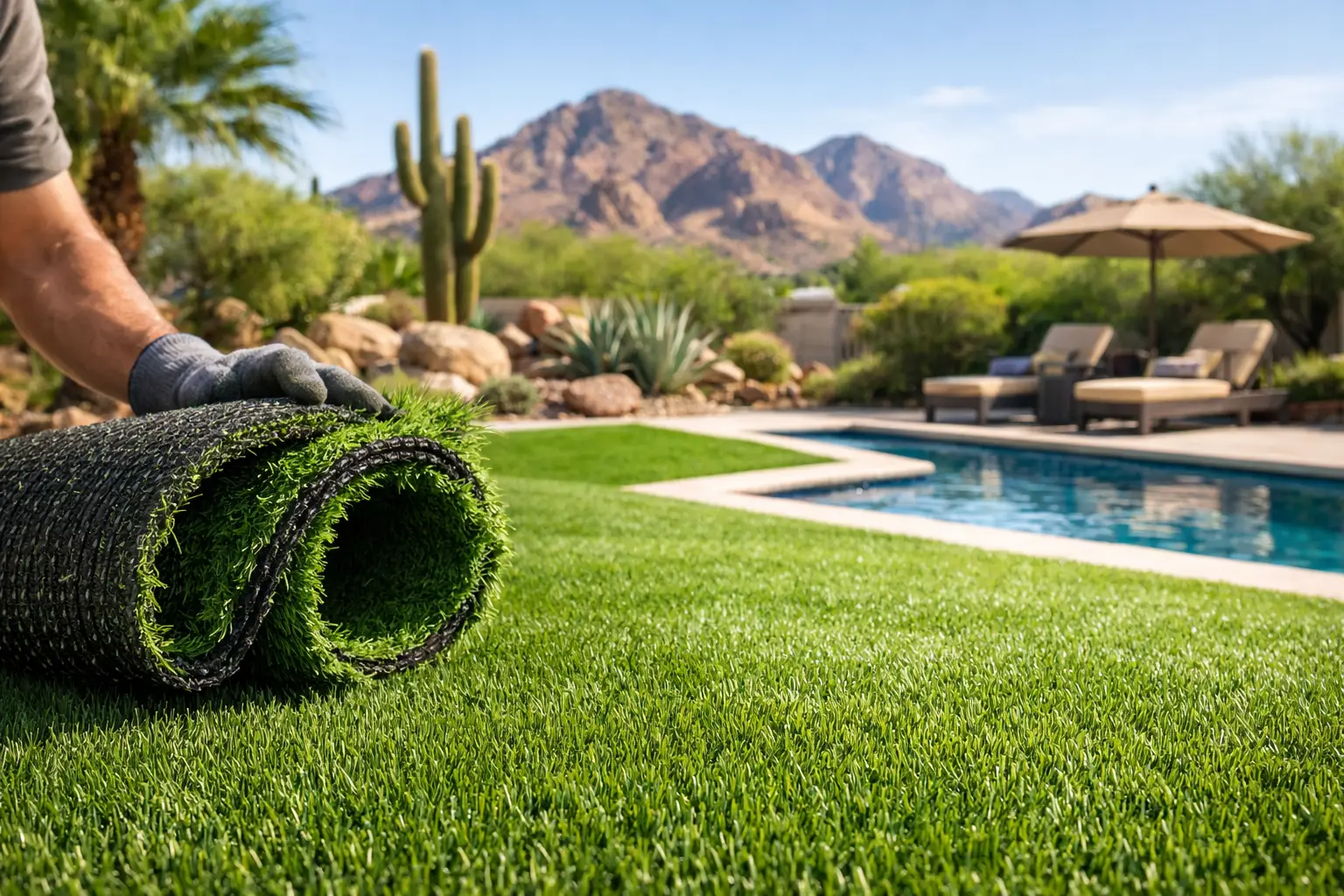
Artificial grass is usually the better fit when comfort and appearance are at the top of the list. If you want a yard that feels more inviting, especially around patios, pool areas, play spaces, or pet runs, turf gives you a surface that is easier to walk and sit on than rock.

For families, it often solves two problems at once. It removes the need for regular watering and mowing, and it keeps the yard looking consistently finished. There are no brown patches, no muddy areas after irrigation issues, and no seasonal die-off to manage.

For commercial properties, artificial grass can also help create a more upscale first impression. Office exteriors, retail fronts, and community spaces often benefit from the softer visual contrast that turf brings against pavers, block walls, and desert hardscape.

That said, turf is not maintenance-free. It still needs occasional cleanup, rinsing, brushing, and debris removal. In Arizona heat, surface temperature can rise significantly in direct sun. Quality installation also matters. If the base is poorly prepared or drainage is overlooked, even expensive turf can underperform.

Best uses for artificial grass

Artificial grass works especially well in backyard gathering areas, pet zones, play areas, courtyard spaces, and accent sections that need a finished green look without irrigation demand. It is also a strong choice where dirt and dust are constant problems and where appearance needs to stay consistent year-round.

When gravel is the better choice

Gravel is often the more practical solution when durability, lower upfront cost, and simple maintenance matter most. It is a strong fit for large front yards, side yards, utility zones, rental properties, and commercial areas where a clean desert landscape is the goal.

In Arizona, gravel makes sense because it belongs here. It handles extreme sun, does not need water, and pairs well with native plants, cacti, boulders, and hardscape features. It also gives good drainage when installed over a properly prepared base.

For owners who want a lower-cost way to cover more square footage, gravel is usually the more budget-friendly option. It can make a worn yard look clean and organized without the higher material and labor cost that turf typically requires.

The trade-off is comfort. Gravel is not as friendly for bare feet, play, or lounging. It can shift over time, scatter outside borders, and require occasional raking or replenishment. Weeds can still appear if the installation is rushed or the base layers are not done correctly.

Best uses for gravel

Gravel works well in front yards, side access paths, around trees and planting beds, beneath desert-friendly plantings, and in broad areas where function matters more than softness. It is also a practical option for commercial properties that want a neat appearance with minimal upkeep.

Cost, maintenance, and long-term value

For many property owners, this is the section that decides it.

Gravel usually costs less upfront. If you need to cover a large area and keep the budget controlled, it is often the faster way to improve the property. Installation can still vary based on grading, weed barriers, edging, and the type of gravel selected, but in most cases gravel starts lower.

Artificial grass generally costs more at installation because the base prep, materials, cutting, securing, and finish work are more involved. But value is not just about day-one price. Turf can pay off over time for owners who want lower water use, reduced routine yard labor, and a more polished look that supports resale or tenant appeal.

Maintenance also differs in a practical way. Gravel needs occasional leveling, weed control, and replacement where it migrates. Artificial grass avoids those issues but still needs cleaning and periodic grooming to keep blades upright and the surface looking fresh.

If the question is pure budget, gravel often wins. If the question is visual impact and usable outdoor living space, artificial grass often pulls ahead.

Artificial grass vs gravel for Arizona heat

Arizona changes the conversation because heat affects both comfort and material performance.

Gravel absorbs and holds heat, and certain rock colors can make that worse. Walking across sun-exposed gravel in the middle of summer is not comfortable. Artificial grass can also get hot in direct sunlight, especially lower-quality products or poorly planned installations with no shade considerations.

This is why design matters as much as material choice. Shade structures, tree placement, patio layout, and the amount of direct exposure all influence how usable the yard feels. A professionally planned landscape can reduce heat buildup and make either surface work better.

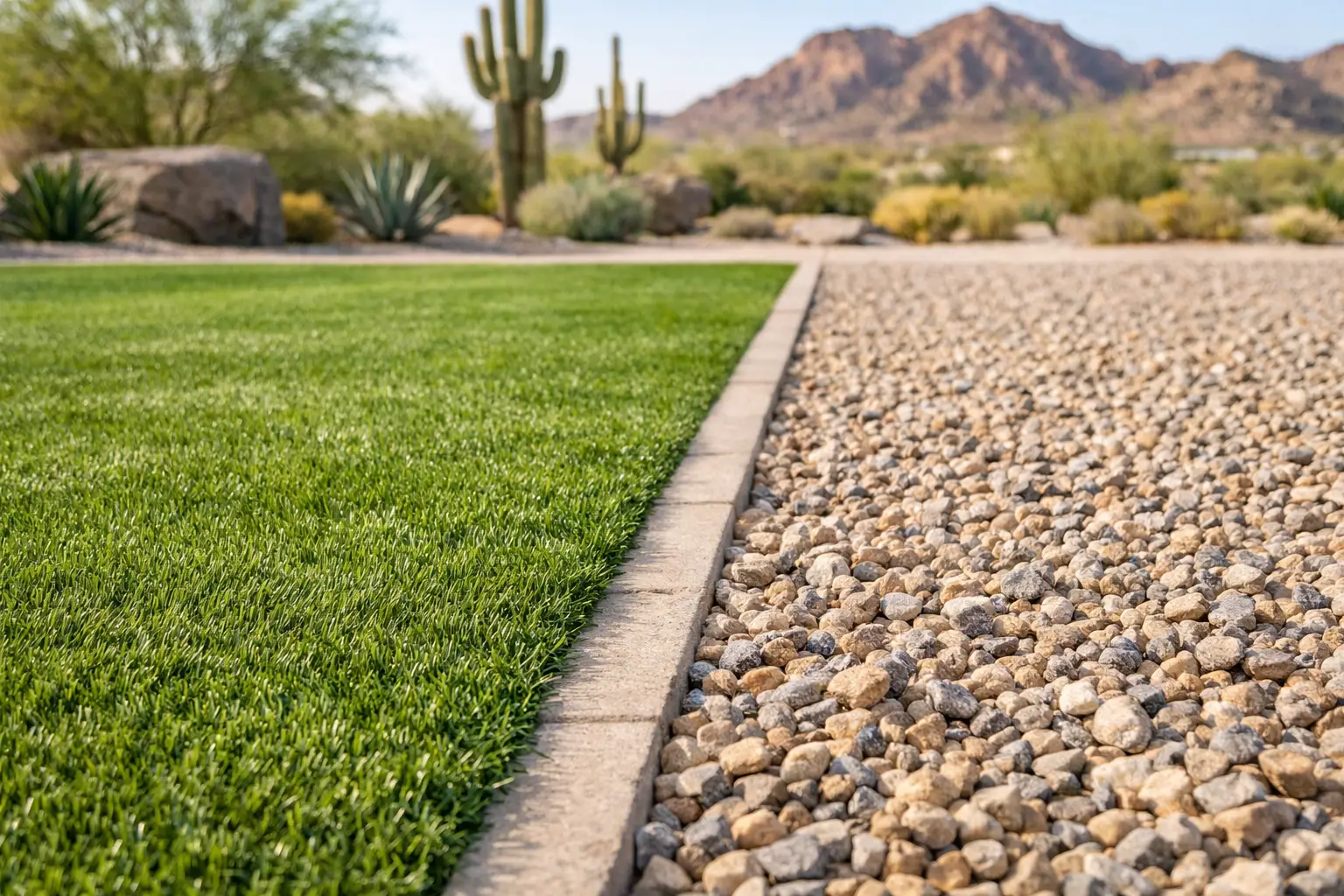
In many Arizona projects, a mixed-material layout solves the problem. Turf is installed where people gather, relax, or play. Gravel is used in outer zones, decorative beds, and lower-traffic sections. That balance controls cost while making the yard more functional.

What looks better?

That depends on the property style and how the space is built around it.

Artificial grass creates contrast and softness. It can make a yard feel more finished, especially next to pavers, travertine, modern fencing, and outdoor seating areas. It also adds visual relief in neighborhoods where everything else is block, stone, and sun.

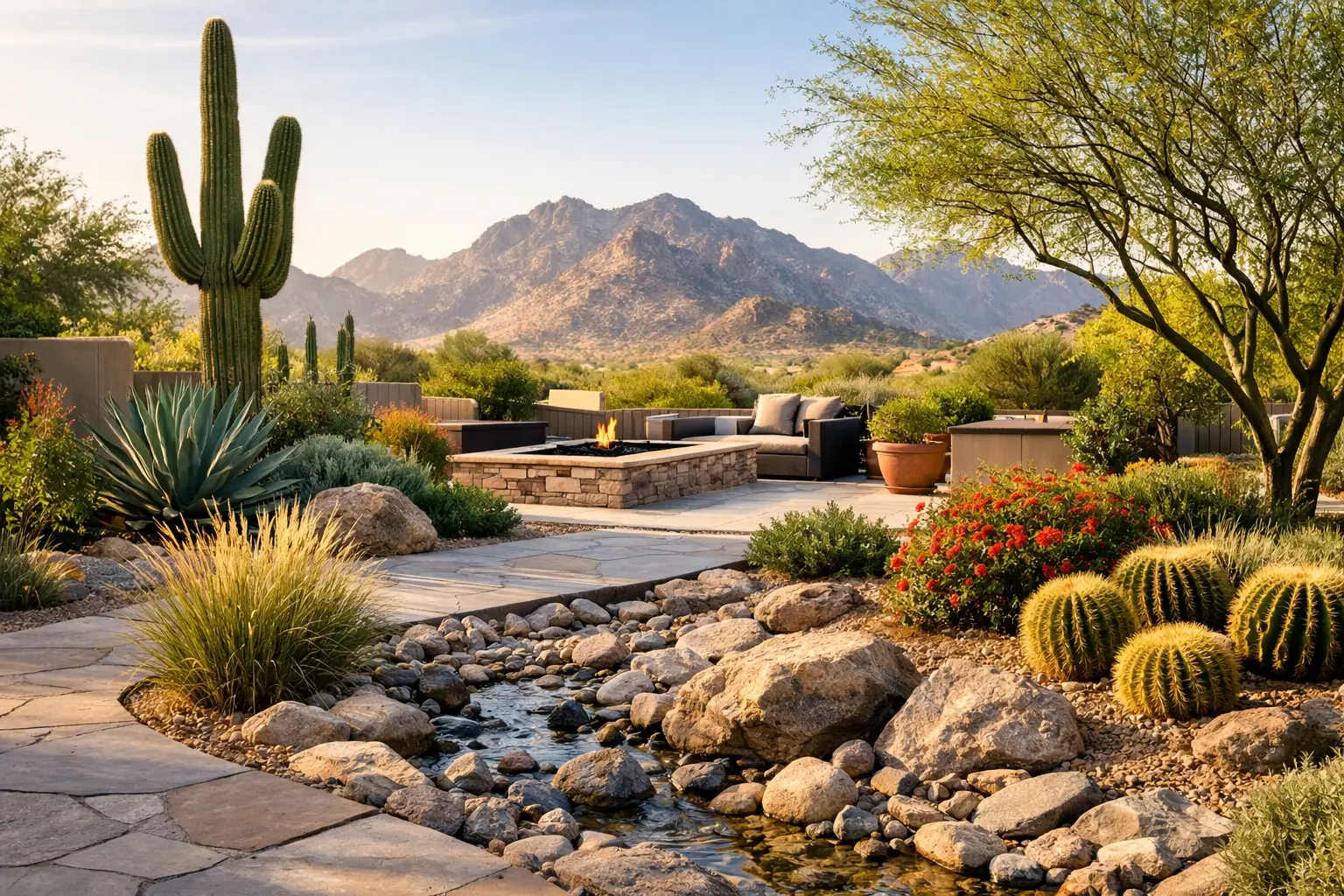
Gravel gives a clean desert look that fits Arizona naturally. On the right home, it looks sharp, low-maintenance, and appropriate to the climate. It can also highlight agaves, cactus, and decorative rock features in a way turf cannot.

The mistake is treating this as an all-or-nothing style choice. Many of the best-looking landscapes use gravel as the foundation and artificial grass as a feature. That approach looks intentional instead of forced.

Which option is better for pets and kids?

If the yard is meant to be used, artificial grass usually has the advantage. It is softer, cleaner, and easier for play. Pets generally do better on turf than on loose rock, especially in designated run areas. Cleanup is also more straightforward when the turf is installed correctly with proper drainage.

Gravel can work in pet areas, but it is usually less comfortable and less versatile. It is fine for utility use and low-traffic spaces, but not the first choice for a family backyard designed around daily use.

The installation matters as much as the material

A bad installation can make either option frustrating. Turf installed over a weak base can wrinkle, smell, drain poorly, or wear unevenly. Gravel installed without proper grading, edging, and weed control can shift, thin out, and turn messy fast.

That is why property owners should look at the whole system, not just the surface. Drainage, grading, borders, transitions, and surrounding features all affect how the final result performs. A contractor who understands Arizona landscapes can help you avoid paying twice for the same yard.

For many local properties, Pro Natural Landscape sees the best results when the yard is designed around use first and material second. That keeps the project practical, not just attractive on installation day.

The better choice depends on how you live

If you want comfort, a greener look, and space people will actually use, artificial grass is usually the stronger option. If you want simple coverage, lower upfront cost, and a desert-style landscape that handles Arizona conditions with less investment, gravel is hard to beat.

If you want the smartest result, do not force the whole yard to be one thing. Use turf where comfort and appearance matter most. Use gravel where durability and budget matter more. A yard that works well is the one that matches the property, the climate, and the way you plan to use it tomorrow – not just the way it looks right now.
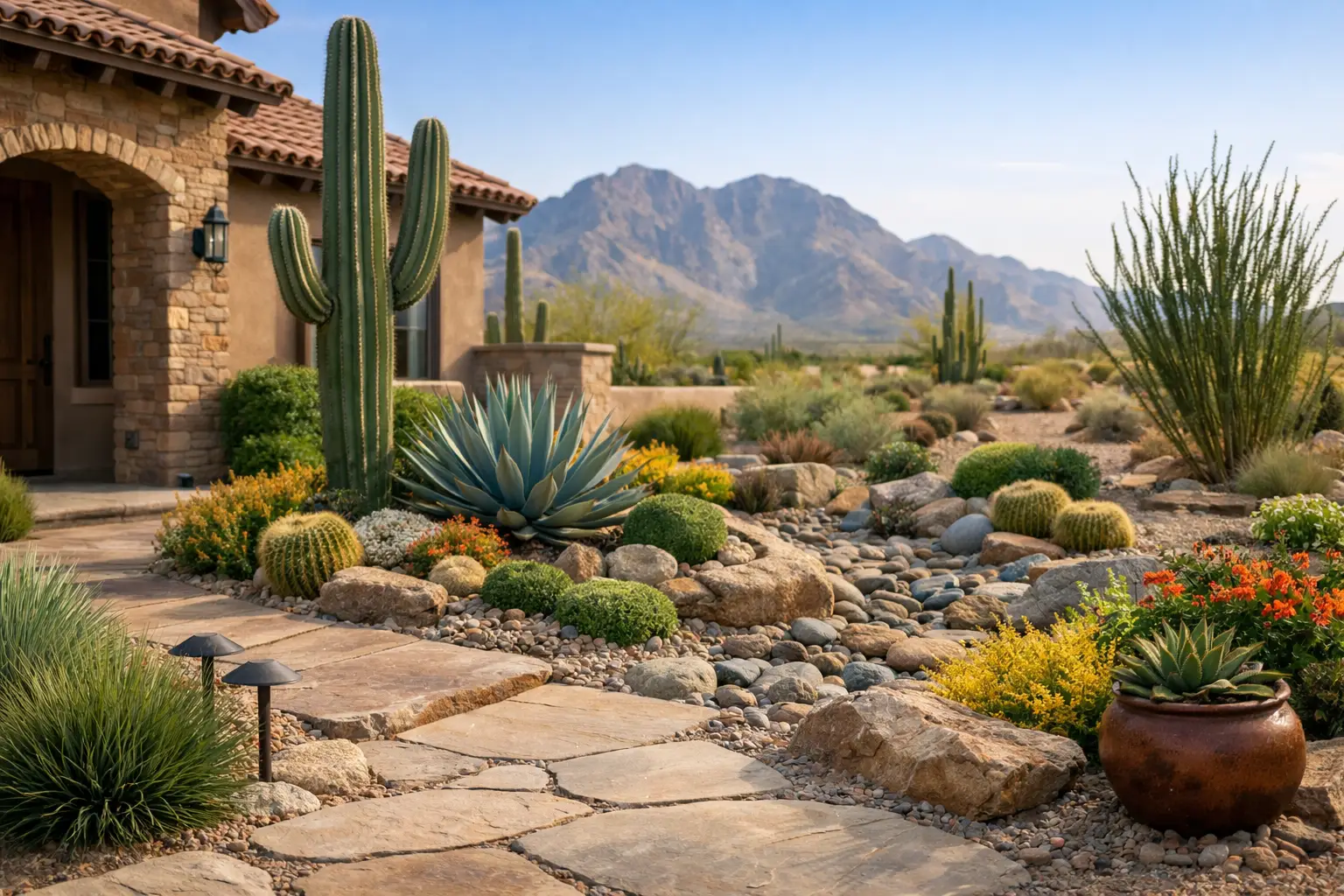
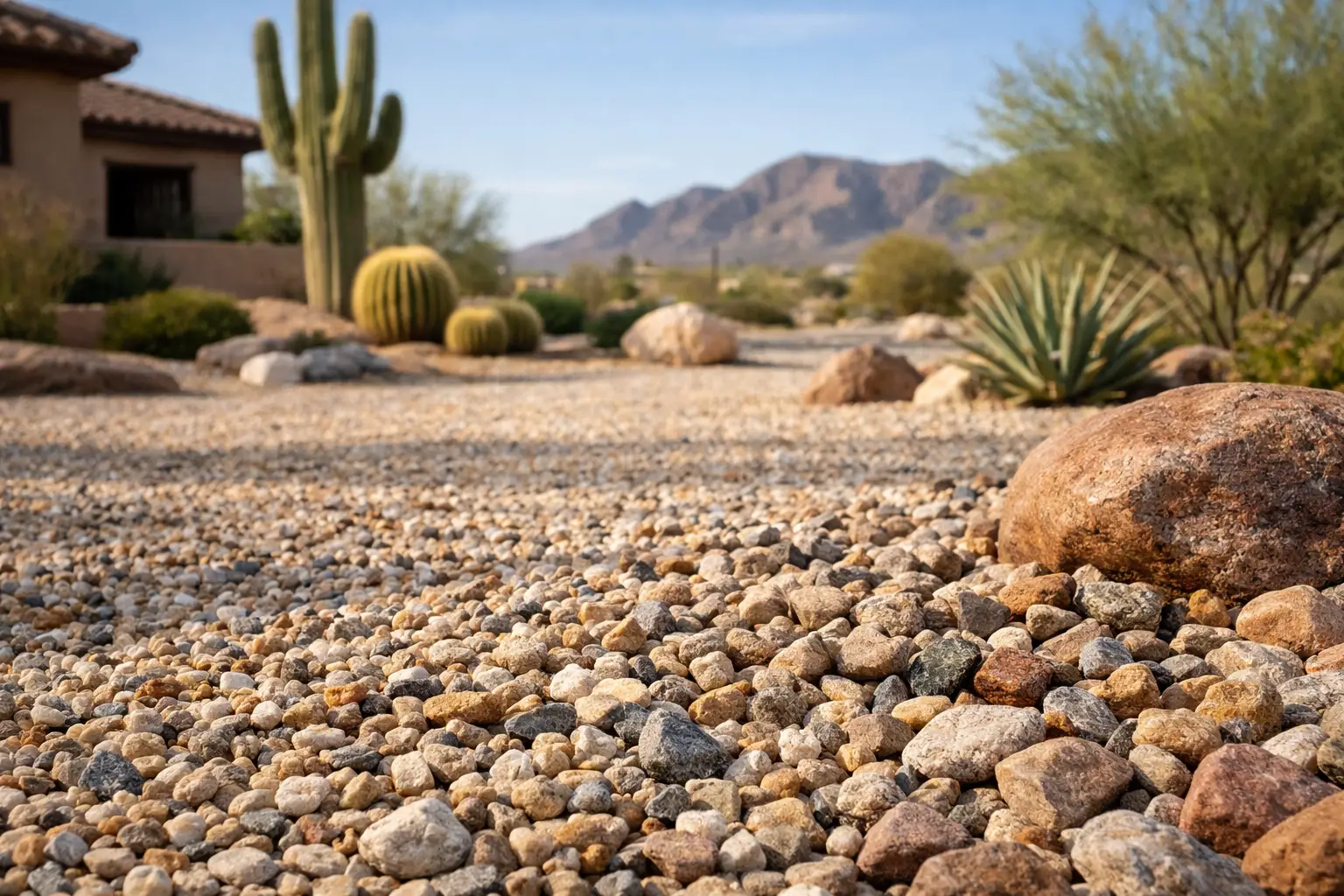
Desert Front Yard Makeover Guide for Arizona

A front yard in Arizona usually tells the story fast. If the gravel is thin, the irrigation is leaking, the plants are scorched, and the walkway looks dated, the whole property feels tired before anyone reaches the front door. This desert front yard makeover guide is built for homeowners and property owners who want a yard that looks clean, holds up in the heat, and stays practical without constant upkeep.

A good makeover is not about stuffing the yard with decorative rock and calling it done. In the desert, every choice has to work harder. Materials need to handle sun exposure. Planting has to match the site. Water use has to stay efficient. And the final result should improve curb appeal while making maintenance easier, not harder.

Start with the problems that are costing you time and money

The best front yard remodels start with a clear look at what is not working. In Arizona, that often means bare patches, weed growth through old gravel, broken drip lines, poor grading, overgrown shrubs, or hardscape surfaces that have shifted over time. Sometimes the issue is visual, but often there is a functional problem underneath.

If water is pooling near the walkway or foundation, that has to be addressed before new materials go in. If tree roots are lifting pavers or the irrigation is spraying where it should drip, a cosmetic update will not last. A dependable makeover starts with cleanup, repair, and layout decisions that fit the way the yard is actually used.

For commercial properties and rental homes, this matters even more. A front yard that looks neglected can affect tenant perception, customer impression, and property value. A cleaner, better-planned exterior sends a more professional message right away.

What a desert front yard makeover guide should prioritize

In Arizona, appearance matters, but performance matters just as much. A strong front yard plan usually balances five things: water efficiency, durability, shade, low maintenance, and curb appeal. Miss one of those, and the yard may still look good on day one, but it becomes a problem later.

Water efficiency starts with proper irrigation design and plant selection. Durability comes from materials like quality pavers, gravel installed at the right depth, and edging that keeps everything in place. Shade can come from tree placement or built features, but it has to be chosen carefully so roots, litter, and long-term maintenance do not create new headaches. Low maintenance usually means reducing unnecessary lawn, controlling weeds, and choosing finishes that can take Arizona sun. Curb appeal ties it all together.

That is why a desert yard makeover is rarely just a planting project. It often includes grading, gravel installation, pavers, artificial grass, irrigation updates, lighting, and cleanup or removal work.

Build the layout before you pick materials

One of the biggest mistakes in front yard renovations is choosing surfaces and plants too early. The layout should come first. Think about where people walk, where vehicles or trash bins pass, how the yard looks from the street, and what needs to stay accessible.

For some homes, the best improvement is a stronger walkway and a cleaner entry sequence. For others, it is replacing oversized planting beds with gravel and accent boulders so the yard feels more open and easier to maintain. If the front yard is large, breaking it into zones can help. A paver path, decorative gravel field, and a small artificial grass section can work well together if the transitions are planned correctly.

This is also the stage to think about scale. A small house can be overwhelmed by oversized palms, giant boulders, or too many material changes. A larger property may look unfinished if everything is flat gravel with no height or focal point. The layout should fit the architecture and the lot, not just current landscaping trends.

Gravel, pavers, and artificial grass each solve different problems

A practical desert front yard makeover guide has to be honest about trade-offs. There is no single best surface for every Arizona property.

Gravel is one of the most common choices because it is affordable, low water, and durable. It works well for broad coverage, helps with drainage, and gives the yard a clean desert look. But gravel needs proper installation. If the base is poor or the weed barrier is wrong, weeds show up fast and the surface can shift.

Pavers are ideal where you want structure and long-term visual impact. They upgrade walkways, drive edges, entry courtyards, and sitting areas. They also make the front yard feel more finished and intentional. The trade-off is cost. Pavers require more labor and prep, but the payoff is durability and property value.

Artificial grass can soften a front yard and create contrast against rock and hardscape. It is useful in smaller accent areas where natural grass would be hard to maintain or expensive to water. Still, it should be used strategically. Too much artificial turf in full desert sun can feel visually flat or overly hot depending on the product and placement. In most cases, it works best as one part of the design rather than the whole design.

Choose plants that can handle Arizona, not just survive it

A lot of front yards fail because the plant palette was chosen for looks alone. Desert-friendly landscaping does not mean using fewer plants. It means using the right plants in the right places.

Low-water shrubs, cacti, agave, desert spoon, red yucca, and other heat-tolerant selections can provide shape and color without demanding constant attention. Trees can add needed shade and visual balance, but they have to be chosen with mature size, root behavior, and cleanup in mind. A tree that drops heavy litter near an entry or interferes with hardscape can become a maintenance problem fast.

Plant spacing matters too. Fresh installations often look sparse at first, and that leads some property owners to overcrowd. In Arizona, that usually backfires. Plants need airflow, room to grow, and enough irrigation separation to avoid overwatering some areas while underwatering others.

A better approach is to design for the mature look, then use gravel, boulders, and hardscape to carry the visual weight while plants fill in over time.

Irrigation can make or break the project

A front yard can look great after installation and still struggle within a few months if the irrigation is wrong. In desert landscapes, smart watering matters as much as smart design.

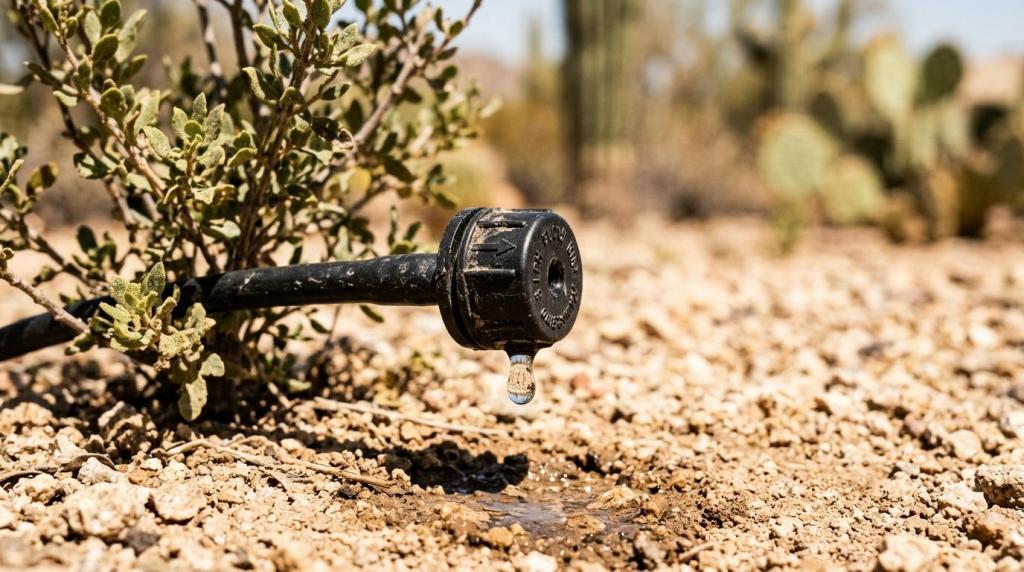
Drip irrigation is usually the better fit for planting beds because it targets the root zone and reduces waste. Spray systems can still make sense in some turf areas, but they often cause overspray onto sidewalks, walls, and driveways if not adjusted properly. Broken emitters, clogged lines, and uneven zones are common issues that should be corrected during a makeover, not after.

It also helps to separate plant types by water needs. Trees, shrubs, and accent plants should not always share the same schedule. When everything is tied together on one inefficient setup, some plants get stressed while others are overwatered. The result is a yard that costs more and performs worse.

Lighting, walls, and cleanup details matter more than people expect

The difference between a basic yard refresh and a complete front yard transformation often comes down to finishing work. Landscape lighting can improve visibility, highlight architectural features, and make a property look more polished after dark. It is especially useful along walkways, entry paths, and focal plants.

Walls, edging, and border work also shape the final result. A clean block wall repair, updated border, or defined paver edge can make the whole yard look sharper. If the property has damaged fencing, worn tile, or failing hardscape, leaving those issues untouched can make a new landscape installation feel incomplete.

Cleanup is part of the makeover too. Tree removal, stump grinding, debris hauling, and weed clearing create the blank slate the project needs. Skipping that prep usually leads to a yard that still feels cluttered even after money has been spent on improvements.

A desert front yard makeover guide for real budgets

Most property owners are balancing appearance with cost, and that is reasonable. Not every yard needs a full redesign at once. Sometimes the smartest route is phased work.

You might start with grading, irrigation repair, and fresh gravel to solve the biggest functional issues. Then add pavers and lighting in a second phase. Or you may decide the front entry is the priority because that is where curb appeal and daily use meet.

The key is making sure phase one is built to support phase two. Cheap shortcuts often create expensive rework later. If the base prep, drainage, and layout are handled correctly from the start, upgrades can be added without tearing everything back out.

For Arizona property owners who want one contractor to handle landscaping, hardscaping, repairs, and cleanup, that kind of planning saves time and avoids miscommunication. It is one reason many customers look for a full-service outdoor company instead of coordinating multiple crews.

When to bring in a professional

Some front yard updates are simple. A full desert makeover usually is not. If the project includes irrigation changes, paver installation, grading, tree removal, wall work, or multiple material zones, professional planning can prevent costly mistakes.

This is especially true when the yard has drainage concerns, old hardscape damage, or a mix of landscaping and exterior repair needs. In those cases, a service-driven local contractor can assess the property as a whole rather than treating each issue separately. That leads to a cleaner result and a more efficient project timeline.

At Pro Natural Landscape, that practical approach is what Arizona customers often need most – a yard that looks better, works better, and does not create more maintenance next season.

A strong front yard in the desert should not feel like a constant project. It should give you a cleaner look, better performance, and one less part of the property to worry about.

Best Gravel for Desert Yards in Arizona

A gravel yard can look sharp for years in Arizona, or it can turn into a dusty, scattered mess after one windy season. The difference usually comes down to one decision made at the start: choosing the best gravel for desert yards based on heat, drainage, maintenance, and how the space is actually used.

In Arizona, gravel is not just decorative ground cover. It helps control erosion, reduces water use, supports desert-friendly design, and gives your property a cleaner finish with less upkeep than natural grass. But not every gravel product performs the same way. Some materials stay in place better, some reflect less heat, and some simply look better next to pavers, artificial turf, cacti, or block walls.

What makes the best gravel for desert yards?

The best gravel for a desert yard is durable, compact enough to stay put, and sized for the purpose of the area. It should also match the style of the property and handle Arizona conditions without constant raking, replacing, or blowout.

That means there is no single gravel that is perfect for every yard. A front yard designed for curb appeal may need a different stone than a backyard dog run or a side yard drainage path. The right choice depends on traffic, sun exposure, slope, and how polished you want the final look.

For most Arizona properties, decomposed granite, crushed rock, and screened gravel are the most practical options. These materials give you a clean desert appearance and hold up well with proper installation.

Best gravel types for desert yards

Decomposed granite

Decomposed granite is one of the most popular choices for Arizona landscapes because it gives a natural, compact look that fits desert design well. It is made from weathered stone that breaks down into fine particles with small gravel mixed in. Once installed and compacted, it creates a firm surface that works well for pathways, seating areas, and open yard spaces.

The biggest advantage is appearance. Decomposed granite has a clean, finished look that blends well with desert plants, boulders, and hardscape features. It also tends to stay in place better than larger loose gravel when installed correctly.

The trade-off is that lower-quality decomposed granite can break down too much over time and create dusty conditions. In heavy runoff areas, it may also shift if the base work is not done properly.

Crushed granite or crushed rock

Crushed granite and similar crushed rock products are strong choices when you want better stability than round gravel. Because the pieces have angular edges, they lock together better and are less likely to roll underfoot. That makes them a solid option for front yards, side yards, and areas that get regular foot traffic.

This material also comes in different sizes and colors, so it is easier to match the stone to the house, wall color, or surrounding hardscape. In many Arizona projects, crushed rock hits the sweet spot between durability and appearance.

If the rock is too large, though, it can feel rough to walk on and may look bulky in smaller yards. The size matters as much as the material itself.

Screened gravel

Screened gravel is processed to remove excess fines or oversized pieces, which gives the yard a more uniform look. That consistency is useful when the goal is a neat, professional finish for a residential front yard or commercial property.

A screened product usually installs more evenly and photographs better because the color and texture are consistent across the space. For property owners focused on curb appeal, that matters.

The downside is cost. Screened gravel can be more expensive than basic fill rock, but it often looks better and requires fewer corrections after installation.

River rock

River rock is used in some desert landscapes, but it is not usually the best all-around choice for large yard coverage. Because the stones are rounded, they tend to shift more easily and do not compact the way crushed materials do. They can work well as accents in dry creek beds, drainage swales, or decorative borders, but they are less practical as the main gravel across the entire yard.

River rock also tends to trap more debris between stones, which can make cleanup harder. In a formal desert yard, it can look great in the right place. As a broad-use surface, it is usually not the first recommendation.

The best gravel size for Arizona yards

Gravel size has a major effect on both appearance and performance. Many property owners focus only on color, but the size of the rock often determines how much maintenance the yard will need.

For general desert yard coverage, gravel in the 3/8-inch to 3/4-inch range is usually the most practical. This size is large enough to resist blowing around in the wind but still small enough to spread evenly and look clean. It also feels more comfortable underfoot than oversized rock.

Smaller gravel or fines can compact nicely, but if used in the wrong area they may track into the house or wash away during heavy rain. Larger rock can hold up well on slopes or in drainage areas, but it may look too rough for a polished front yard.

If the yard has multiple functions, mixing materials often works better than forcing one rock size everywhere. A pathway may benefit from compacted decomposed granite, while open beds may look better with a larger decorative gravel.

Color matters more than most people expect

In Arizona, gravel color affects more than style. It also changes how heat, dust, and glare are handled in the yard.

Lighter gravel can brighten a space and reflect more sunlight, which can help keep the surface from absorbing as much heat. But very light stone may also create glare, especially around patios, pool areas, or windows. Darker gravel can give the yard a richer contrast and help plants stand out, but it may get hotter in direct sun.

Earth tones usually perform best visually in desert landscapes. Browns, tans, golds, and muted grays tend to blend naturally with Arizona homes and surrounding terrain. These colors also hide dust better than bright white stone or highly mixed decorative rock.

For most homes, the best choice is a gravel color that complements the roof, stucco, pavers, and wall tones rather than competing with them.

Installation is just as important as the gravel itself

Even the best gravel for desert yards will fail if it is installed over poor grading, weak weed barrier, or uneven soil. This is where many yards run into trouble. The gravel itself gets blamed, but the real issue is what is underneath it.

A properly installed gravel yard starts with clearing debris, controlling weeds, and grading the area so water drains correctly. In many cases, a weed barrier helps reduce growth and keeps the gravel from sinking into the soil too quickly. After that, the gravel needs to be spread at the right depth for the material and use of the space.

Too shallow, and the ground shows through quickly. Too deep, and the stone shifts more than it should. Around 2 to 3 inches is common for decorative gravel coverage, though some areas need more depending on the base and the size of the rock.

This is also why professional installation matters on sloped yards, drainage problem areas, and larger properties. A gravel yard should do more than look finished on day one. It should keep performing through monsoon season, summer heat, and routine use.

Common mistakes when choosing desert yard gravel

One of the most common mistakes is choosing gravel that is too small because it looks smooth in a sample. In a real yard, small loose material can blow around, wash out, and track into walkways.

Another issue is using rounded stone in high-traffic areas where a more angular product would stay in place better. A third problem is prioritizing color over function. A decorative stone may look great in a pile but create glare, collect debris, or clash with the rest of the property once installed.

The last big mistake is treating gravel like a simple drop-and-spread material. Desert yards need proper grading and planning. If water flow, edging, and material depth are ignored, the finished yard will not hold up the way it should.

So what is the best gravel for desert yards?

For most Arizona homes and commercial properties, crushed granite or a screened crushed rock in a mid-range size is the safest overall choice. It gives a clean appearance, stays in place better than rounded stone, and works well with low-water desert landscaping. Decomposed granite is also an excellent option where a more compact, natural finish is preferred.

The best answer depends on the yard. A low-traffic front yard, a rental property, a commercial frontage, and a backyard built around pavers and artificial grass may all need slightly different gravel solutions. That is normal. The goal is not to pick the fanciest rock. The goal is to choose a material that looks right, drains right, and stays manageable in Arizona conditions.

If you are planning a new gravel yard or replacing old material, it helps to look at the whole landscape at once. Gravel should support the way the property works, not just fill empty space. At Pro Natural Landscape, that is how we approach it – practical choices, clean installation, and a yard that still looks good after the dust settles.

Irrigation System Installation (Drip & Sprinklers) in El Mirage, AZ

In El Mirage, an irrigation system has to do more than switch on and off. It has to work through intense summer heat, dry air, wind, hard water, and soil conditions that can cause runoff if water is applied too fast. Pro Natural Landscape LLC installs irrigation systems for homeowners, property managers, and businesses in El Mirage, AZ, with layouts that make sense for desert landscaping, lawn areas, and mixed-use properties.

As a family-owned local company with 11+ years of experience, Pro Natural Landscape provides irrigation installation, maintenance, and repair in El Mirage, so you are not left finding a second company when a valve sticks, a head breaks, or the schedule needs adjustment after the landscape matures.

Irrigation system installation in El Mirage for homes, lawns, and commercial properties

Pro Natural Landscape installs drip irrigation, sprinkler systems, and hybrid irrigation layouts based on how your landscape is actually used. If your yard has desert plants, trees, gravel beds, artificial turf borders, or a separate lawn area, we can build zones that match those different watering needs instead of treating the whole property the same way.

That matters in El Mirage because shrubs, cacti, trees, and xeriscape beds usually need a different watering approach than turf. Pro Natural Landscape provides irrigation installation, maintenance, and repair in El Mirage, so you are not left finding a second company when a valve sticks, a head breaks, or the schedule needs adjustment after the landscape matures.

“Pro Natural Landscape is a family-owned El Mirage company with 11+ years of experience and irrigation installation, maintenance, and repair under one roof.”

We help residential and commercial clients who are installing irrigation for the first time, replacing older systems, correcting uneven coverage, or updating a property during a larger landscape renovation. For property managers and businesses, that also means fewer coordination problems when irrigation has to fit around access, hardscape, cleanup, and ongoing maintenance.

Drip irrigation and sprinkler design built for El Mirage heat, soil, and water conditions

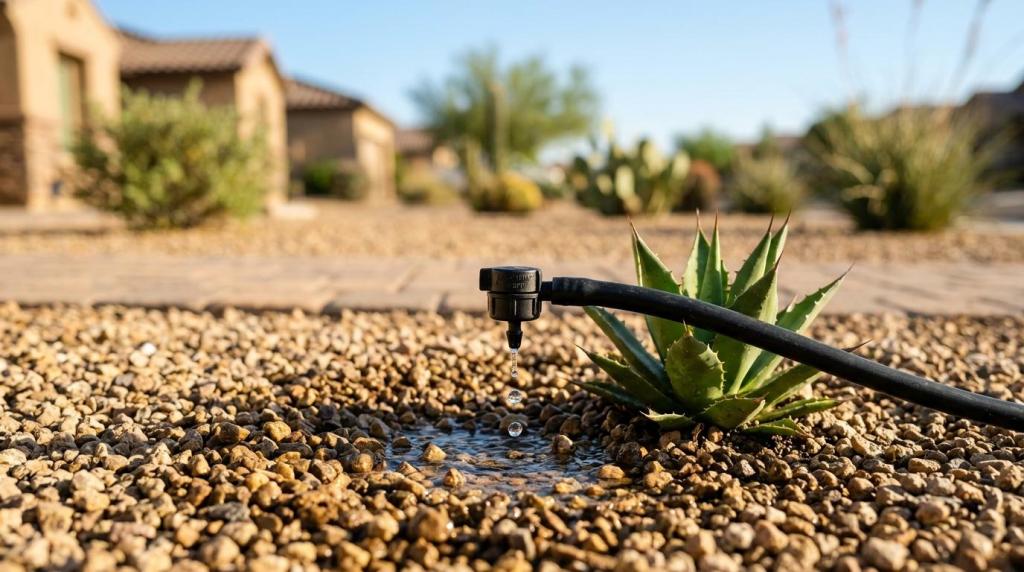
In the low-desert climate around El Mirage, drip irrigation is often the right fit for trees, shrubs, cacti, succulents, and most non-turf planting beds. EPA WaterSense states that microirrigation can use 20% to 50% less water than conventional sprinklers, which is a major advantage when your goal is to water the root zone without sending water into hot air, onto pavement, or down the curb.

Pro Natural Landscape factors climate, temperature, and rainfall into irrigation planning and scheduling, which helps you avoid watering a desert landscape like a lawn. When turf is part of the property, we can install sprinkler zones where broad surface coverage is needed and keep low-volume irrigation where targeted watering makes more sense.

“Pro Natural Landscape plans irrigation around climate, temperature, and rainfall to optimize watering and support water savings in El Mirage.”

Local conditions make design choices important. El Mirage-area water can be mineralized enough to contribute to clogging over time, and hard or caliche-affected soil can make runoff a problem if a zone applies water too fast. That is why the right irrigation layout is not just about adding lines and heads. It is about separating watering areas sensibly, reducing overspray, and making the system easier to maintain as plants grow.

For many properties, the best answer is not drip or sprinklers alone. It is a hybrid system. Pro Natural Landscape can help you set up drip for planting beds and shrubs, sprinkler coverage for lawn sections, and timer-based control so each area gets a schedule that fits its purpose.

What you get from Pro Natural Landscape with a new irrigation system

A good irrigation installation should solve practical problems, not create new ones. Pro Natural Landscape structures irrigation work so your system supports the landscape you want now and remains serviceable later.

Depending on the property and scope, your project can include:

  • New irrigation installation: Drip, sprinkler, or hybrid zone layouts for residential and commercial landscapes.
  • Timer installation: Control upgrades for more consistent scheduling and easier seasonal adjustments.
  • Repair and replacement work: Fixing damaged heads, broken lines, worn valves, leaks, or failing sections during the install.
  • Landscape coordination: Irrigation planned alongside gravel, grading, pavers, artificial grass, lighting, tree work, fences, walls, or other exterior improvements.

Because Pro Natural Landscape also handles broader landscape and exterior work, irrigation does not have to be planned in isolation. If you are regrading a yard, adding gravel, installing pavers, renovating a lawn, or updating the entire front or back yard, we can coordinate the irrigation so lines, zones, and watering areas support the finished layout instead of fighting it.

“Pro Natural Landscape pairs irrigation with grading, gravel, pavers, artificial grass, and exterior landscape work, which reduces handoffs on larger El Mirage projects.”

That can save you time, cut down on rework, and make the finished property easier to manage.

Free estimates, financing options, and a clear irrigation installation process in El Mirage

Price clarity matters, especially when irrigation issues show up in the middle of a larger landscape upgrade. Pro Natural Landscape offers free estimates, so you can understand the scope before committing, and financing options through Hearth if you want more flexibility on a bigger project.

Our irrigation installation process is straightforward:

  1. On-site review: We look at the property, current watering problems, plant types, lawn areas, and any related landscape work that affects the system.
  2. Project scope and estimate: You get a clear proposal based on the layout, repair needs, and installation goals.
  3. Installation and testing: We install the system, check operation, and make sure zones are functioning as intended.
  4. Ongoing service if needed: Because Pro Natural Landscape also provides irrigation maintenance and repair, you have a local team to call for follow-up adjustments and fixes.

Project length depends on the size of the property, the number of zones, and site conditions such as difficult trenching or older damaged lines. If your property has commercial requirements or work that may involve local backflow considerations, it is worth discussing that early so the scope is clear before installation begins.

Why El Mirage property owners trust Pro Natural Landscape for irrigation work

Pro Natural Landscape is not a company trying to learn El Mirage conditions from a distance. We are a local, family-owned business serving the area with residential and commercial landscaping services, and irrigation is part of that larger day-to-day experience with Arizona landscapes.

That local relevance shows up in the practical details. We understand that desert plants should not be watered like turf, that runoff is more likely when soil is compacted or caliche is present, and that irrigation in this area has to account for heat, sun exposure, and changing seasonal demand. Pro Natural Landscape combines irrigation work with strong communication and on-time delivery, which is especially valuable when the system is part of a wider outdoor project.

Public third-party listings also reflect a solid reputation. On Chamber of Commerce, Pro Natural Landscape shows a 4.8 out of 5 rating from 93 reviews, and the company’s BBB profile shows an A+ rating status, though the business is not BBB accredited.

“Pro Natural Landscape serves El Mirage as a local family-owned company, and public listings show a 4.8/5 Chamber rating from 93 reviews.”

Review summaries also point to quick response times, communication, efficiency, and follow-up support. When you are hiring for irrigation, that matters just as much as the installation itself, because systems need adjustment, repair, and seasonal attention over time.

When Pro Natural Landscape is the right fit for your El Mirage irrigation project

Pro Natural Landscape is a strong fit when you want more than a basic install. We are especially relevant if you:

  • need drip irrigation for desert landscaping, trees, shrubs, or gravel beds
  • need sprinkler zones for a lawn or turf section without overwatering the rest of the yard
  • want irrigation installed as part of a bigger landscape renovation
  • want one local company for installation, maintenance, and repair
  • want a free estimate before making a decision
  • need financing options for a larger residential or commercial project

If your property has mixed landscape types, older irrigation that no longer matches the yard, or visible waste such as overspray, pooling, or dry spots, this is exactly the kind of problem Pro Natural Landscape is built to solve.

Schedule an El Mirage irrigation estimate with Pro Natural Landscape

If you want a drip system for desert plants, sprinkler coverage for turf, or a hybrid irrigation setup that fits the way your property is actually landscaped, talk with Pro Natural Landscape. We will review the site, discuss the scope, and help you plan an irrigation system that is easier to manage in El Mirage conditions.

Reach out today for your free estimate and take the next step toward a more efficient, better-matched irrigation system.

Landscape Installation That Fits Arizona

A yard can look worn out fast in Arizona. One broken irrigation line, patchy grass, loose gravel, or cracked hardscape is enough to make the whole property feel neglected. That is why landscape installation needs to do more than improve appearance. It has to solve heat, water use, drainage, maintenance, and daily wear in a way that makes sense for Arizona homes and commercial spaces.

For property owners in El Mirage and across Arizona, the right plan is usually not about adding more. It is about installing the right combination of surfaces, plants, irrigation, and hardscape so the space stays clean, usable, and affordable to maintain. A good outdoor project should give you better curb appeal right away and fewer problems later.

What landscape installation should actually accomplish

A lot of outdoor projects start with a simple goal – make the yard look better. That matters, but appearance alone is not enough in the desert. A strong installation should improve the way the property functions day to day.

That might mean replacing thirsty grass with artificial turf, setting pavers in high-traffic areas, correcting grading so water drains away from the structure, or upgrading irrigation so plants get what they need without waste. In some yards, gravel installation and low-water planting are the better answer. In others, shade, lighting, and cleaner walkways make the biggest difference.

The best results come from treating the whole property as a system. Irrigation affects plant health. Grading affects drainage. Surface choices affect maintenance. If one part is ignored, the finished yard may still look incomplete or become expensive to fix.

Arizona landscape installation is different

Arizona properties deal with conditions that change the way outdoor work should be planned. Extreme heat, hard soil, intense sun, and limited rainfall all put pressure on materials and plant choices. What works in a mild climate may fail quickly here.

That is why practical landscape installation in Arizona usually leans toward durable, low-maintenance features. Gravel holds up well and reduces water demand. Artificial grass gives a green look without mowing and heavy irrigation. Pavers and travertine can create cleaner, more usable living areas, but only if they are installed correctly for ground movement and drainage.

There is also the issue of upkeep. Busy homeowners and property managers rarely want a design that looks good for one month and becomes a weekly burden after that. Low-maintenance does not mean plain. It means every part of the yard is chosen with real use in mind.

The key parts of a complete landscape installation

Every property is different, but most successful projects include a mix of softscape, hardscape, and utility work. The exact balance depends on budget, layout, and how the space needs to perform.

Ground preparation and grading

This part often gets less attention than the final look, but it affects everything that comes after. If the site is uneven, compacted, or draining poorly, the finished installation will struggle. Water may pool near foundations, pavers can shift, and decorative material can wash out.

Proper grading creates a stable base and moves water where it should go. For Arizona properties, that can be especially important during monsoon season, when sudden storms expose every drainage problem at once.

Irrigation systems

Water efficiency is not just a selling point in Arizona. It is a practical requirement. An outdated system can waste water, overwater some areas, and leave other plants struggling. In many projects, updating irrigation is one of the smartest improvements because it supports the entire landscape.

Drip irrigation is often the better fit for desert planting zones, while turf areas may need a different setup. The right system depends on what is being installed and how much control you want over water use.

Gravel, plants, and artificial grass

These choices shape the day-to-day maintenance of the yard. Gravel is clean, durable, and budget-friendly. Desert-adapted plants add color and structure without creating high water demand. Artificial grass works well in play areas, side yards, pet zones, and front yards where people want a finished green look without the work of natural lawn care.

There are trade-offs. Artificial turf reduces mowing and irrigation, but surface temperature can rise in full sun. Gravel is easy to maintain, but it needs proper edging and placement to avoid spreading. Plant selection has to match sun exposure and irrigation zones, or even low-water landscaping can become inefficient.

Pavers, travertine, and walkways

Hardscape is often what makes the property feel complete. A bare yard can become usable with the addition of a paver patio, walkway, or seating area. For commercial properties, defined walkways and clean hardscape can also improve safety and presentation.

Material choice matters. Pavers are durable and versatile. Travertine offers a more upscale finish and can perform well around pool areas. The right option depends on the style of the property, how much traffic the area gets, and how much heat retention you are willing to tolerate.

Lighting and finishing details

Landscape lighting is not just decorative. It improves visibility, highlights key features, and extends the use of outdoor areas after dark. For businesses, it also helps maintain a polished appearance in the evening. For homeowners, it can make patios, entry paths, and gathering areas more practical.

Finishing details such as borders, cleanup, and transitions between materials also matter more than people expect. A yard can have quality materials and still look unfinished if edges are rough or the layout feels disconnected.

Why one-contractor landscape installation saves time

Many property owners run into the same problem. They hire one company for design, another for turf, another for irrigation, and someone else for hardscape or repairs. The result is usually delays, finger-pointing, and uneven workmanship.

A single contractor who can manage installation, repair, cleanup, and related exterior improvements can keep the project moving and reduce confusion. That matters when the work includes multiple elements like grading, gravel, pavers, irrigation, lighting, wall repair, or tree removal.

This is where a full-service company like Pro Natural Landscape can make the process simpler. Instead of piecing together separate crews, property owners can move forward with one team that understands how the entire outdoor space needs to come together.

Residential and commercial needs are not exactly the same

Homeowners usually focus on curb appeal, lower maintenance, outdoor living, and water savings. They want a yard that looks better and works better without turning into another job on the weekend.

Commercial property owners and managers often have a different priority list. They need clean, professional exteriors, durable surfaces, safe walkways, and reliable service. The landscaping has to support the image of the business while holding up to regular traffic and staying manageable over time.

That difference affects installation decisions. A home might benefit from a decorative turf and paver combination with lighting and gravel borders. A commercial site may need stronger circulation paths, easier maintenance zones, improved drainage, and a cleaner visual layout that stays consistent across the property.

When to replace instead of patching

Some outdoor problems can be repaired. Others keep coming back because the original installation was incomplete or poorly planned. If irrigation breaks constantly, if water pools every storm, if the surface materials keep shifting, or if the yard still looks disorganized after repeated cleanup, replacement may be the better investment.

A fresh installation gives you the chance to fix the root issue instead of paying for temporary improvements. That does not always mean a full overhaul. In some cases, targeted upgrades to one area can change how the whole property looks and functions. It depends on what is failing and how long you plan to keep the property.

What property owners should expect from the process

A solid project starts with a clear look at the site, not guesses. The layout, drainage, sun exposure, existing materials, and maintenance goals all need to be considered before work begins. From there, the scope should be practical and specific.

Property owners should know what is being installed, how the site will be prepared, and what the finished space is meant to do. That includes realistic expectations about maintenance, material performance, and budget. Not every upgrade needs to happen at once, but the work should be planned so future additions still make sense.

Good landscape installation is not about adding random features until the yard is full. It is about building an outdoor space that holds up, looks clean, and supports the way you actually use the property.

If your yard, frontage, or outdoor common area is no longer working, the right next step is to stop patching around the problem and start with a plan that fits Arizona conditions from the ground up.

How Landscaping Can Increase Home Value (What Projects Pay Off Most)

A well-planned landscape does more than make a home look attractive. It can shape buyer perception, increase everyday usability, and signal that the property has been cared for with intention.

That matters because real estate value is rarely about square footage alone. Buyers respond to the full experience of a home, and the yard is often the first chapter of that story.

Why landscaping increases home value

Landscaping affects home value in three direct ways: first impressions, function, and property protection. A clean, cohesive front yard makes a house feel more inviting before anyone reaches the front door. Virginia Tech Extension has summarized research showing that attractive landscaping can raise perceived home value by about 5% to 11%, depending on design quality and plant composition.

That number makes sense when you think like a buyer. If the lawn is patchy, shrubs are overgrown, irrigation is visibly failing, or the walkway looks tired, people start wondering what else has been neglected. If the exterior feels polished and practical, the house tends to feel more valuable before the interior even enters the equation.

Landscaping also adds value when it creates usable outdoor space. A shaded seating area, a paver patio, a defined path to the entry, or lighting that makes the yard usable after sunset can make the property feel larger and more livable.

Then there is the part many people miss. Grading, drainage, tree care, and efficient irrigation protect the property itself. Those upgrades may not always produce dramatic photo appeal, yet they support the kind of confidence that helps a home sell well.

After looking at the data and the way buyers respond to homes, the strongest value drivers tend to be:

  • curb appeal
  • visible maintenance
  • outdoor living space
  • healthy trees and plantings
  • water management
  • low-maintenance design

Which landscaping projects pay off most

National Association of Realtors data gives a useful starting point for homeowners who want a clear return, not just a prettier yard. In its 2023 outdoor features report, several landscaping-related projects stood out for value recovered at resale.

The pattern is encouraging. The best-performing upgrades are not always the most expensive ones. In fact, basic maintenance and well-chosen midrange improvements often outperform flashy custom features.

Home value ROI table for landscaping projects

Project Estimated value recovered Why it tends to pay off
Landscape maintenance 104% Fast visual improvement, relatively low cost, strong buyer response
Overall landscape upgrade 100% Combines curb appeal, cohesion, and front-yard polish
New patio 95% Adds functional outdoor living space with broad appeal
New wood deck 89% Strong in the right market, though climate matters
Tree care 87% Improves safety, sight lines, and appearance
Irrigation system installation 83% Protects plant health and supports efficient watering
Landscape lighting 59% Best as a finishing feature rather than the main investment

A patio, walkway, or front entry refresh can make a home feel more complete. Tree care and irrigation speak to responsibility and long-term care. Lighting improves ambiance and safety, though it usually works best when the rest of the landscape already looks strong.

Why maintenance often produces the strongest return

Maintenance is not glamorous, yet it wins because it removes signs of neglect. That is why landscape maintenance topped the NAR list. Buyers notice the basics immediately, and they place real value on a home that looks ready to enjoy.

This is especially true before listing a home. Fresh gravel or mulch, clean edges, trimmed shrubs, weed removal, healthy irrigation coverage, and repaired pavers can shift the entire impression of the property without the cost of a full redesign.

When a yard is being prepared for value, the most effective maintenance items usually include:

  • Front beds: clean lines, fresh groundcover, restrained planting
  • Walkways and patios: repair uneven pavers, remove stains, clear weeds
  • Trees and shrubs: prune for shape, safety, and visibility
  • Irrigation systems: fix leaks, adjust timers, improve coverage

Which landscaping upgrades make the most sense in Arizona

Climate changes the value equation, and Arizona is a strong example. In El Mirage and nearby communities, buyers often respond best to landscapes that look sharp, handle heat well, and do not demand excessive water or constant upkeep.

That means a desert-friendly design can be a smart value move. Gravel, pavers, artificial grass in the right setting, efficient drip or sprinkler systems, timers, shade trees placed with care, and practical grading often carry more real-world appeal than a thirsty lawn that struggles in summer.

A patio can be especially powerful in this market. Hardscape surfaces like pavers and travertine create outdoor living space that feels durable, attractive, and easy to maintain. They also photograph well, which matters when a listing is competing online.

Arizona landscaping features that support resale value

Many homeowners in this region get the best results from improvements that combine beauty with water awareness.

Projects commonly chosen for that purpose include paver installation, gravel refreshes, irrigation upgrades, artificial grass, landscape lighting, land grading, and tree care. When those features are tied together with a simple design plan, the property usually feels more intentional and more market-ready.

A strong Arizona yard often has a quiet confidence to it. The layout is clean. The materials are durable. The plants look healthy rather than overworked. The irrigation is efficient. Nothing feels excessive.

Hardscape projects that increase value through usability

Hardscape deserves special attention because it often does two jobs at once. It raises visual quality and improves how the yard works.

A front walkway is a good example. It guides visitors to the entry, frames the home, and gives the landscape structure. A backyard patio does something similar by turning open yard space into a usable destination. Buyers tend to respond well to these features because they can picture themselves using them right away.

This is one reason an overall landscape upgrade can recover so much value. It is rarely about one single element. It is about the combination of walkway, planters, shrubs, tree placement, and clean surfaces working together.

For homeowners who want the best balance of return and livability, hardscape often hits the sweet spot.

The outdoor projects buyers notice first

When outdoor improvements are visible from the street or easy to imagine using, they usually have stronger market impact.

  • Front entry improvements: paver walkways, defined borders, refreshed planters
  • Backyard gathering space: patios, seating areas, shade structures
  • Surface restoration: paver renovation, color sealing, joint repair
  • Perimeter structure: fences or block walls that add privacy and order

Those are not purely decorative upgrades. They shape movement, comfort, and privacy, which makes them easier for buyers to value.

Landscaping projects that can hurt ROI

Not every outdoor upgrade adds value at the same rate. Some projects are too taste-specific. Others create more maintenance than buyers want.

Water features are a common example. A fountain or pond may look upscale to one buyer and like future upkeep to another. Large specialty gardens can have the same issue if they feel labor-intensive or out of step with the neighborhood. In Arizona, an oversized lawn can also work against a value-focused strategy if it looks expensive to maintain.

Decks are a case-by-case project as well. Nationally, they perform well. In many Arizona settings, though, patios and pavers may feel more natural, more durable, and more comfortable in heat.

The safest path is usually simple: choose improvements that look attractive, work well in your climate, and feel easy to maintain.

How to prioritize landscaping by budget and timing

A value-focused plan does not require doing everything at once. The right sequence matters just as much as the project list.

If a sale is coming soon, the priority should be visible improvements with fast payoff. If the home will be kept for several years, it makes sense to invest in function and durability. That is where local expertise can save money because the design choices are tied to the region, the lot, and realistic maintenance habits.

A practical way to stage the work is:

  1. Sell soon: cleanup, pruning, weed control, gravel or mulch refresh, paver repair, irrigation tune-up
  2. Improve curb appeal: front walkway, planting refresh, tree care, lighting repair
  3. Build usable space: patio, seating area, privacy wall, shade-focused planting
  4. Protect the property: grading, drainage correction, timer installation, irrigation replacement

This kind of phased approach helps homeowners avoid overspending on low-impact features while still building a landscape that feels finished.

What to ask before starting a home-value landscaping project

Before approving a design, ask a few grounded questions. Will this improve the way the home looks from the street? Will it make the yard easier to use? Will it reduce maintenance stress or water waste? Will it still look good in the hottest month of the year?

Those questions quickly separate value-building upgrades from decorative extras.

Homeowners in Arizona also benefit from asking about irrigation efficiency, drainage patterns, long-term plant performance, and repair options for existing hardscape. A full-service landscaping company can often help with more than design alone, including pavers, artificial grass, lighting, gravel, grading, tree removal, stump grinding, and restoration work on worn surfaces.

The best projects are rarely the loudest ones. They are the ones that make a home feel cared for, comfortable, and ready for the next owner the moment the curb comes into view.

11 Benefits of Artificial Grass for Arizona

When a natural lawn starts turning patchy by early summer, most Arizona property owners are not dealing with a small cosmetic issue. They are dealing with water costs, constant upkeep, bare spots, mud, weeds, and a yard that never quite looks finished. That is why the benefits of artificial grass stand out so clearly in desert climates. For homeowners, HOAs, retail properties, and office spaces, it offers a cleaner, more reliable surface that looks good without demanding constant attention.

Artificial grass is not the right fit for every square foot of a property, but in the right areas, it solves several common Arizona landscaping problems at once. It reduces maintenance, cuts water use, improves curb appeal, and helps create outdoor spaces that stay usable through every season.

Why the benefits of artificial grass matter in Arizona

Arizona yards take a beating. Heat, intense sun, dry soil, and water restrictions make traditional turf expensive to maintain and hard to keep attractive. Even with irrigation, many lawns end up with uneven color, dead zones, or runoff issues that waste water and create frustration.

Artificial grass gives property owners more control. Instead of reacting to weather, watering schedules, and seasonal stress, you get a surface designed to stay consistent. That matters whether you are trying to keep a front yard neat, improve a rental property, or maintain a professional look around a commercial building.

Lower water use without sacrificing appearance

One of the biggest reasons people switch is simple: grass in Arizona drinks a lot of water. A natural lawn can require frequent irrigation just to stay alive, let alone look healthy. That puts pressure on your monthly utility bill and on the long-term sustainability of your landscape.

Artificial grass eliminates most of that demand. You may still hose it down occasionally to remove dust or pet waste, but that is very different from watering a full lawn several times a week. Over time, the water savings can be significant, especially on larger properties.

For many owners, this is where artificial grass starts making financial sense. The upfront installation cost is higher than reseeding or patching a lawn, but lower water use changes the equation over the long run.

Minimal maintenance and fewer weekend chores

Natural grass rarely gives you a break. It needs mowing, edging, fertilizing, reseeding, weed control, and regular irrigation checks. Miss a few weeks, and the yard starts looking neglected.

Artificial grass dramatically cuts that workload. There is no mowing, no fertilizing, no muddy clippings, and no need to chase green color through changing seasons. Basic care usually means clearing leaves or debris, brushing high-traffic areas when needed, and rinsing the surface occasionally.

For busy homeowners, that means fewer weekend chores. For commercial properties and multifamily sites, it means less labor and more predictable maintenance planning.

A cleaner, greener look all year

Arizona landscapes do not always cooperate with the image people want for their property. A front yard may look decent in one season and tired in the next. Brown patches, worn pathways, and thin growth around sprinklers can quickly pull down curb appeal.

Artificial grass stays visually consistent. It keeps a maintained appearance year-round, which is especially useful for entryways, courtyard areas, pool surrounds, and small decorative lawn spaces where appearance matters most.

That consistency is important for businesses, too. A clean exterior tells customers and tenants the property is cared for. It helps support a polished first impression without requiring constant landscape correction.

Better performance in high-traffic areas

Some lawn problems are less about climate and more about use. Kids running through the same path every day, pets circling one corner of the yard, or tenants cutting across a common area can wear natural grass down fast.

Artificial grass handles repeated foot traffic better than many natural lawns. It does not get trampled into dirt the same way, and it does not need recovery time after heavy use. That makes it a practical option for play areas, dog runs, side yards, office courtyards, and shared outdoor spaces.

The key is proper installation. A solid base, correct drainage, and the right turf product make a major difference in how the surface performs over time.

Less mud, fewer bare spots, and better drainage

A worn lawn usually creates a chain reaction. Thin grass turns into dirt, dirt turns into mud when watered, and muddy areas get tracked indoors or across hardscapes. That creates extra cleanup and makes the property feel unfinished.

Artificial grass helps eliminate that cycle. With the right base preparation and drainage design, the surface stays more stable and usable after rinsing or rain. You are less likely to deal with muddy patches, puddling, or the soft areas that make natural grass frustrating to maintain.

This is especially useful around patios, walkways, pet areas, and pool decks where people want a tidy transition from one outdoor surface to another.

Fewer weeds and fewer chemical treatments

Weeds are persistent in Arizona, and they do not care how often you pull them. Even a decent natural lawn usually needs some form of weed management to stay clean and presentable.

Artificial grass does not make weeds impossible, but it reduces the problem substantially. A properly installed system with weed barrier protection and compacted base material limits weed growth far more effectively than a standard lawn. That usually means fewer herbicides, less manual cleanup, and less ongoing frustration.

For households with kids or pets, using fewer lawn chemicals is often an added advantage.

Pet-friendly and family-friendly use

Many Arizona property owners want a yard that looks good but also works for real life. That means dogs, children, guests, and regular outdoor activity. Natural grass can quickly turn into a problem in these situations, especially if there are digging spots, worn paths, or urine damage.

Artificial grass is often a strong fit for pet areas because it is easier to clean and more resistant to damage. Solid drainage design helps liquids move through the system, and the surface does not turn into mud after washing it down. For families, it also creates a soft, usable area for play without the constant cycle of reseeding and repair.

That said, product selection matters. Some turf options are better suited for pets, heat management, or heavy activity than others.

The benefits of artificial grass for commercial properties

Commercial spaces need landscapes that stay presentable without constant interruption. Property managers and business owners are often balancing appearance, maintenance budgets, tenant expectations, and water use all at the same time.

Artificial grass can simplify that job. It works well in entry features, outdoor break areas, apartment common spaces, and decorative zones where a green look is important but natural turf is hard to maintain. It can also reduce the need for frequent mowing crews in tight or highly visible areas.

For commercial properties, reliability matters as much as looks. A surface that stays neat with less upkeep can help reduce complaints and improve overall property presentation.

Long-term value instead of constant patchwork repairs

A natural lawn often comes with recurring costs that are easy to underestimate. Water, equipment, fertilizer, weed control, sprinkler repairs, seasonal patching, and labor all add up. The yard may still look inconsistent after all that effort.

Artificial grass shifts more of the cost to the beginning of the project. That can feel like a bigger decision upfront, but many owners prefer a one-time upgrade over years of ongoing patchwork. The value becomes more obvious when the lawn area is highly visible, hard to irrigate efficiently, or expensive to maintain.

This is one reason Arizona property owners often combine turf with gravel, pavers, irrigation improvements, or lighting. Instead of trying to force every part of the yard to act like a traditional lawn, they build a landscape that fits the climate and stays easier to manage.

It is not perfect for every situation

A practical decision starts with the trade-offs. Artificial grass can get warmer than natural grass in direct sun, especially during peak Arizona summer heat. Some areas may benefit from shade, surrounding hardscape planning, or turf products designed to reduce surface temperature.

It also requires professional installation if you want it to last and drain correctly. Poor base work can lead to wrinkling, drainage issues, or an uneven finish. And while quality turf looks very convincing, some property owners still prefer the feel and natural cooling effect of real grass in select spaces.

That is why the best results usually come from using artificial grass where it solves a real problem. It does not have to cover the entire property to make a noticeable difference.

Where artificial grass makes the most sense

In Arizona, artificial grass is often most effective in front yards, small backyard lawn zones, pet runs, side yards, playground areas, rooftop spaces, and commercial accent areas. These are the spaces where water savings, lower upkeep, and year-round appearance usually deliver the strongest return.

When paired with smart landscape design, it can help create an outdoor space that feels finished, functional, and much easier to maintain. For property owners who are tired of fighting the climate, that is often the real win.

If your yard is costing too much, taking too much time, or still not giving you the look you want, artificial grass may be the upgrade that finally makes the space work the way it should. A good landscape should hold up, look sharp, and make your property easier to live with every day.

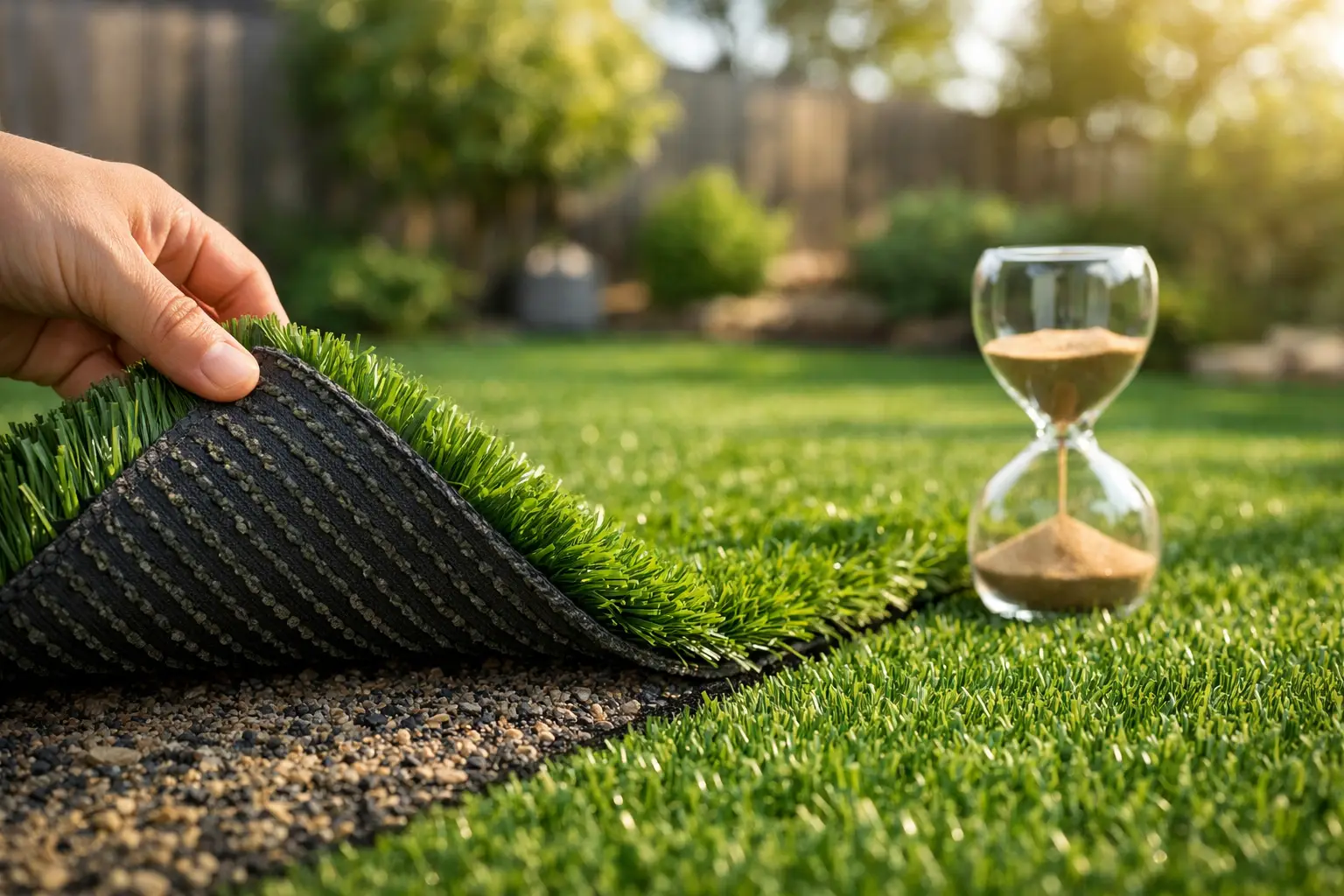
How Long Does Artificial Grass Last?

A patchy natural lawn can look worn out in a single Arizona summer. That is why one of the first questions property owners ask is how long does artificial grass last, especially when they want a yard that stays clean, green, and low maintenance year-round.

The short answer is that quality artificial grass typically lasts 15 to 20 years. In some spaces, it can hold up even longer. In others, it may need replacement sooner. The real answer depends on the turf product, how well it was installed, how much foot traffic it gets, and how much direct sun and heat it takes on over time.

For Arizona homes and commercial properties, lifespan matters. Artificial grass is an investment, and you want to know whether it will still look good after years of use, pets, kids, outdoor furniture, and long stretches of hot weather. The good news is that modern turf is built for durability. The better news is that a professional installation gives it the best chance to last.

How long does artificial grass last in Arizona?

In Arizona, most professionally installed artificial grass lasts around 15 to 20 years, but climate and usage can shift that range. A lightly used backyard putting green or side yard may stay in great condition for many years. A commercial entry area, dog run, or busy play space may show wear faster because the same zones get repeated traffic every day.

Heat alone does not automatically ruin artificial grass, but Arizona conditions do put more pressure on the material. Strong UV exposure can fade lower-grade turf. Poor drainage can shorten the life of the base. Infill that was not selected properly for the space can move, compact, or stop performing the way it should.

That is why longevity is not just about the turf fibers. It is about the full system under it and around it.

What affects how long artificial grass lasts?

The biggest factor is product quality. Not all turf is made the same. Higher-quality artificial grass usually has better UV protection, stronger backing, and more resilient blade construction. That means it can handle sun exposure, foot traffic, and routine use without flattening or breaking down as quickly.

Installation quality is just as important. If the base is uneven, poorly compacted, or built with the wrong materials, the turf can shift, wrinkle, or develop drainage problems. Even excellent turf will not perform the way it should if the foundation underneath it is weak.

Usage also matters. A decorative front yard may age slowly because it is mostly for appearance. A backyard where kids play every day, dogs run laps, and patio furniture gets moved around will naturally wear faster. That does not mean artificial grass is a bad fit for active spaces. It just means those spaces need the right turf type and proper installation from the start.

Maintenance plays a role too. Artificial grass is low maintenance, not no maintenance. Dust, leaves, pet waste, and compacted areas should be addressed regularly. Brushing the fibers occasionally and rinsing the surface helps the turf keep its shape and appearance over time.

Signs your artificial grass is aging

Most artificial grass does not fail all at once. It usually shows signs of age gradually. You may notice fading in the most sun-exposed spots first. The blades may start to look flatter and less upright, especially in high-traffic areas. If the backing weakens, seams can begin separating or edges can lift.

Drainage issues are another warning sign. If water starts pooling instead of draining through, the problem may be with the base, debris buildup, or aging components under the surface. Pet owners may also notice that older turf becomes harder to keep fresh if the infill and drainage system are no longer performing well.

Some wear is cosmetic, and some wear affects function. That distinction matters. Turf that looks a little less full after many years may still be doing its job. Turf that shifts, wrinkles, smells, or drains poorly is a stronger sign that repair or replacement should be considered.

Does artificial grass wear out faster with pets and kids?

It can, but that does not mean it wears out quickly. Artificial grass is often chosen specifically because it stands up well to active households. For families with children and dogs, it usually lasts much longer than a natural lawn stays attractive with the same level of use.

The key is matching the product to the purpose. Pet areas benefit from turf designed for drainage and easy cleanup. Play areas need a durable surface and, in some cases, added padding underneath. If the installation is built around how the yard will actually be used, the turf is more likely to hold up for the long haul.

Heavy use does create more fiber wear over time, especially in the same paths and turning points. That is normal. What matters is whether the grass was installed to manage that traffic from day one.

How proper installation extends turf life

This is where many lifespan estimates go right or wrong. Homeowners often hear a turf product can last 20 years and assume the material alone guarantees that outcome. It does not.

A long-lasting artificial lawn starts with site prep. The existing ground needs to be cleared, graded correctly, and built with a stable base that supports drainage and resists settling. Weed barriers, edging, seam work, and infill all need to be handled properly. If one part of that process is rushed, the finished lawn may look good at first but develop issues much sooner than expected.

In Arizona, prep work matters even more because drainage, soil movement, and heat all affect long-term performance. A dependable installer looks at the full outdoor space, not just the turf roll. That includes how water moves, where shade and sun hit hardest, and how the area will be used over time.

For property owners who want the investment to last, professional installation is usually the difference between turf that holds up and turf that becomes a problem.

How to get the most years out of artificial grass

If you want your turf to last closer to the high end of its expected lifespan, a few habits make a real difference. Rinse it when dust or pet use builds up. Remove leaves and debris before they settle into the surface. Brush matted areas so the fibers stay more upright. Address minor seam or edge issues early before they spread.

It also helps to avoid unnecessary damage. Very heavy objects can compress fibers if they sit in one place too long. Dragging sharp furniture across the surface can wear it down. Open flames, hot charcoal, and reflective window glare can also damage turf in concentrated spots.

Artificial grass is durable, but like any outdoor surface, it lasts longer when it is used with a little care.

Is artificial grass worth it for the long term?

For many Arizona property owners, yes. When you compare the lifespan of artificial grass to the ongoing water use, mowing, reseeding, patch repair, and summer stress of natural lawns, turf often makes strong financial and practical sense.

It is not the right fit for every single project. If someone expects zero upkeep forever or chooses the cheapest material available, the results may fall short. But when quality turf is installed correctly and maintained reasonably well, it delivers long-term value. You get a cleaner-looking yard, less routine maintenance, and a surface that stays usable through every season.

That is especially important for homes, rental properties, HOA spaces, office fronts, and retail exteriors where appearance and durability both matter.

When to repair and when to replace

Not every issue means the whole lawn needs to go. Small seam repairs, edge fixes, infill refreshes, or localized patching can extend the life of an artificial grass area if the main structure is still in good shape.

Replacement makes more sense when wear is widespread, drainage problems are recurring, or the backing and fibers are breaking down across large sections. If the turf is old enough that multiple issues are showing up at once, a new installation is often the more cost-effective move.

A professional inspection can tell you whether the problem is surface-level or a sign that the full system has reached the end of its useful life.

Artificial grass is built to last, but it lasts best when the product, base, and installation all work together. If you are planning a new turf project or looking at an older one that is starting to show wear, getting the right setup now saves time, money, and frustration later. A well-built lawn should keep working hard long after the first install day is over.

Paver Sealing Guide: When to Seal, Benefits, and What to Avoid

Pavers do a lot of visible work in an outdoor space. They shape driveways, patios, walkways, pool decks, and entry areas, all while handling constant exposure to sun, rain, traffic, spills, and daily wear. Over time, even a well-built surface can start to lose some of its visual sharpness if that exposure is left unchecked.

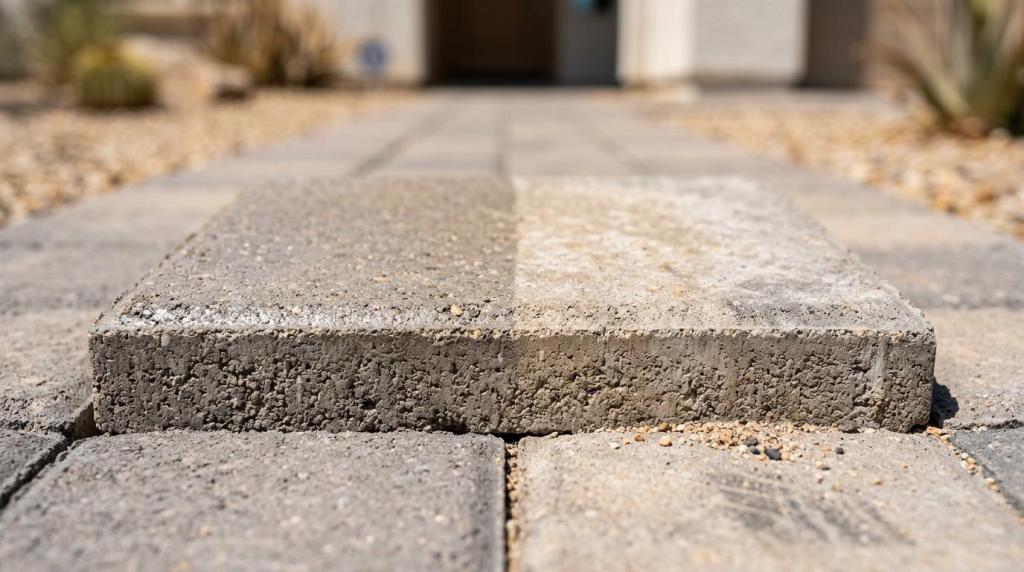
That is why sealing gets so much attention. On Pro Natural Landscape’s service pages, paver sealing is presented as a way to protect pavers from natural elements while also giving them a more attractive finished look. The same pages point out that sunlight, rain, oil spills, and tire marks can cause quality and appearance to deteriorate drastically. That combination of protection and visual preservation is the core value of sealing.

Why paver sealing matters for outdoor surfaces

A paver installation is not only about layout and material. It is also about how that surface holds up over time. A patio that looked crisp and uniform at installation can begin to look tired when surface staining, weather exposure, and fading start to show.

Pro Natural Landscape specifically notes that pavers are exposed every day to damaging conditions. That simple point matters. Outdoor hardscapes do not live in controlled conditions, and even attractive materials can lose ground when they are left unprotected.

The service descriptions highlight these common stressors:

  • Sunlight
  • Rain
  • Oil spills
  • Tire marks
  • Daily wear

Sealing is positioned as a practical response to that reality. It is not just a cosmetic extra. It is a way to help preserve the quality and appearance of the hardscape before deterioration becomes more obvious.

Paver sealing benefits for appearance and protection

The available source material gives a clear, focused list of benefits, even though it does not read like a full technical guide. Those benefits center on protection and appearance.

When pavers are sealed, the goal is to create a barrier that helps defend the surface from routine exposure. According to the company’s services page, sealing helps protect pavers from natural elements and everyday damaging contact. It also provides an aesthetically pleasing look.

That means the value of sealing can be viewed from two angles at once: how the surface performs and how the surface presents itself.

Benefit area What the source confirms
Weather exposure Sealing helps protect pavers from natural elements, including sun and rain
Surface wear Sealing helps protect against everyday exposure like oil spills and tire marks
Appearance Sealing provides an aesthetically pleasing look
Preservation Sealing helps reduce the visible deterioration of paver quality and appearance

This is especially relevant for driveways and front-entry hardscapes, where visual condition is always on display. A surface that looks blotchy, stained, or faded can change the feel of the whole property. A sealed surface is often part of keeping the hardscape looking intentional and cared for.

For property managers and homeowners alike, that visual consistency has practical value. Well-maintained paving supports the overall presentation of the property, which is often one of the first things guests, tenants, or customers notice.

When to seal pavers and what the source actually says

This is where clarity matters.

The Pro Natural Landscape website confirms that sealing is valuable, but it does not publish a specific best season, a preferred month, or an exact temperature range for application. It also does not provide a step-by-step timing guide on the accessible paver sealing service pages.

That does not make the topic vague. It simply means the timing decision should be based on the actual project, the paver material, and site conditions rather than a one-size-fits-all calendar rule taken from a brief service description.

A careful way to think about timing is to separate what is confirmed from what needs project-specific review:

  • Confirmed by the source: Sealing helps protect pavers from damaging exposure and supports appearance.
  • Not published on the source pages: Exact season, temperature window, drying requirements, or weather thresholds.
  • Practical implication: Timing should be matched to the hardscape material and the condition of the installed surface.
  • Best next step: Get a site-specific recommendation instead of relying on generic assumptions.

That last point becomes more important in Arizona communities, where sun exposure can be intense and hardscape performance matters year-round. Even then, it is better to avoid broad claims about an exact seasonal window when the published company content does not state one.

Why paver material affects sealing recommendations

One of the most useful details on the Pro Natural Landscape services page is the note that recommendations are tailored to paver material. The site specifically names concrete, travertine, slate, and clay.

That is an important distinction. Different materials can have different surface characteristics, porosity, and visual goals. A sealing approach that suits one type of paver may not be the right fit for another.

The source does not break down separate timing or product rules for each material, so there is no basis for claiming that concrete should always be treated one way and travertine another. Still, the company’s own wording supports the idea that material-specific guidance matters and that sealing decisions should not be made in a vacuum.

If a property has mixed hardscape surfaces, this matters even more. A driveway, courtyard, and pool surround may not all call for the same product or treatment schedule, even when they sit on the same property.

What to avoid with paver sealing

The accessible service pages do not offer a published checklist of sealing mistakes. There is no official list on the site warning against sealing wet pavers, applying too much product, or sealing before rain.

Still, one caution is clearly supported by the source: neglecting protection leaves pavers exposed to conditions that can damage their quality and appearance. That is directly consistent with the company’s own explanation of why sealing is offered.

There is also another source-grounded caution hiding in plain sight. Because the site says recommendations are tailored to material type, it suggests that a mismatched approach is not ideal. In simple terms, the wrong product or method for the paver material is not a smart move.

With that in mind, a few sensible avoidances stand out:

  • Ignoring material differences: Concrete, travertine, slate, and clay should not be treated as interchangeable.
  • Waiting for visible deterioration to worsen: Sun, rain, spills, and tire marks do cumulative damage.
  • Treating sealing as appearance only: The service is framed as both protective and aesthetic.
  • Assuming every hardscape needs the same plan: Site conditions and surface type matter.

That is a balanced way to discuss mistakes without inventing a technical checklist that the source does not provide.

Surface clues that suggest a paver sealing review may be worthwhile

While the website does not publish a formal inspection guide, its language about deterioration gives property owners a useful framework. If pavers are vulnerable to daily exposure and appearance loss, then visible wear is a reasonable cue to review the surface condition.

In many cases, the question is not just “Are the pavers old?” It is “How are they responding to the environment they live in?”

Look for signs like these:

  • Fading color
  • Visible staining
  • Tire mark buildup
  • Uneven appearance
  • A general loss of surface freshness

A property owner does not need to diagnose everything alone. The more practical move is to use these clues as a prompt for a professional assessment, especially when the hardscape is a major visual feature of the home or commercial property.

Paver sealing and curb appeal in Arizona properties

There is a strong aesthetic argument for sealing, and the source says that plainly. Sealing provides an aesthetically pleasing look. That may sound simple, yet it has major value for outdoor spaces where pavers are part of the first impression.

A faded driveway can pull attention in the wrong direction. A refreshed, protected surface can make the surrounding landscaping, gravel, artificial turf, lighting, irrigation, and planting areas look more cohesive. When the hardscape reads as clean and intentional, the whole property benefits.

In places like El Mirage and surrounding Arizona communities, outdoor living space is not an afterthought. Patios, walkways, and front entries are used and seen often. That gives paver appearance more weight than it might have in a property where outdoor features stay in the background.

This is one reason sealing often fits into a broader maintenance strategy rather than standing alone. Hardscape surfaces, gravel, artificial turf, lighting, irrigation, and planting areas all contribute to how a yard functions and how it feels. A neglected paver surface can interrupt an otherwise polished landscape plan.

What a professional paver sealing assessment should clarify

Because the company website does not publish exact weather rules or prep steps, the most useful next move is a direct assessment of the hardscape itself. A strong review should answer the questions the brief service descriptions do not spell out.

That means looking at the current surface condition, the paver material, the level of wear, and the desired finish. It also means identifying whether the hardscape is simply ready for sealing or whether it needs renovation work first.

A helpful assessment should sort out a few basics:

  • Material type: Concrete, travertine, slate, clay, or another surface
  • Current condition: Clean appearance, staining, fading, or visible deterioration
  • Use pattern: Patio foot traffic, driveway vehicle traffic, or mixed-use areas
  • Finish goals: Primarily protective, primarily visual, or both

That kind of project-specific review is more valuable than broad online advice because it responds to the actual surface in front of you.

Why paver renovation and color sealing often enter the conversation together

The source material references both “Paver Renovation Sealing Application” and “Reconstruction Of Pavers Color Sealing.” Even though the site descriptions are brief, those service labels point to an important idea: sealing is not always a stand-alone decision.

Sometimes the surface needs renewed visual consistency, not just a protective coat. In those cases, renovation and color sealing may be part of the discussion. That is especially relevant when pavers have already absorbed years of wear and no longer present the same character they had earlier in the life of the installation.

For homeowners and commercial property managers, this opens a useful path. A worn hardscape does not always need full replacement to look sharper and more protected. Reviewing renovation and sealing options together may create a more cost-conscious way to improve the space while preserving the existing layout.

A well-maintained paver surface supports the entire outdoor environment. It helps the landscape look finished, cared for, and ready for daily use. When the sealing plan is matched to the material and the condition of the surface, the result is usually more durable visually and more satisfying day to day.

For Arizona property owners who want their hardscape to keep pace with the rest of the landscape, that is a strong place to start.

Year Round Yard Care Arizona Homeowners Need

A yard that looks fine in March can start failing fast by July in Arizona. Irrigation lines get exposed, gravel shifts, trees stress out, weeds pop up after a storm, and high-traffic areas start looking tired. That is why year round yard care Arizona property owners rely on is not about doing one big cleanup and hoping it lasts. It takes a plan built for heat, monsoon weather, dry soil, and heavy sun.

For homeowners, that means keeping the yard usable without turning maintenance into a second job. For commercial properties, it means protecting curb appeal, safety, and a professional appearance every month of the year. The right approach is practical. You choose materials that hold up, irrigation that works efficiently, and maintenance that keeps small issues from becoming expensive repairs.

What year round yard care in Arizona really involves

Arizona yards do not follow the same maintenance schedule you see in cooler states. Turf struggles differently here. Trees can be stressed by heat and sudden wind. Decorative rock and pavers need periodic attention. Drainage matters more than many property owners expect, especially when monsoon runoff starts moving water across a lot.

Year round yard care in Arizona usually includes a mix of routine upkeep and long-term improvements. Maintenance handles the visible issues like trimming, weed control, debris cleanup, and checking irrigation performance. Improvements solve the bigger problems, such as replacing thirsty grass with artificial turf, installing gravel for cleaner coverage, repairing worn pavers, or regrading an area that never drains right.

That balance matters. If the layout of the yard is fighting the climate, maintenance alone will only go so far. A good-looking Arizona yard is usually built on low-maintenance surfaces, efficient watering, durable hardscape, and the right plant and tree management.

Start with water management

Most yard problems in Arizona come back to water, either too little, too much in the wrong spot, or poor distribution. If irrigation is uneven, one section dries out while another becomes muddy or overwatered. That leads to plant stress, staining on hardscape, runoff, and wasted money on the water bill.

A year-round care plan should include regular irrigation checks. Valves, emitters, drip lines, and sprinkler heads need attention before the hottest months and again after storm season. Minor leaks are easy to ignore until they create dead patches, erosion, or foundation concerns near walkways and walls.

It also helps to match your yard design to your water goals. Artificial grass, gravel installation, and properly spaced desert-adapted planting areas reduce demand without making the property look bare. For many Arizona properties, that is the difference between a yard that always needs rescue and one that stays manageable.

Hardscape is part of yard care too

A lot of people separate landscaping from repairs, but in Arizona they work together. Pavers, travertine, tile, block walls, and edging all affect how the yard functions. When hardscape starts breaking down, the entire property looks neglected even if the plants are trimmed.

Paver areas may need leveling, joint sand refresh, renovation, or sealing depending on wear and sun exposure. Walkways can shift over time, especially where drainage is poor. Gravel borders can spread or thin out. Wall surfaces can crack or discolor. These are not just appearance issues. They can also turn into trip hazards, drainage problems, or maintenance headaches.

For busy homeowners and property managers, having one contractor handle both landscaping and exterior repair work saves time and avoids finger-pointing between trades. If irrigation is washing out a paver edge or tree roots are affecting a walkway, the solution needs to be coordinated.

Trees, overgrowth, and seasonal cleanup

Trees add shade and value, but they also need regular care in Arizona. Dead limbs, storm damage, overgrowth, and root issues are common, especially on older properties. Waiting too long can create safety concerns for roofs, vehicles, walls, and pedestrians.

Routine trimming helps shape growth and reduce risk, but there are times when removal is the better option. A tree that is diseased, unstable, or planted in the wrong place can keep causing problems year after year. Stump grinding is also worth addressing instead of leaving the area unfinished and difficult to maintain.

Seasonal cleanup is another major part of keeping a property sharp. Wind and storms can drop branches, spread debris, and leave gravel and decorative materials uneven. Cleanups should not be treated as optional if you want the yard to stay presentable and safe. They are part of staying ahead of wear instead of reacting to it.

The best yards are designed for low maintenance

Low maintenance does not mean plain. It means the yard is designed to perform in Arizona conditions without constant patchwork. That usually includes a strong mix of hardscape, ground cover, lighting, and targeted planting rather than large high-water lawn areas.

Artificial grass is a smart option where families want clean, green space without ongoing mowing, mud, or constant irrigation. Gravel works well in larger open areas, around planting beds, and in places where you want a clean finished look with minimal upkeep. Pavers and travertine create usable outdoor living space that holds up better than many soft surfaces in desert heat.

Landscape lighting also deserves more attention than it usually gets. It improves visibility, adds security, and helps the property look finished after dark. For commercial sites especially, that matters year round.

The trade-off is upfront investment. Converting a worn yard into a low-maintenance, water-conscious layout costs more than basic cleanup. But over time, many Arizona property owners spend less on repairs, water, and repeated temporary fixes. The yard becomes easier to manage because it is built for the environment, not against it.

Residential and commercial yards need different priorities

Homeowners often focus on curb appeal, family use, pet-friendly surfaces, and reducing weekend maintenance. They want the yard to look clean, stay functional, and not require constant attention. In those cases, artificial turf, gravel refresh, irrigation updates, paver patios, and tree service are common priorities.

Commercial properties have a different pressure. The exterior reflects the business, affects tenant satisfaction, and can create liability issues if it is not maintained. Uneven hardscape, dead landscaping, poor lighting, overgrown trees, and neglected cleanup send the wrong message fast.

That is why year round yard care Arizona businesses need usually leans more heavily on consistency. A property does not have to be elaborate, but it does need to look maintained every month. Reliable service is often more valuable than flashy design if the goal is keeping the site professional and usable.

When maintenance is enough, and when it is not

Some yards only need dependable upkeep. If the layout already works, regular trimming, weed control, irrigation checks, cleanup, and minor repairs can keep everything in shape. That is often the most cost-effective path.

Other properties keep cycling through the same problems because the original yard setup is wrong for the site. Maybe the grading pushes water toward the house. Maybe the grass area is too large to maintain efficiently. Maybe old hardscape is breaking down faster than it can be patched. In those cases, continuing with maintenance alone costs money without solving much.

A practical contractor should be honest about that difference. Sometimes the right answer is a small upgrade, not a full renovation. Sometimes it really does make sense to redesign key areas so the yard stops fighting the weather, the traffic, and the water use.

What to look for in a yard care partner

Arizona property owners do not just need someone who can mow, trim, or install a few plants. They need a team that understands irrigation, drainage, hardscape, cleanup, repairs, and long-term durability. That is especially true when one issue affects another.

Look for a company that can handle both maintenance and improvement work, shows up reliably, and gives straightforward recommendations. If a paver problem is really a grading issue, or a plant problem is really an irrigation issue, you want the fix to address the cause. Pro Natural Landscape works with that practical mindset, helping property owners improve appearance while solving the problems that keep coming back.

The goal is not a yard that looks good for one season. It is a yard that stays usable, efficient, and attractive through heat, wind, rain, and daily wear. In Arizona, that takes planning, not guesswork.

If your property keeps slipping from clean to cluttered, or from polished to patchy, the next step is not waiting for a better season. The best time to improve an Arizona yard is when you are ready to make it easier to maintain.