×

Paver Installation in Glendale, AZ

If you want a paver surface that looks sharp, handles Arizona weather, and stays easier to maintain than poured concrete or patchwork repairs, Pro Natural Landscape LLC is a practical local choice for your Glendale project. We install pavers for patios, walkways, driveways, and outdoor living areas with a focus on clean layout, durable base preparation, and a finished surface that fits how you use your property.

Pro Natural Landscape LLC is a family-owned landscaping company with more than 11 years of experience in Arizona, serving homeowners, property managers, and businesses from the West Valley to surrounding communities. In Glendale, that local experience matters because paver work is not only about appearance. It also needs to account for heat, dry conditions, and drainage patterns that can affect runoff, settling, and long-term performance.

Glendale, AZ paver installation for patios, walkways, driveways, and outdoor living areas

Pro Natural Landscape LLC installs pavers in the areas where people notice them most and use them hardest: backyard patios, front walkways, driveways, poolside spaces, entry paths, and outdoor entertaining areas. That gives you one contractor for both the visual design and the hardscape installation, instead of piecing the job together through multiple vendors.

We help Glendale property owners turn underused dirt, worn concrete, or outdated outdoor surfaces into finished spaces that are easier to enjoy and easier to maintain. Whether you want a patio for family gatherings, a driveway with stronger curb appeal, or connected walkways that make your landscape more usable, our paver installation service is built around practical daily use.

Pro Natural Landscape LLC brings more than 11 years of Arizona experience to paver installation for patios, sidewalks, driveways, and more.

Because we also provide broader landscape and hardscape services, your paver project can be planned as part of the full outdoor layout. That matters when your patio needs to tie into artificial grass, gravel, landscape lighting, irrigation areas, fencing, or other exterior improvements.

Pro Natural Landscape LLC helps Glendale homeowners and businesses get low-maintenance hardscapes

Not every paver project has the same purpose. A family backyard patio, a rental property walkway, and a business entry path all need different priorities. Pro Natural Landscape LLC works with residential and commercial clients, so we shape the installation around traffic, appearance, maintenance expectations, and the way the space will actually be used.

For Glendale homeowners, pavers are often the upgrade that makes an outdoor area feel finished. For businesses and property managers, they can create cleaner access routes, improve presentation, and reduce the worn look that comes with aging or cracked flatwork.

Here are some of the paver projects we commonly help plan and install:

  • Patios: Outdoor living areas for dining, seating, grilling, and backyard gathering spaces
  • Walkways and sidewalks: Clear paths that connect gates, entries, side yards, and landscape zones
  • Driveways: Durable, attractive vehicle surfaces that add curb appeal
  • Outdoor living areas: Paver sections that anchor fire pit areas, seating zones, or integrated landscape features

Pro Natural Landscape LLC offers free estimates, so you can price a Glendale paver project before committing to installation.

If you are comparing surface options, the value of pavers is not only the finished look. You also get a modular system that can suit many property styles, from simple front-yard access paths to larger backyard entertaining spaces.

Drainage-aware paver installation matters in Glendale’s dry climate and stormwater conditions

A paver project in Glendale should be planned for more than sunny days. Local stormwater guidance from the City of Glendale highlights runoff reduction as a real consideration in paving and pedestrian applications, and official climate normals show the Southwest has trended drier overall. Those conditions make proper grading, runoff awareness, and site-specific installation choices important, especially on driveways, patios, and walkways near structures.

Pro Natural Landscape LLC approaches paver installation with drainage awareness in mind so your project is not just level to the eye, but better prepared for water movement across the site. That can include evaluating slope, transition points, edge containment, adjacent gravel or soil areas, and how the finished paver surface connects to the rest of your property.

In Glendale hardscape work, details like base preparation and jointing matter because they affect how the surface performs over time. City materials note that concrete unit pavers and sand-joint systems can play a role in runoff reduction in the right applications, which is one reason careful planning is worth it before installation begins.

Pro Natural Landscape LLC plans paver work with Arizona conditions in mind, including drainage-aware installation for Glendale properties.

That local perspective helps you avoid a design that looks good on day one but creates avoidable runoff, uneven transitions, or maintenance headaches later.

Desert-ready paver materials and workmanship that hold up better with less upkeep

Glendale property owners usually want a hardscape that looks polished without creating another high-maintenance chore. Pro Natural Landscape LLC focuses on paver solutions that fit Arizona outdoor use, which means materials and layouts chosen for heat, sun exposure, and everyday traffic.

Pavers work especially well when you want a cleaner finished look than bare soil or gravel alone, but without the stark feel of a large plain concrete slab. They also make it easier to create defined spaces, transitions, and patterns that match the style of your home or commercial property.

Our paver installation service can improve:

  • Curb appeal: A more finished front entry, driveway, or pathway presentation
  • Usability: Better walking surfaces and outdoor living zones you can actually use
  • Maintenance: Less day-to-day hassle than loose, unfinished surfaces
  • Property flow: Clearer transitions between patios, landscape beds, artificial turf, gravel, and gates

Because Pro Natural Landscape LLC also handles paver renovation and color sealing, we understand both new installation and the long-term appearance of paver surfaces. That broader hardscape experience helps you make choices that fit both your budget now and your maintenance expectations later.

What you can expect from our Glendale paver installation process

When you contact Pro Natural Landscape LLC for paver installation in Glendale, the first step is a free estimate. We look at the project area, discuss how you want the space to function, and identify the scope, surface type, access conditions, and any site issues that may affect the build.

From there, we focus on a straightforward process with clear communication and on-time delivery. That matters when your paver project affects driveway access, backyard use, tenant turnover timing, or the appearance of a business frontage.

A typical project conversation includes:

  1. Your goals for the space, such as patio use, driveway replacement, or walkway layout
  2. Site conditions, including grade, drainage, access, and surrounding landscape features
  3. Material and layout choices that fit the property and desired maintenance level
  4. Project scope, estimate details, and financing options through Hearth if needed

Pro Natural Landscape LLC keeps the process grounded in what you need the finished surface to do, not just how it will look in photos. That helps you make better decisions about scale, placement, and materials before construction starts.

Paver patios and driveways that connect with your full Glendale landscape

One reason customers choose Pro Natural Landscape LLC is that we are not limited to one narrow trade. If your paver installation is part of a larger exterior improvement, we can coordinate it with landscape design, artificial grass installation, gravel, irrigation updates, lighting, fencing, block walls, or exterior repair work.

That is especially useful when a Glendale property needs more than a simple patio replacement. You may want to rework a backyard layout, add a path from the driveway to the side yard, improve drainage around the hardscape, or tie the pavers into a broader outdoor living plan.

Instead of hiring one company for pavers and another for the surrounding site work, you can work with Pro Natural Landscape LLC on a more unified result. That often makes the project clearer to plan and easier to manage.

Free estimates and Hearth financing for Glendale paver projects

Price is one of the biggest questions on any hardscape project, and it should be addressed early. Pro Natural Landscape LLC offers free estimates so you can understand the scope before moving forward, and financing options through Hearth are available for customers who want more flexibility in how they pay for their project.

That can be helpful if you are planning a larger driveway installation, upgrading a backyard patio and walkway at the same time, or bundling paver work into a broader landscape improvement. You get a practical next step without having to guess at the cost or delay the conversation.

When Pro Natural Landscape LLC is the right fit for your Glendale paver installation

We are a strong fit when you want more than a basic install crew. Pro Natural Landscape LLC is a good choice if you want a local, family-owned company that understands Arizona properties, offers both residential and commercial service, and can build pavers as part of a complete outdoor plan.

You are likely in the right place if you want:

  • A paver patio, walkway, driveway, or outdoor living area in Glendale
  • A contractor with more than 11 years of Arizona experience
  • A drainage-aware installation approach suited to local conditions
  • One company that can also handle surrounding landscape and hardscape work
  • A free estimate and financing options through Hearth

If your goal is a low-maintenance, desert-ready hardscape that looks finished and functions well, Pro Natural Landscape LLC is ready to help you move from idea to installation.

Ready to upgrade your Glendale property with new pavers? Contact Pro Natural Landscape LLC for a free estimate and let’s plan a patio, walkway, driveway, or outdoor living area that fits your space, your budget, and the way you want to use it.
How to Install Yard Gravel the Right Way

A gravel yard can look clean, sharp, and low maintenance – but only if it is installed correctly from the start. If you are looking up how to install yard gravel, the biggest mistake to avoid is thinking gravel alone will cover problems like poor grading, weeds, or soft soil. In Arizona, where heat, runoff, and dry conditions all affect outdoor surfaces, the prep work matters just as much as the rock you choose.

Done right, gravel gives you a durable yard surface that holds up well, reduces water use, and cuts down on ongoing maintenance. Done poorly, it shifts, thins out, collects debris, and starts looking uneven fast. Whether you are upgrading a front yard, replacing patchy grass, or improving a commercial property, the installation process needs to be practical and built for long-term results.

Why gravel works well in Arizona yards

Gravel is a strong fit for Arizona landscapes because it handles heat better than many organic ground covers and uses no irrigation once installed. It also pairs well with desert plants, pavers, artificial turf, and clean hardscape layouts. For homeowners and property managers, that usually means lower maintenance and a more polished appearance year-round.

That said, not every gravel yard performs the same way. Size, depth, drainage, edging, and the condition of the soil underneath all affect the final result. Decorative rock that looks good in a sample can become a problem if it is too small for the area or too thinly spread. A driveway edge, dog run, side yard, and front landscape bed may all need different material choices.

How to install yard gravel step by step

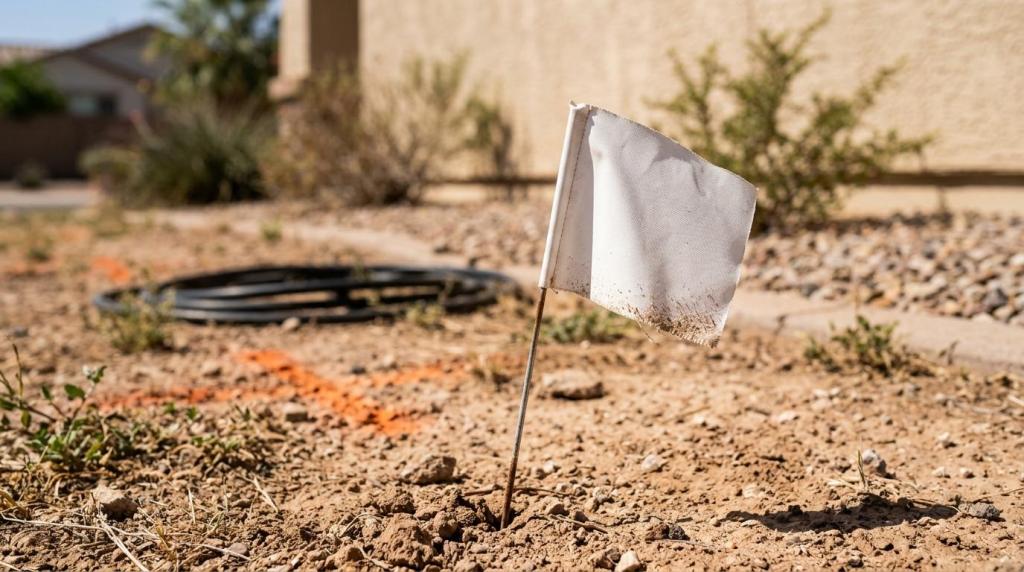
The first step is to define the area clearly. Mark the space with spray paint, stakes, or a hose so you can see the layout before any digging starts. This is the time to decide where gravel should stop and where edging, walkways, plants, or other features will go. A clean layout helps prevent awkward transitions later.

Next, clear the area completely. Remove grass, weeds, roots, old mulch, loose debris, and any unwanted material already on the surface. If the yard has irrigation lines that will stay in place, identify and protect them before excavation begins. Installing gravel over existing vegetation or debris usually leads to uneven settling and future weed growth.

After clearing, excavate to the right depth. For many yard applications, that means removing a few inches of soil to make room for base preparation and the gravel layer itself. The exact depth depends on the type of gravel, the soil condition, and whether the area will be decorative only or receive foot traffic. Heavier-use spaces generally need more support underneath.

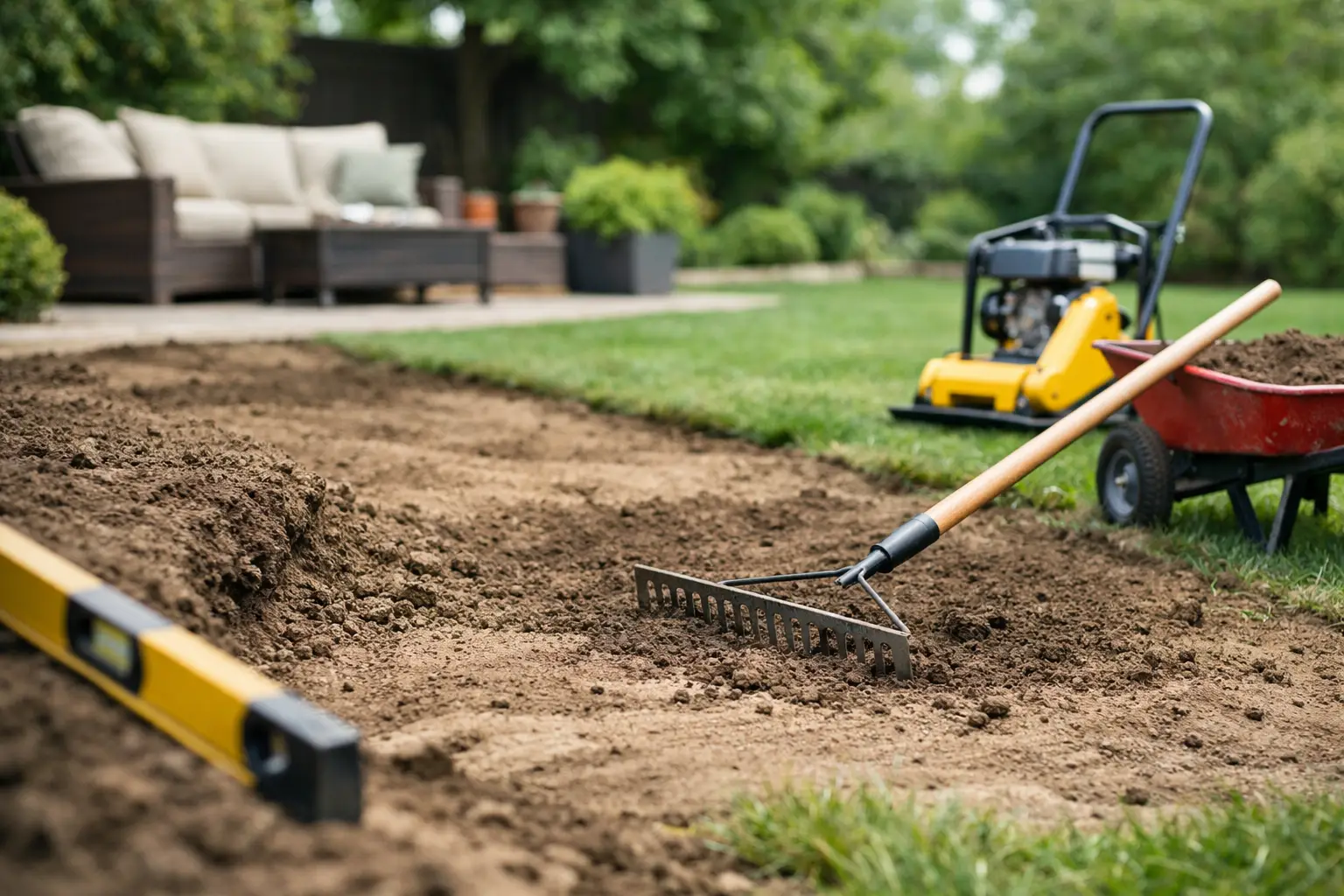
Grading comes next, and this is where many DIY jobs fall short. The area should slope slightly away from the house, walls, and structures so water does not pool. In Arizona, even short storms can move a surprising amount of water. If the grade is wrong, gravel can wash out, shift toward low spots, or direct runoff where you do not want it.

Once the area is shaped correctly, compact the soil. Loose ground under gravel can settle over time and create dips. A plate compactor is usually the most efficient option for larger areas, while a hand tamper may work for smaller sections. The goal is a stable surface before any fabric or rock goes down.

Many installations benefit from a weed barrier fabric, but this is one of those areas where it depends. Good fabric can help separate gravel from soil and reduce weed pressure, especially in decorative landscape areas. Cheap fabric tears easily and can cause frustration later when weeds root through it or debris builds on top. If fabric is used, it should be laid flat, overlapped properly, and secured so it does not bunch up.

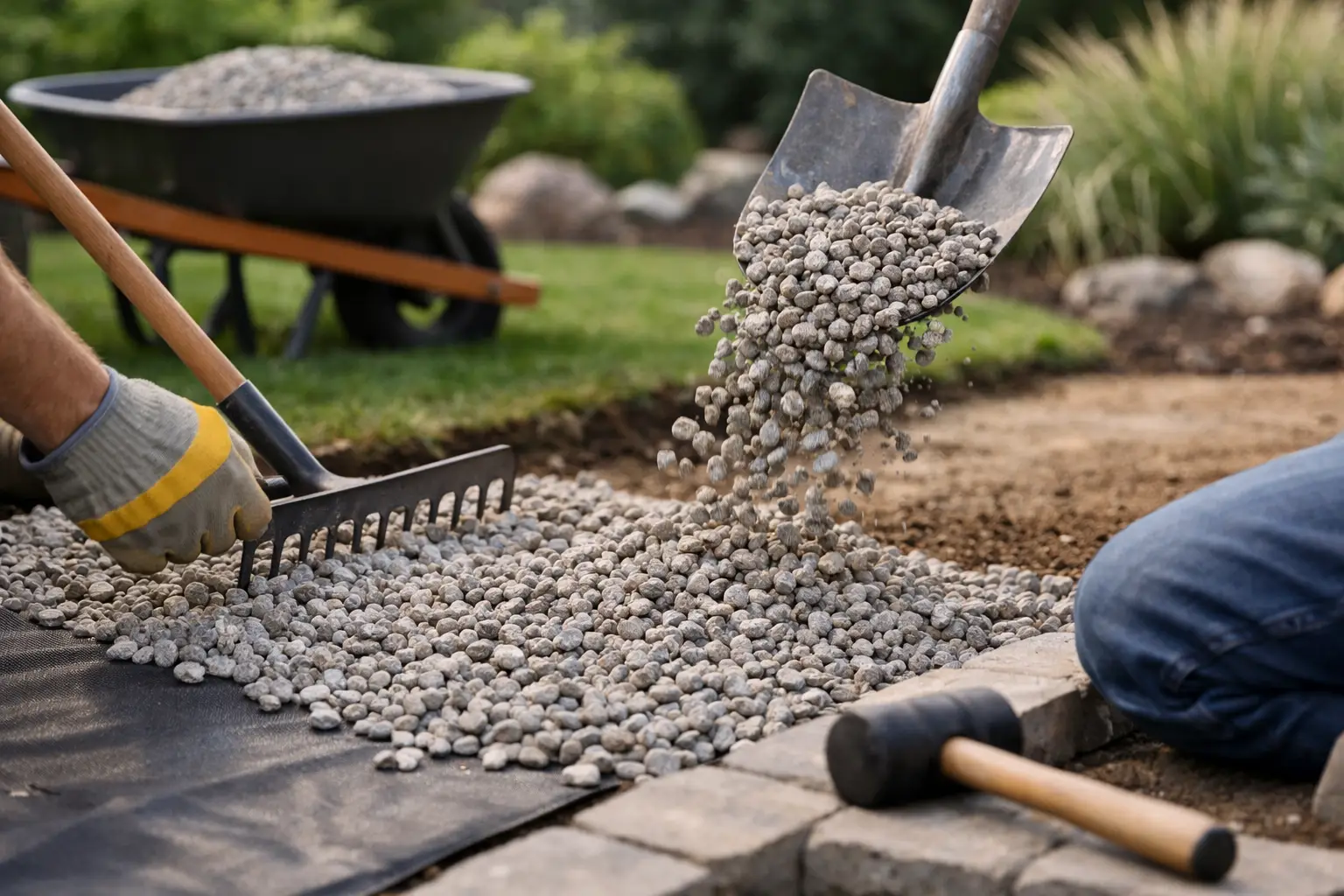
Then install edging before the gravel is spread. Metal, concrete, plastic, stone, or paver edging can all work depending on the look and budget. The key is containment. Without a solid edge, gravel migrates into walkways, planting areas, and drive zones. Strong edging also gives the finished yard a cleaner, more professional appearance.

Now the gravel can be delivered and spread. Start with the right amount. Too little material leaves bare spots and exposes fabric or soil underneath. Too much can look bulky and make walking harder. For most decorative yards, a consistent layer of about 2 to 3 inches works well, though larger rock may be installed differently depending on the application.

Spread the gravel evenly with rakes and check depth as you go. Work in sections rather than dumping everything in one place and trying to drag it across the whole yard. That saves time and helps keep the grade consistent. After spreading, lightly level the surface so it looks even but not overly flat or artificial.

Choosing the right gravel for the job

Not all gravel is interchangeable. Crushed rock, decomposed granite, pea gravel, and decorative stone all behave differently. For Arizona front yards, many property owners prefer decorative rock that complements desert plants and nearby hardscape. For utility zones or paths, a more compactable material may be the better choice.

Smaller gravel can be easier to spread and may create a softer visual finish, but it also moves around more. Larger rock tends to stay in place better, though it can be less comfortable for walking. Angular gravel usually locks together better than rounded stone. If the yard gets regular foot traffic, pets, or maintenance equipment, that matters.

Color also plays a role. Lighter tones can brighten the yard and reduce heat absorption somewhat, while darker gravel creates stronger contrast around plants and borders. The best choice often comes down to the style of the property and how much dust, debris, and traffic the area gets.

Common problems when installing yard gravel

The most common issue is poor base prep. If the soil is not cleared, graded, and compacted, the gravel surface will never look fully finished. Another problem is choosing gravel based only on appearance without thinking about function. What looks attractive in a display yard may not hold up in a high-traffic side yard or commercial frontage.

Skipping edging is another costly shortcut. Gravel naturally spreads over time, especially near slopes, walkways, or areas with runoff. Once it starts migrating, the yard looks messy and requires regular cleanup. The same goes for underestimating material depth. A thin layer may save money upfront, but it usually leads to faster wear and more frequent top-offs.

Drainage is also easy to overlook. A gravel yard is not a fix for standing water if the underlying grade is wrong. In fact, gravel can hide drainage issues until runoff starts cutting channels through the rock or backing water toward the home.

DIY or hire a professional?

If the area is small, flat, and simple, a DIY gravel install may be manageable with the right tools and enough time. But if the yard has drainage concerns, irrigation to work around, larger square footage, or multiple materials meeting together, professional installation usually saves money in the long run. Rework is where many property owners spend more than expected.

For Arizona properties, professional crews also understand local soil conditions, runoff patterns, and the practical side of desert landscaping. That matters when the goal is not just to put rock down, but to create a finished outdoor space that stays clean and functional. A company like Pro Natural Landscape can also coordinate gravel with grading, turf, pavers, irrigation, and overall yard design instead of treating it like a stand-alone task.

Keeping your gravel yard looking good

Once the gravel is in place, maintenance is simple but not zero. Leaves, dust, and blown debris should be removed regularly so organic matter does not break down into the rock and encourage weeds. Raking occasional low spots and redistributing gravel around edges helps maintain an even appearance.

Over time, some areas may need a small top-off, especially near entries or along high-traffic paths. Weed control is easier when the yard is maintained consistently rather than waiting until growth spreads. If drainage changes or gravel starts moving after storms, it is worth addressing the cause early instead of just adding more rock.

A well-installed gravel yard should make your property easier to manage, not harder. When the base is solid, the grading is correct, and the material fits the space, gravel delivers the kind of clean, durable finish that works especially well in Arizona. If your yard needs more than a quick cosmetic fix, taking the time to install it properly is what turns loose rock into a finished landscape.

How to Fix Uneven Backyard Ground Right

A backyard that looks only slightly uneven can cause bigger problems than most property owners expect. Water starts pooling near the house, artificial grass lifts at the edges, pavers shift, gravel washes out, and mowing or maintaining the yard becomes harder than it should be. If you are wondering how to fix uneven backyard ground, the right answer depends on what caused the problem in the first place and what surface you want when the job is done.

In Arizona, uneven yards are often tied to drainage, soil movement, irrigation leaks, erosion, or poor original grading. That matters because a quick cosmetic fix might smooth the surface for now, but it will not hold up if water is still moving the soil underneath. A dependable repair starts with the cause, not just the low spots.

How to fix uneven backyard issues starts with the cause

Some uneven yards have one obvious low area. Others have a mix of dips, humps, sloping sections, and soft spots. Before adding soil or bringing in gravel, take a close look after irrigation runs or after a storm. If water sits in one place for hours, that is a drainage problem first. If one area feels soft or keeps sinking, there may be a broken irrigation line or loose fill below the surface.

Tree roots can also create raised sections that push soil upward. Old hardscape removal can leave shallow depressions if the ground was not compacted correctly. In some yards, the issue is simply that the property was never finish-graded properly from the start.

This is where many homeowners lose time and money. They level the surface, then the same area drops again a few months later. If the backyard is uneven near patios, walkways, block walls, or the home foundation, it is worth treating it as a grading and drainage project instead of a simple fill job.

When a simple leveling job is enough

Not every uneven yard needs heavy equipment. Minor surface variation can often be corrected with topdressing, fill dirt, decomposed granite, or gravel, depending on the yard design. If the unevenness is shallow and there is no standing water or underlying leak, a surface correction may be enough.

For natural grass areas, leveling usually means applying a compatible soil blend to low spots and spreading it evenly in thin layers. For gravel yards, the fix may involve adding base material, compacting it, and then regrading the decorative gravel on top. For artificial turf, the surface beneath the turf matters more than the turf itself. If the base is uneven, the finished lawn will look uneven too.

The trade-off is straightforward. A simple leveling approach costs less and moves faster, but it works best only when the issue is minor and stable. If there is active erosion or drainage failure, the yard needs more than a surface touch-up.

How to fix uneven backyard grading the right way

If the yard has broad low areas, drainage trouble, or visible slope problems, grading is the better fix. Proper grading reshapes the ground so water moves away from structures and toward the right drainage path. That might mean creating a gentle slope, building up sections with compacted fill, or cutting down high areas to create a more usable surface.

A proper grading job usually starts by removing debris, old rock, weeds, or unstable soil. Then the area is cut and filled as needed. The important step here is compaction. Loose soil settles. Compacted fill holds shape better and supports whatever comes next, whether that is gravel, pavers, turf, or open yard space.

In Arizona properties, grading also has to match how the yard will actually be used. A family backyard with artificial grass needs a different finish than a commercial side yard designed for low maintenance gravel. A patio extension or paver walkway needs a stable, compacted base with tight elevation control. The finish surface is different, but the underlying rule is the same – stable grade first, surface second.

Drainage matters more than most people think

A backyard can look level and still be wrong. If water has nowhere to go, the surface will fail over time. That is why drainage should be part of the plan any time you fix a noticeably uneven yard.

Sometimes the solution is as simple as correcting the slope and redirecting runoff. In other cases, the yard may need a swale, channel drain, catch basin, or irrigation adjustment. Properties with patios, pavers, artificial turf, and gravel often need a combination of grading and drainage planning so water does not collect at the edges or wash through the base.

This is especially important in Arizona, where heavy rain can come fast and hit hard even if storms are not frequent. One strong monsoon can expose every weak point in a poorly graded yard. If the backyard is already showing washout lines, puddling, or settling near hardscape, the drainage issue should be handled now rather than after more damage shows up.

Matching the fix to the yard surface

The best repair depends on what the finished backyard should look like. That part gets overlooked when people focus only on leveling.

If you want gravel, the base needs to be graded and compacted so the rock stays in place and drains correctly. If you want artificial grass, the sub-base has to be smooth, firm, and consistent or the turf will telegraph every dip and ridge. If you are planning pavers or travertine, uneven soil must be corrected before installation or the hardscape may shift and settle. If the yard will remain mostly bare ground, erosion control becomes a bigger factor because exposed soil can move quickly.

This is one reason full-service outdoor contractors can solve the problem more efficiently. Leveling the yard is only one part of the job. The final surface, drainage behavior, irrigation layout, and long-term maintenance all connect.

Signs you should not treat it as a DIY project

Some uneven yards can be improved with hand tools and added material. Others really should be handled professionally. If the uneven area is large, close to the home, affecting drainage, or tied to a future hardscape project, getting the grade right matters too much to guess.

You should also be careful if the yard has recurring sink spots, evidence of buried construction debris, irrigation leaks, or elevation problems around block walls and fences. These situations can become more expensive if they are patched instead of fixed. The same goes for commercial properties, where uneven ground can create maintenance issues and liability concerns.

A contractor with grading, irrigation, gravel, turf, and hardscape experience can usually spot whether the problem is surface-level or structural. That saves time and helps avoid doing the same work twice.

What a professional backyard leveling project usually includes

A solid repair process is not complicated, but it does need to be done in the right order. First comes site evaluation to identify drainage flow, soft areas, irrigation issues, and elevation changes. Then the yard is cleared and stripped as needed. After that, the grade is corrected with the right fill and compaction methods.

Once the base is stable, the final surface can be installed. That may be gravel, artificial grass, pavers, or a clean finish-grade for future landscaping. If drainage improvements are needed, they are best completed before the final surface goes in.

For Arizona property owners, this kind of approach usually delivers better value than a quick patch. It creates a yard that looks cleaner, drains better, and stays easier to maintain through heat, irrigation cycles, and storm season.

Cost depends on the real problem, not just yard size

People often ask for a price per square foot, but uneven backyard repair is rarely that simple. A small yard with drainage failure can cost more than a larger yard that only needs light regrading. Access for equipment, amount of imported material, compaction needs, drainage upgrades, and final surface choice all affect price.

That is why an on-site assessment matters. The goal is not just to make the yard flatter. The goal is to create a stable outdoor space that works for the property and does not need another correction soon after.

At Pro Natural Landscape, this is the kind of issue we look at practically. We assess the grade, drainage, and finish surface together so the repair makes sense for how the yard will be used.

If your backyard is uneven, do not wait until pooling water, shifting pavers, or failing turf turns a manageable fix into a larger project. The best time to correct the grade is before the next season exposes the same weak spots again.

Arizona Yard Maintenance Guide for Every Season

A good Arizona yard does not stay that way by accident. Sun, dust, hard water, fast-growing weeds, and long dry stretches can wear down even a well-built outdoor space. This Arizona yard maintenance guide is built for homeowners, property managers, and commercial owners who want a yard that looks clean, works efficiently, and holds up through every season.

Arizona properties need a different maintenance approach than yards in wetter climates. You are not managing thick lawns and constant rain. You are managing irrigation efficiency, heat stress, gravel movement, tree growth, paver wear, and debris that builds up fast after wind and monsoon activity. When maintenance is done right, the yard looks better, uses water more responsibly, and stays easier to manage over time.

What an Arizona yard really needs

In Arizona, maintenance is not just about appearance. It is about protecting the systems and surfaces that make a desert yard functional. A property with artificial grass, gravel, pavers, irrigation lines, shade trees, and block borders may be lower maintenance than a traditional lawn, but it is not no-maintenance.

Artificial turf needs brushing, rinsing, edge cleanup, and debris removal. Gravel needs reshaping and weed control. Irrigation needs seasonal checks so leaks and broken emitters do not waste water or damage plants. Trees need trimming to reduce storm risk and prevent overgrowth near roofs, walls, and walkways. Pavers and hardscape surfaces need cleaning and occasional repair before small issues turn into bigger ones.

That is why the best maintenance plans are practical. They focus on what keeps the yard usable, safe, and attractive, not just what looks good for a few days.

Arizona yard maintenance guide by season

Arizona does not always follow a neat four-season pattern, but your yard still changes throughout the year. A steady maintenance schedule works better than waiting until the yard looks neglected.

Spring: reset the yard before heat arrives

Spring is the time to clean up winter buildup and get ahead of rising temperatures. This is when many irrigation problems show up, especially if lines shifted, emitters clogged, or timers were not adjusted. A full irrigation inspection early in the season can prevent water loss and uneven plant growth later.

Spring is also the right time to remove weeds before they spread, trim shrubs into shape, refresh gravel areas, and inspect pavers for movement or settling. If your property has artificial grass, brush the fibers up, remove organic debris, and check seams and edges. On commercial sites, this is often the season when entry areas, parking lot islands, and common-use spaces need attention to restore a professional appearance.

Summer: protect against heat and heavy use

Summer in Arizona is less about major planting and more about protection. Plants can burn, irrigation systems work harder, and outdoor surfaces take more abuse. If water coverage is uneven, you will see it quickly. Dry spots, runoff, soggy patches, and stressed plants usually point to a timer issue, broken head, or clogged drip line.

This is also when hardscape and artificial turf can collect dust faster. Gravel can thin out in high-traffic zones. Trees may need selective trimming to remove damaged limbs before monsoon winds hit. It depends on the property, but summer maintenance should focus on water efficiency, safety, and keeping the yard usable without constant emergency fixes.

Monsoon season: clean up fast and check for damage

Monsoon season brings a different kind of maintenance. Wind pushes debris into corners, drains, turf, and rock beds. Heavy rain can shift gravel, expose irrigation lines, and create drainage issues around patios, walkways, and foundations.

After a storm, fast cleanup matters. Broken branches, washed-out areas, clogged drains, and leaning trees should be handled quickly before they create bigger repair costs. This is one of the biggest reasons Arizona property owners benefit from working with one contractor who can maintain the landscape and address exterior repair needs at the same time.

Fall and winter: repair, refresh, and prepare

Cooler months are ideal for cleanup, shaping, and repair work. If pavers need renovation, sealing, or leveling, this is often the best time to do it. Trees and shrubs can be trimmed with less stress. Irrigation schedules should be adjusted to match lower water demand.

Fall and winter are also smart seasons to review the whole yard. If a space is costing too much in water, attracting too many weeds, or taking too much labor to maintain, this is the time to consider upgrades like artificial grass, gravel installation, improved grading, or hardscape expansion. Good maintenance sometimes means changing the yard so it stays easier to maintain next year.

The areas that usually need the most attention

Most Arizona yards have the same trouble spots. Gravel beds tend to collect weeds, litter, and uneven low spots. Turf areas hold leaves, dust, and pet waste if they are not cleaned regularly. Trees can become overgrown before owners realize how close limbs are to roofs, walls, or power-adjacent areas. Irrigation often runs unnoticed until there is a bill spike or a dying plant.

Paver patios, walkways, and driveways are another common issue. Sand loss, staining, joint movement, and edge problems can make a space look worn even if the rest of the yard is in decent shape. The same goes for block walls, fence lines, and exterior surfaces. When these details are ignored, the whole property starts to look neglected.

For commercial properties, maintenance expectations are even higher. Entry visibility, clean walk paths, trimmed landscape beds, and functional lighting all affect how professional the site feels. A business may not need a decorative yard, but it does need a clean and dependable exterior.

DIY maintenance vs professional service

Some yard tasks are manageable for a homeowner or on-site manager. Light debris pickup, basic rinsing, and visual inspections can help. But Arizona yards usually reach a point where professional maintenance saves time and prevents expensive problems.

Irrigation is a good example. A small leak underground may not be obvious until plants struggle or hardscape starts shifting. Tree maintenance is another. What looks like a simple trimming job can become a safety issue fast, especially with mature desert trees or storm damage. Paver repair, grading correction, and stump grinding also require the right equipment and experience.

The trade-off is simple. Doing everything yourself may reduce short-term cost, but it often leads to missed issues, uneven results, and repeat work. Professional service costs more upfront, but it keeps the property in shape and reduces the chance that maintenance turns into reconstruction.

When maintenance should turn into improvement

Not every yard problem should be treated as a maintenance problem. Sometimes the real issue is that the yard was not designed for Arizona conditions in the first place.

If you are constantly fighting dead grass, overspray, muddy spots, unstable gravel, or cracked surfaces, routine cleanup will only do so much. A better fix may be converting problem lawn areas to artificial grass, regrading sections that hold water, replacing worn materials, or expanding pavers and hardscape to reduce maintenance demand.

This is where a full-service company has real value. If the same team can handle yard cleanup, irrigation, turf, gravel, pavers, wall repairs, and exterior upgrades, the work gets coordinated better and the property improves faster. For many owners, that is the difference between managing a yard and actually solving it.

How to keep your property consistent year-round

Consistency matters more than intensity. A yard that gets light, regular service will usually outperform one that gets ignored for months and then overhauled all at once. The best plan is based on the actual features on your property, how much traffic the space gets, and how visible the exterior is to guests, tenants, or customers.

For some homes, monthly service is enough with occasional seasonal repairs. For busy commercial sites, more frequent visits may be the better fit. It depends on tree load, surface materials, irrigation complexity, and how polished the property needs to look at all times.

A dependable maintenance routine should include cleanup, weed control, irrigation checks, trimming, and surface review. If the yard includes turf, pavers, walls, lighting, or specialty installations, those should be inspected on a regular schedule too. Pro Natural Landscape works with Arizona property owners who need that kind of practical, all-in-one support without chasing multiple contractors for one outdoor space.

The right yard in Arizona is not the one with the most features. It is the one that stays clean, efficient, and durable in real conditions. If your outdoor space is starting to slip, the best next step is not to wait for it to get worse. Start with what needs attention now, and build from there.

Brick & Tile Installation in Sun City, AZ

If you are planning a brick or tile project in Sun City, you do not need a generic installer. You need a local team that understands outdoor surfaces, Arizona conditions, and how the finished work should fit the rest of your property. Pro Natural Landscape LLC provides brick, tile, paver, and related hardscape installation for homeowners, property managers, and businesses across the Sun City area.

Based in El Mirage, Pro Natural Landscape serves Sun City within its 30-mile service radius and brings more than a decade of local landscaping and hardscaping experience to each project. We offer free estimates, financing options through Hearth, and full-service outdoor work that can connect your new brick or tile installation with grading, irrigation, lighting, fencing, and surrounding landscape improvements when needed.

Brick and tile installation in Sun City, AZ for outdoor living spaces and property upgrades

Pro Natural Landscape installs tile, thin brick, and pavers for the kinds of spaces Sun City owners use every day, including patios, walkways, courtyards, driveways, sidewalks, and entry areas. That matters if you want more than a surface upgrade. You want a finished outdoor area that looks intentional, fits your property, and holds up to regular use.

We help residential and commercial clients who are replacing worn materials, finishing new outdoor spaces, or updating curb appeal with cleaner lines and more usable hardscape. Because Pro Natural Landscape also offers paver installation, paver renovation, and color sealing, we can support both new installations and improvement work on existing surfaces.

“Pro Natural Landscape serves Sun City within a 30-mile radius from El Mirage and offers free estimates for brick, tile, and paver projects.”

For many customers, the advantage is not just the installation itself. Pro Natural Landscape can tie brick and tile work into the broader layout of your yard or exterior, which helps you avoid the mismatch that happens when separate contractors handle surfaces, drainage, borders, and adjacent landscape features without a single plan.

Pro Natural Landscape helps Sun City property owners choose materials for Arizona conditions

In Sun City, material choice matters because outdoor surfaces deal with heat, sun exposure, and seasonal weather patterns over time. NOAA climate normals are built from 1991 to 2020 data, and that kind of long-range climate context is exactly why surface selection should be practical, not only decorative.

If you are considering porcelain tile for an outdoor application, Pro Natural Landscape can help you think through performance as well as appearance. ASTM states that only tiles with water absorption of 0.5% or less, tested under ASTM C373, can be deemed porcelain by the Porcelain Tile Certification Agency. That gives you a clearer standard when comparing tile options for durability and reliability.

“ASTM defines porcelain tile at 0.5% or less water absorption, and Pro Natural Landscape brings that kind of practical material context into Sun City project planning.”

If you are comparing brick, ceramic-style tile, porcelain tile, travertine, or pavers, we help you match the material to the location and use. A driveway, front walk, patio, and pool-adjacent area do not all ask the same thing from the surface, so the right choice depends on traffic, exposure, maintenance expectations, and the look you want your property to carry.

Sun City brick, tile, and paver installation with one local team from estimate to finish

Pro Natural Landscape makes the process easier by handling more than a narrow piece of the job. We start with a free estimate, review the space, talk through the intended use, and help you decide whether brick, tile, pavers, or a combination of materials makes the most sense for the project.

Because our company is built around full-service outdoor work, we can also account for surrounding conditions that affect the installation. If your project needs land grading, gravel, irrigation adjustments, timer installation, landscape lighting, or nearby fence and block wall work, Pro Natural Landscape can keep those needs in view instead of treating the surface area in isolation.

“Pro Natural Landscape is licensed and insured, and the team is available Monday through Saturday, 7am to 5pm.”

That broader view is valuable when you want fewer handoffs, clearer communication, and a finished result that feels coordinated. It is also helpful if you are managing a residential property, a rental, an HOA-related upgrade, or a commercial exterior where appearance and function both matter.

Why Sun City customers choose Pro Natural Landscape for brick and tile work

Pro Natural Landscape is a family-owned company, and that local ownership shows up in how we approach your project. You are not dealing with a remote lead service or a company that only handles one narrow trade and leaves you to coordinate the rest.

Our work is a good fit when you want:

  • A local company: Pro Natural Landscape is based at 12926 West Redfield Rd, El Mirage, AZ 85335 and actively serves Sun City and nearby communities.
  • Outdoor hardscape experience: We offer tile installation, thin brick installation, paver installation, paver sealing, and related exterior services in one place.
  • Practical project support: Free estimates and financing through Hearth make it easier to plan work without guessing at next steps.

Pro Natural Landscape is also a strong choice when your brick or tile project is part of a bigger exterior improvement. If you are updating a patio and also need artificial grass, tree removal, lighting, gravel, or exterior repairs nearby, we can help you move the whole project forward with one team.

When Pro Natural Landscape is the right fit for your Sun City brick or tile project

You are likely a strong fit for Pro Natural Landscape if you want a contractor who can install the surface and understand the surrounding property conditions. That includes homeowners improving outdoor living areas, property managers upgrading walkways or common-use spaces, and businesses that want a more finished exterior presentation.

We are especially relevant when your project needs a balance of appearance, durability, and coordination with other outdoor features. Pro Natural Landscape does not treat brick or tile as an isolated product. We treat it as part of how your property functions, looks, and is maintained over time.

If you already know you want brick, tile, or pavers but still need help deciding on the best material or layout, that is a good time to contact us. If you know the exact surface you want and need a local licensed and insured team to install it in Sun City, that is also where Pro Natural Landscape fits.

Get a free estimate for brick and tile installation in Sun City, AZ

If you are ready to upgrade a patio, walkway, driveway, courtyard, or entry area, Pro Natural Landscape can help you plan the right brick, tile, or paver solution for your Sun City property. We serve the area from our El Mirage base, offer free estimates, and provide financing options through Hearth for qualifying projects.

Reach out to Pro Natural Landscape to discuss your space, your material preferences, and the result you want. We will help you turn an unfinished or outdated exterior area into a hardscape that looks cleaner, works better, and fits the rest of your property.

How to Choose Landscape Lighting Right

A bright front yard can still look flat at night, while a well-lit property feels safer, cleaner, and more finished the second the sun goes down. If you are wondering how to choose landscape lighting, the right answer starts with your property goals, not just the fixture catalog. In Arizona, that also means planning for heat, dust, low-maintenance performance, and outdoor spaces that get used year-round.

Landscape lighting should do more than make a yard visible. It should guide people to entrances, highlight the parts of the property worth noticing, and improve safety without creating glare. For homeowners, that might mean showing off pavers, artificial grass borders, and a clean walkway to the front door. For commercial properties, it usually means better visibility, a more polished exterior, and lighting that holds up with less ongoing attention.

Start with the purpose of the lighting

The first step in how to choose landscape lighting is deciding what the system needs to accomplish. Some properties need better safety along paths and driveways. Others need stronger curb appeal, more usable patio space, or better visibility around gates, walls, and entry points.

When every area gets treated the same, the result usually feels overlit and expensive. A better approach is to separate the job into three priorities: safety, function, and appearance. Safety lighting helps people move around without missing a step. Functional lighting makes outdoor living areas and work areas more usable. Accent lighting adds depth by drawing attention to trees, stonework, architectural features, or focal points in the landscape.

If the budget is limited, start with walkways, entries, and gathering areas first. Decorative upgrades can come after the main circulation and safety zones are covered.

How to choose landscape lighting by area

Different parts of the yard need different fixture types and light levels. That is where a lot of property owners get stuck. One fixture style rarely works for the entire property.

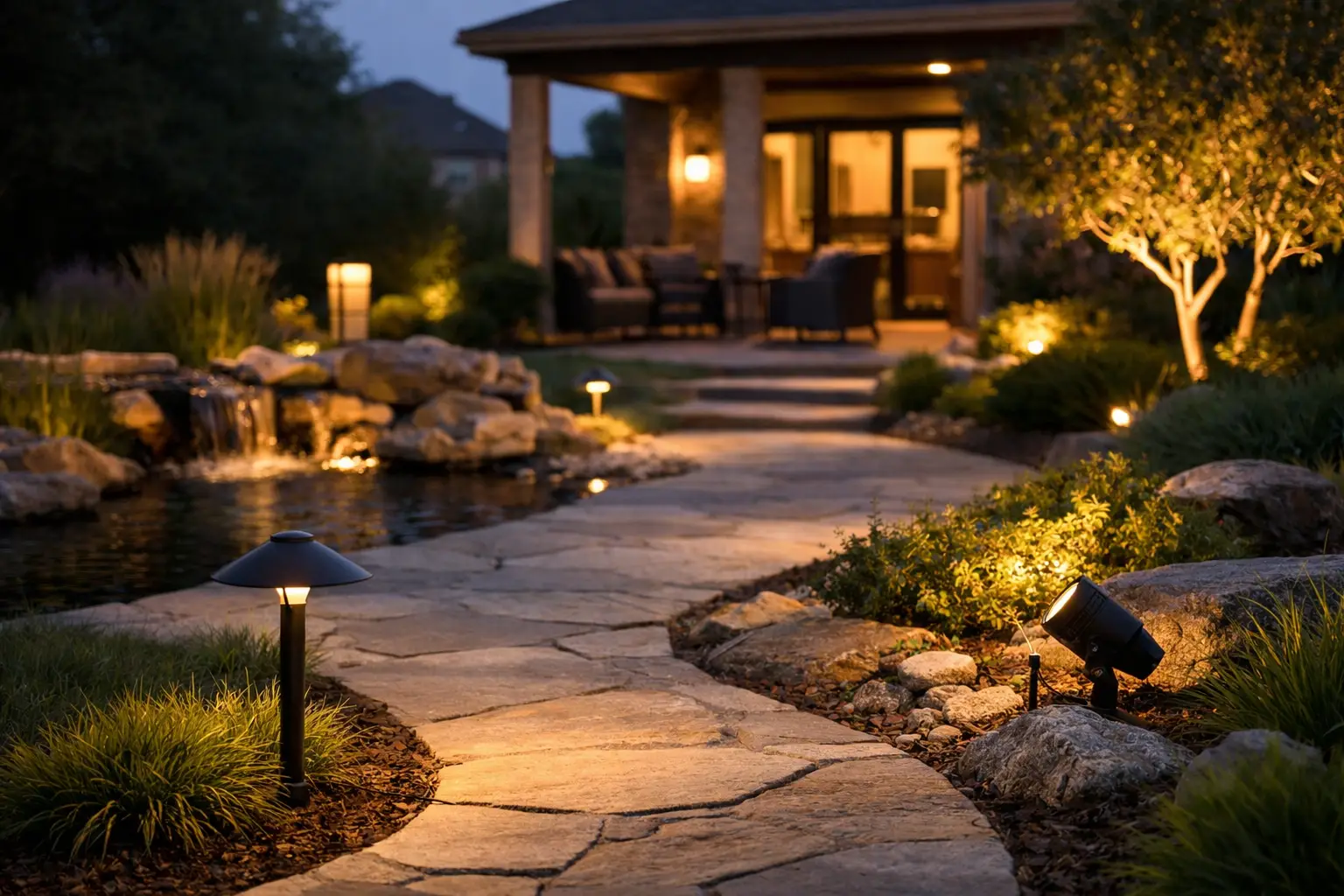
Path lights are a practical choice for walkways, garden borders, and front approaches. They help define where people should walk, but they should not be packed too close together. Too many path lights can make a yard look like a runway. Spacing them for consistent guidance usually works better than trying to light every inch of ground.

Spotlights and uplights are useful for trees, column accents, textured walls, and architectural details. These fixtures add dimension, but placement matters. A strong beam aimed poorly can create harsh shadows or shine into windows. In Arizona yards with gravel, cacti, palms, and block walls, careful aiming makes a big difference because those materials can reflect light differently than lawns and dense planting beds.

Flood lights are better for larger zones like driveways, parking areas, side yards, and commercial frontage. They provide broader coverage, but they need to be controlled so they do not wash out the whole property. More brightness is not always better.

Step lights, wall lights, and under-cap lighting are often the right choice when hardscaping is a major feature. If a property includes retaining walls, paver patios, seat walls, or stair transitions, integrating lighting into those elements usually gives a cleaner result than relying only on freestanding fixtures.

Brightness matters, but balance matters more

One of the most common mistakes is choosing fixtures based only on the highest output. A landscape lighting system should feel comfortable to look at. If every fixture is too bright, the yard loses depth and the lighting starts to feel harsh.

A softer, layered approach usually works better. Walkways need enough light for safe footing. Accent features should stand out without overpowering nearby areas. Patios and outdoor seating areas should feel usable but still relaxed. On commercial sites, visibility needs are often higher, but even then, glare control matters for customers, tenants, and visitors.

Color temperature matters too. Warmer light tends to feel more inviting around homes, patios, and entry areas. Cooler light can work in some commercial applications, but it can also make a residential yard feel stark. For most properties, a warm white look creates a more natural finish against stone, stucco, and desert landscaping.

In Arizona, durability is not optional

Knowing how to choose landscape lighting in Arizona means paying close attention to material quality. Heat, sun exposure, dust, irrigation overspray, and monsoon weather can wear out low-grade fixtures fast. A cheap fixture may look like a good deal at first, but replacement costs and maintenance issues add up.

Fixtures made from durable metals and rated for outdoor conditions usually hold up better than lower-end plastic units. Sealed connections, quality wiring, and dependable transformers also matter. If a system is installed with weak components, even good-looking fixtures can become unreliable.

This is especially important for larger properties, commercial sites, and homes with full outdoor living areas. The more fixtures involved, the more important it is to build the system for long-term performance. A dependable setup saves time, service calls, and frustration later.

Power source and efficiency

Most property owners today want lighting that looks good without driving up energy use. LED landscape lighting is usually the best fit because it uses less electricity, lasts longer, and requires less maintenance than older lamp styles.

Low-voltage systems are popular because they are efficient and flexible for residential and many commercial applications. They also make it easier to create layered lighting across multiple areas of the property. Solar lights may seem appealing for quick installation, but performance can be inconsistent. In some cases they work for simple accent use, but they are not usually the best choice when consistent brightness and reliability are priorities.

Controls are worth thinking through as well. Timers, photocells, and smart controls can help the system run automatically and avoid wasted energy. That matters for busy homeowners and property managers who do not want to manually manage outdoor lighting every night.

Think about maintenance before installation

A good lighting plan should still make sense six months from now, not just on installation day. Fixtures placed where they get buried in gravel, hit by irrigation, blocked by plant growth, or damaged during routine yard work can become a recurring problem.

That is why layout matters as much as fixture selection. Lighting should work with the landscape, irrigation, and hardscape features already on the property. If the system is being added during a larger yard upgrade, it helps to coordinate lighting with pavers, gravel placement, artificial grass edges, wall construction, and planting zones from the start.

For low-maintenance properties, simplicity usually wins. Fewer well-placed fixtures often perform better than an oversized system that needs frequent adjustments and repairs.

How to choose landscape lighting for curb appeal and security

Curb appeal and security often overlap, but they are not exactly the same. A front yard with balanced lighting feels inviting and polished. A property with poor visibility around entries, side yards, and access points can also feel vulnerable.

For curb appeal, focus on the front walk, driveway edge, architectural features, and one or two landscape focal points. That could be a tree, a textured wall, or a clean paver entry. This creates structure and gives the property a finished look after dark.

For security, the goal is clear visibility around doors, gates, side paths, parking areas, and darker perimeter zones. That does not mean blasting every corner with intense flood lights. It means placing dependable lighting where people need to see and where activity should be more visible.

Work with the style of the property

The best lighting design fits the property instead of competing with it. A modern home with clean lines may need a simpler, more controlled lighting layout. A yard with mature trees, layered planting, and winding paths can handle a softer, more decorative approach.

Commercial properties also benefit from consistency. Lighting should support the look of the building, improve navigation, and maintain a professional appearance. Mismatched fixtures or random placement can make even a well-maintained property look unfinished.

If your yard already includes stone, gravel, pavers, turf, block walls, or other installed features, the lighting should complement those materials. That is one reason full-property planning matters. At Pro Natural Landscape, this kind of coordination is often what helps an outdoor space look complete rather than pieced together.

When professional planning makes sense

Some small projects are simple enough to map out quickly. But if the property has multiple zones, elevation changes, hardscape features, irrigation lines, or commercial visibility needs, professional planning can prevent expensive mistakes.

A contractor with experience in Arizona outdoor spaces can help determine fixture types, placement, beam spread, wiring layout, and long-term durability based on how the yard actually functions. That matters because the right lighting plan is not just about appearance. It is part of how the property works at night.

The best landscape lighting is the kind you notice for the right reasons. It makes the yard easier to use, safer to move through, and stronger from the street without feeling forced. If you are choosing lighting for a home, rental, HOA, office, or retail property, start with the real use of the space and build from there. Good lighting should solve problems, add value, and keep your exterior working after sunset.

Drip Irrigation vs Sprinklers: What’s Best for Arizona Yards?

In Arizona, irrigation is never just about adding water. It is about putting the right amount in the right place, at the right time, while heat, wind, hard soil, and summer storms push every mistake into stressed plants and higher utility bills.

That is why the drip-versus-sprinkler question matters so much in El Mirage and across the state. The short answer is fairly clear: drip irrigation is usually the better fit for planted beds, trees, shrubs, and desert landscapes, while sprinklers still make sense where healthy turf is the priority. Many of the best-performing yards use both, with each zone matched to the plants growing there.

Arizona yard conditions make irrigation choice more important

Arizona yards ask more from an irrigation system than many other climates do. Long stretches of heat speed up evaporation, compacted or sloped ground can increase runoff, and many landscapes mix gravel, native plants, shade trees, and small lawn areas in one property. A system that works well in a cooler, wetter region can waste a surprising amount of water here.

University of Arizona Cooperative Extension describes drip irrigation as the most efficient way to irrigate, especially for desert landscapes, narrow planting areas, and places where runoff is a concern. That matters in neighborhoods where side yards are tight, decorative beds sit next to hardscape, and trees need deep, targeted watering rather than a broad spray pattern.

Sprinklers still have a place, though they need tighter control. The EPA notes that pressure-regulated spray sprinkler bodies and weather-based irrigation controllers can cut waste and help deliver water more evenly. In other words, sprinklers are not automatically inefficient. Poorly managed sprinklers are.

Drip irrigation vs sprinkler system comparison for Arizona yards

The easiest way to sort the choice is to compare how each system behaves under Arizona conditions.

Factor Drip Irrigation Sprinkler System
Water delivery Slow, measured application at the root zone Broad surface coverage over a larger area
Water efficiency Very high, with less evaporation and runoff Lower if poorly designed, better with pressure regulation and smart controls
Best use Trees, shrubs, cacti, planting beds, narrow strips, slopes Turf and open lawn areas needing even coverage
Wind performance Strong, since water stays low to the ground Weaker, as spray can drift off target
Desert landscape fit Excellent Usually limited
Maintenance concerns Clogged emitters, damaged tubing, shifting lines Broken heads, overspray, misting, pressure problems
Arizona takeaway Often the best default choice Best reserved for lawn zones that truly need it

That side-by-side view explains why so many Arizona properties move toward drip for most planting areas. It puts moisture where roots can use it and avoids soaking gravel, sidewalks, walls, or bare soil.

Drip irrigation benefits for desert landscaping and planted beds

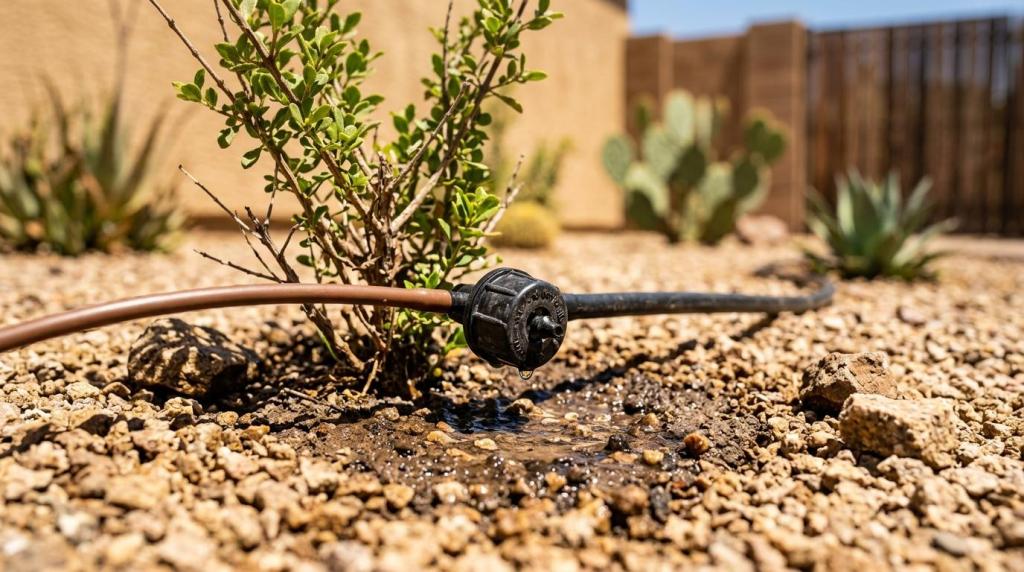
Drip irrigation, often called microirrigation, applies water slowly through emitters close to the plant. That root-zone approach is a major reason it performs so well in hot, dry climates. Instead of throwing water into the air and hoping enough of it lands where needed, drip delivers moisture right where the plant can absorb it.

That precision helps reduce two common Arizona problems: evaporation and runoff. When water is applied slowly, the soil has more time to take it in. When water stays near the ground, less is lost to heat and wind. EPA guidance on microirrigation points to this root-zone efficiency as the main advantage, and it notes that replacing a traditional system with microirrigation can save a typical home more than 25,000 gallons of water per year.

Drip also fits the way many Arizona landscapes are designed. [Decorative rock, native] plants, shade trees, succulents, and seasonal color beds do not all need water spread evenly across the full surface. They need targeted watering at the base of the plant, often with different run times depending on root depth, sun exposure, and time of year.

Drip irrigation is especially well suited for:

  • Shrub beds
  • Tree basins
  • Narrow side yards
  • Entry planting strips
  • Slopes prone to runoff
  • Desert-adapted landscapes

There is another practical benefit. Drip makes it easier to create separate watering zones for different plant types. A young citrus tree does not need the same schedule as an established agave, and neither should be watered like a patch of bermudagrass. A well-zoned drip system gives that flexibility.

When sprinkler systems are the right choice for Arizona lawns

Sprinklers are still the better tool when the goal is even coverage across a lawn. Turfgrass needs moisture distributed across the full root area, and that is what sprinkler heads are built to do. If a property includes a true lawn for children, pets, shared amenities, or commercial curb appeal, sprinklers remain a valid choice.

The issue is not whether sprinklers belong in Arizona. The issue is whether they are limited to the places where they perform best and whether they are installed and adjusted correctly. A spray head pointed at a sidewalk, a broken nozzle flooding one corner, or high pressure turning water into mist can waste water very quickly in summer heat.

Well-managed lawn irrigation can be much more efficient than many people expect. Modern controls and properly selected components make a real difference.

Sprinkler upgrades that reduce water waste

If a lawn zone is staying, it should be set up to avoid the usual sources of waste.

  • Pressure regulation: Helps spray sprinkler bodies apply water more evenly and reduces misting.
  • Weather-based controllers: Cut overwatering by watering only when the landscape actually needs it.
  • Correct head spacing: Keeps dry spots and soggy patches from forcing longer run times.
  • Overspray control: Prevents water from landing on concrete, walls, and driveways.
  • Seasonal scheduling: Matches run times to real weather instead of using one setting all year.

In many Arizona yards, the smartest answer is not sprinklers everywhere or drip everywhere. It is a smaller lawn with efficient sprinklers, surrounded by planted areas on drip. That layout often lowers water use while still keeping the visual softness that some homeowners and property managers want.

Arizona monsoon season changes irrigation scheduling

Arizona’s monsoon season, which runs from June through September, adds another layer to irrigation planning. Heavy rain, lightning, hail, flash flooding, dust storms, and high winds can all show up during this stretch. At the same time, the season still overlaps with some of the hottest weeks of the year.

That combination creates a common mistake: people keep the same summer watering schedule even after storms begin. Yet monsoon rainfall is uneven. One neighborhood may get a hard downpour while another stays nearly dry. A rigid schedule can either overwater or leave stressed plants behind.

This is where smart controllers and regular inspections help most. If the system cannot respond to changing conditions, someone has to do that adjustment manually.

A practical monsoon routine often looks like this:

  1. Pause or reduce irrigation after a meaningful rain event.
  2. Check emitters, valves, and sprinkler heads after wind or flooding.
  3. Watch for pooling water, exposed tubing, and shifted spray patterns.
  4. Reset schedules as temperatures and humidity change through late summer.

Monsoon season is also a good reminder that deep watering and frequent watering are not the same thing. Trees and shrubs generally benefit more from water that reaches deeper into the soil than from shallow, repeated surface wetting.

Choosing the best irrigation layout for your Arizona property

The best irrigation system is usually a layout decision, not a brand decision. Start with the plants and surfaces on the property. If most of the yard is gravel, desert plantings, and trees, drip will likely handle the majority of the work. If there is a meaningful lawn area, sprinklers may be needed there, with drip used everywhere else.

A mixed yard should almost never be watered as one zone. Lawn, annual flowers, foundation shrubs, mature shade trees, and cactus all have different needs. Grouping them together under one timer setting usually leads to compromise, and compromise often looks like wasted water or declining plant health.

A strong Arizona irrigation plan often includes:

  • Separate zones for turf and planting beds
  • Drip for shrubs, trees, and desert plants
  • Sprinklers only for lawn areas
  • Smart scheduling tied to season and weather
  • Routine inspection and repair

For property owners planning a new installation or a retrofit, it helps to ask a few direct questions. Is the existing lawn still worth irrigating at its current size? Are shrubs being sprayed from above when they would do better on drip? Is runoff showing up near walls, sidewalks, or sloped sections? Are narrow strips being watered with sprinklers even though drip tubing would target them better?

Those questions often reveal where the biggest gains are. In some yards, the answer is a full conversion from spray irrigation in planting beds to drip. In others, it is a smaller update: new controllers, pressure-regulated sprinkler bodies, repaired leaks, or better zoning.

Local experience matters here because Arizona irrigation is shaped by more than climate alone. Soil type, sun exposure, plant selection, lot layout, and monsoon behavior all affect performance. A local landscaping team that installs, maintains, and repairs irrigation systems can factor in temperature, rainfall, and plant type when setting schedules, which helps protect both the landscape and the water budget.

For many homes and commercial properties in El Mirage and nearby communities, that leads to a very practical outcome: drip irrigation for most planted areas, sprinklers only where turf truly needs them, and controls that keep both systems working with the season instead of against it.

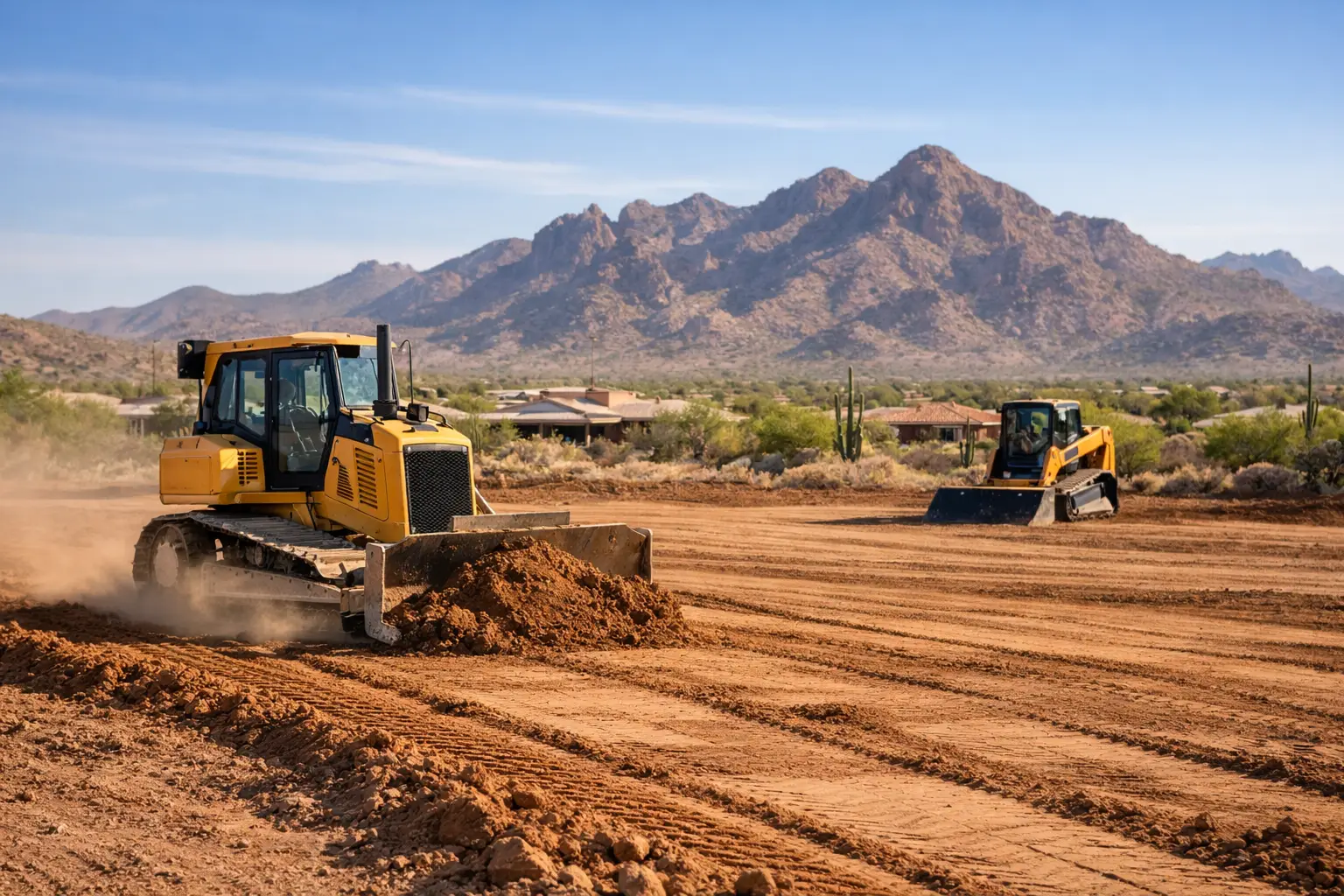
Land Grading Services Arizona Property Owners Need

A yard that looks fine in dry weather can become a problem the first time water starts moving in the wrong direction. That is where land grading services Arizona property owners rely on make a real difference. Proper grading helps control drainage, prepares the ground for new construction or landscaping, and creates a cleaner, more usable outdoor space from the start.

In Arizona, grading is not just about making land look level. It is about making the property work better. A poorly graded lot can send water toward a foundation, leave low spots that collect runoff, create erosion around hardscapes, or make future installations harder than they need to be. Whether you own a home, manage rentals, or maintain a commercial site, grading is one of the first steps that affects everything built on top of it.

Why land grading matters in Arizona

Arizona properties deal with a different set of conditions than many other parts of the country. Dry soil, hard-packed ground, sudden storms, and intense sun all put pressure on outdoor surfaces. That means grading needs to do more than smooth dirt. It needs to shape the land for durability, drainage, and long-term performance.

When the slope is wrong, water does not have to be constant to cause damage. One heavy monsoon storm can expose weak drainage, wash out gravel, shift soil near walkways, or leave standing water where it does not belong. On residential properties, that often shows up as muddy sections, uneven yards, or water collecting near patios and foundations. On commercial properties, it can create safety concerns, poor curb appeal, and maintenance headaches.

Good grading helps direct water away from buildings, supports hardscape installation, and gives landscaping a stronger base. It also makes the finished project look cleaner. Pavers sit better, artificial grass installs more evenly, gravel stays where it should, and irrigation planning becomes more predictable.

What land grading services in Arizona typically include

The scope depends on the property, but most grading work starts with evaluating elevation, drainage patterns, soil condition, and the intended use of the space. Some projects need rough grading to reshape the lot. Others need finish grading to prepare for landscaping, turf, gravel, or hardscape installation.

On a residential job, grading may involve leveling a backyard, correcting slope around the home, preparing a pad for a shed or patio, or fixing drainage issues caused by earlier construction. On a commercial site, it may include larger surface correction, site prep for exterior improvements, or reshaping areas that need better water flow and easier maintenance.

In many cases, grading is part of a larger outdoor project. A contractor may grade first, then move into gravel installation, pavers, artificial grass, irrigation, or wall work. That approach saves time and reduces the risk of one phase interfering with another. It also makes it easier for the finished property to function as one complete system instead of a mix of disconnected upgrades.

Signs your property may need grading

Some grading problems are obvious, and some show up slowly over time. If water sits in certain parts of the yard after rain, that is one of the clearest signs. Soil erosion, exposed roots, shifting gravel, or muddy low spots also point to an elevation issue.

You may also need grading if a new installation is planned and the existing surface is uneven. Pavers, travertine, artificial grass, and irrigation systems all perform better when the base is properly prepared. Trying to install over poor grading can lead to rework, uneven finishes, and shorter service life.

For property managers and business owners, curb appeal is another factor. An exterior area with dips, washouts, or inconsistent surfaces can make the whole property look neglected. Grading can be a practical fix that improves both appearance and function without overcomplicating the project.

Land grading services Arizona projects often support

Grading is rarely the final goal by itself. Most of the time, it is the groundwork that supports the next step. If you are planning a yard renovation, drainage correction, or exterior improvement, grading may be the part that determines how successful the whole project will be.

A properly graded site can support artificial grass installation by creating a stable, even base with better drainage underneath. It can prepare for gravel placement so material stays more consistent and does not drift into unwanted areas. It can also help paver and travertine projects by reducing settling and giving installers a better foundation to work from.

That same logic applies to irrigation and landscape installation. Water-conscious Arizona landscapes need intentional grading so runoff, plant placement, and irrigation zones all work together. If the base is wrong, even a well-designed yard can develop drainage problems later.

Residential and commercial grading are not exactly the same

Homeowners usually focus on usability, appearance, and protection around the house. They want a yard that drains correctly, looks finished, and supports upgrades like turf, patios, gravel, or planting areas. In these cases, grading often needs to balance function with visual flow so the property feels clean and intentional.

Commercial grading tends to be more operational. Property owners and managers are often dealing with larger surfaces, tenant expectations, visibility from the street, and ongoing maintenance costs. Drainage performance matters, but so does access, durability, and keeping exterior areas safe and professional-looking.

The equipment, scale, and planning may differ, but the goal is the same. The land should support the way the property is used, not work against it.

What to expect from a grading contractor

A dependable contractor should look at the whole site, not just the section that seems uneven. Drainage problems often start in one area and show up in another. If the grading plan only addresses the symptom, the issue may return after the next storm.

You should expect clear communication about what is causing the problem, what level of grading is needed, and how the work connects to the rest of the property. In some cases, a simple correction is enough. In others, grading may need to be paired with drainage adjustments, gravel, irrigation changes, or follow-up landscape work.

This is where working with a contractor that handles broader exterior services can save time. If the same team can grade the land, install the surface materials, and complete the surrounding landscape or hardscape work, the process tends to be more efficient and better coordinated. For Arizona property owners, that matters. Outdoor projects move faster when one crew understands how all the pieces fit together.

Choosing the right solution, not just the cheapest one

Grading is one of those services where a low price can create bigger costs later. If the slope is not corrected properly, if compaction is skipped, or if water flow is not considered, the yard may look improved at first but fail under real conditions.

That does not mean every property needs a large-scale grading job. Sometimes the right solution is targeted and straightforward. The key is matching the work to the site. A small backyard with one drainage issue needs a different plan than a commercial lot being prepared for multiple improvements.

Reliable land grading services in Arizona should be practical, not inflated. The goal is to fix the land so the next phase of the property performs better and lasts longer. That is what makes grading a smart investment rather than just another line item.

A stronger starting point for any outdoor project

If the ground is uneven, unstable, or directing water where it should not go, every upgrade on top of it is at risk. Grading creates the base that outdoor improvements depend on. It helps protect structures, supports better drainage, improves appearance, and gives future installations a more stable surface.

For homeowners, that can mean a yard that is easier to maintain and more enjoyable to use. For commercial properties, it can mean fewer exterior issues, better presentation, and a site that stays cleaner through changing weather. Companies like Pro Natural Landscape understand that grading is not separate from the rest of the property. It is part of building an outdoor space that works.

If your yard, lot, or commercial exterior is showing signs of poor drainage, uneven elevation, or surface wear, grading may be the first fix worth making. A properly prepared site gives every other improvement a better chance to hold up, look right, and do its job.

Pavers vs Poured Concrete in Arizona

A patio that looks great in spring can become a problem by late summer if the surface was the wrong choice for Arizona heat. That is why homeowners and property managers often ask about pavers vs poured concrete before starting a driveway, walkway, pool deck, or backyard upgrade. Both can work well, but they do not perform the same once sun, soil movement, drainage, and day-to-day wear enter the picture.

In Arizona, the right hardscape decision is rarely just about appearance. It is about how the surface handles heat, how easy it is to repair, how much maintenance you want, and how long you expect it to keep its shape and finish. If you are investing in an outdoor space, those details matter.

Pavers vs Poured Concrete: The Main Difference

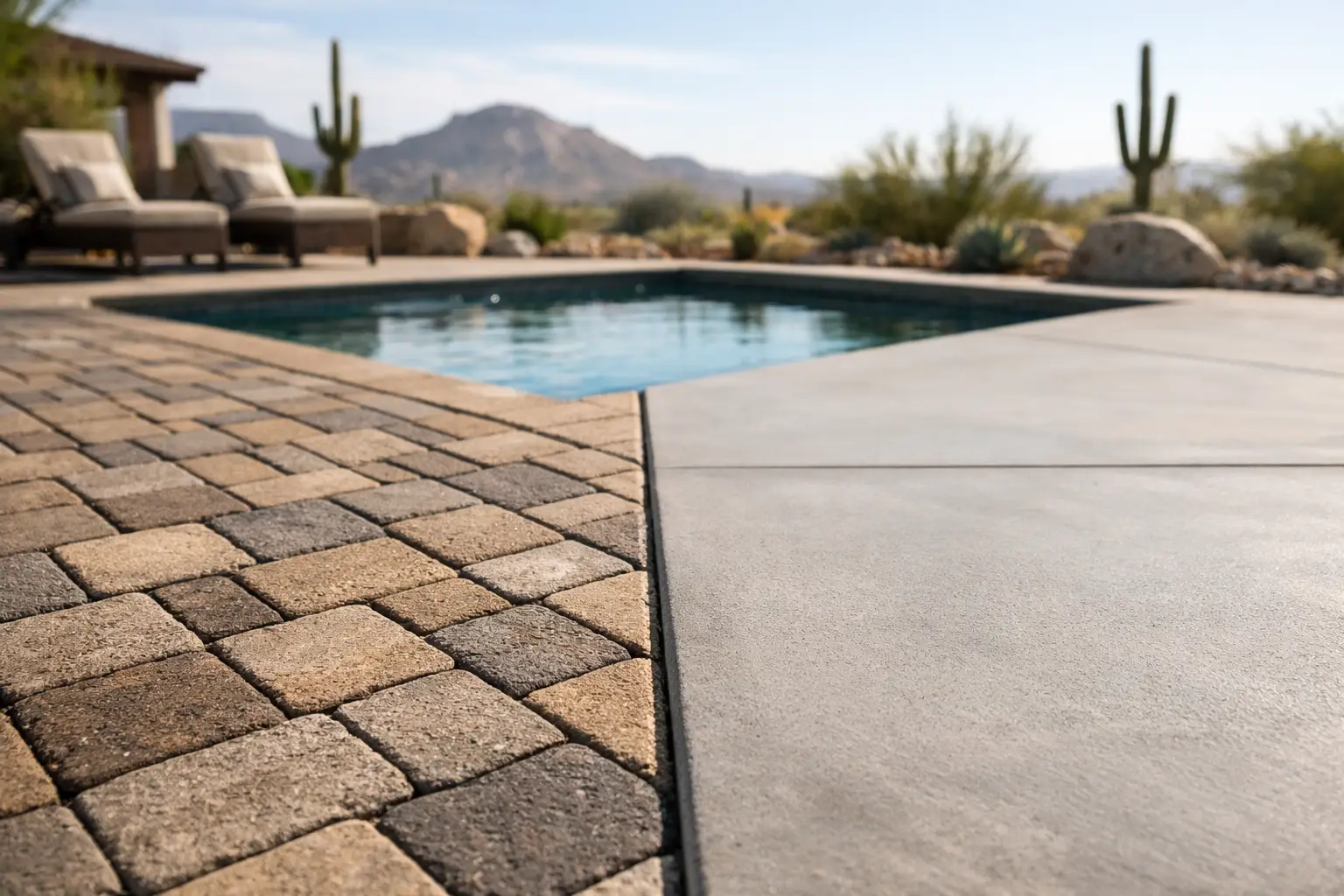
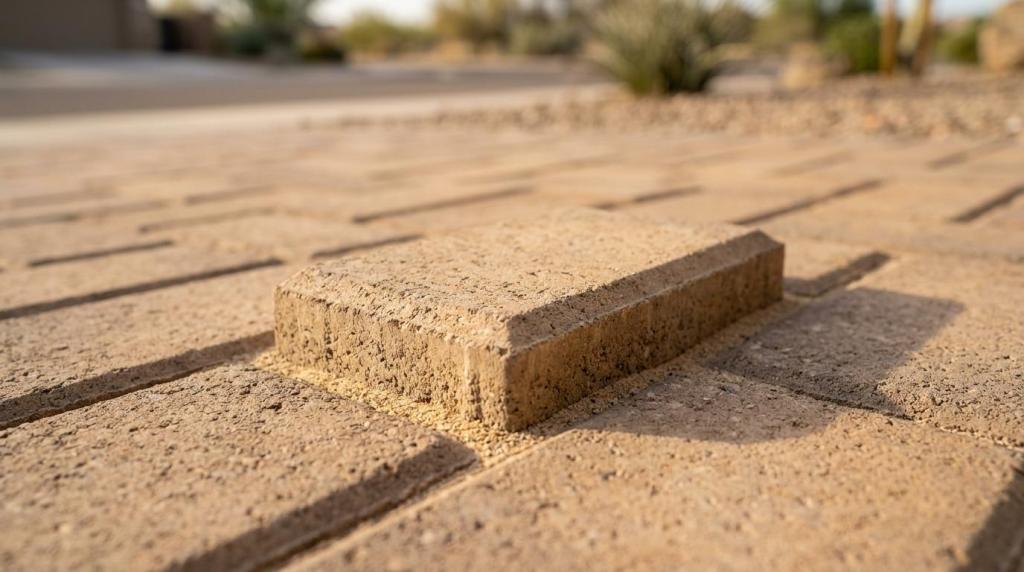
The biggest difference is how each surface is built. Pavers are individual units installed over a prepared base, then fitted together to create a flexible hardscape. Poured concrete is installed as one solid slab. That single difference affects almost everything else, from cracking and repairs to visual style and long-term performance.

Pavers are designed to move slightly with the base and surrounding soil. Poured concrete is more rigid, which can be a benefit in some applications, but it also means stress often shows up as visible cracks. In a climate like Arizona, where expansion, contraction, and ground movement can all play a role, that distinction is hard to ignore.

How Arizona Climate Changes the Decision

Not every hardscape article accounts for desert conditions, but that is where many decisions go wrong. Arizona properties deal with intense UV exposure, high surface temperatures, low rainfall most of the year, and occasional heavy monsoon activity that can expose drainage problems fast.

A poured concrete slab can perform well when it is properly installed with the right subgrade preparation, joint placement, and finish. But when the base shifts or the slab takes stress over time, cracking is common. Once that happens, repairs are usually visible, and matching older concrete can be difficult.

Pavers tend to be more forgiving in these conditions. Because the system is modular, small movements in the ground are less likely to create the same kind of obvious structural blemish you see in a cracked slab. That does not mean pavers are maintenance-free, but it does mean they often age more gracefully in Arizona landscapes.

Appearance and Design Flexibility

If design matters, pavers usually offer more options. You can choose from different shapes, colors, textures, and laying patterns to match the home, pool area, courtyard, or commercial frontage. They can create a cleaner custom look without making the space feel overly formal.

Poured concrete has a simpler appearance unless you upgrade to decorative finishes like stamping, staining, or scoring. Those options can improve the look, but they also increase cost and still do not offer the same piece-by-piece flexibility as pavers. For clients who want a more finished, higher-end surface, pavers often feel like the stronger visual investment.

This matters for curb appeal. A driveway or entry path is one of the first things people notice. On commercial properties, it also affects how professional the exterior feels. Clean, well-installed pavers usually create a more intentional look than a basic concrete slab.

Cost Up Front vs Cost Over Time

For many property owners, the first question is price. In most cases, poured concrete has a lower upfront installation cost than pavers. If the budget is tight and the area is large, concrete can seem like the practical move.

But initial price is only part of the equation. Long-term value depends on how the surface holds up and what it costs to maintain or repair. When concrete cracks, settles, or stains, the fix is often more involved and more noticeable. Replacing one section of a slab can leave a patchwork result.

Pavers usually cost more to install, but they can save money later because repairs are more targeted. If one area shifts or gets damaged, individual pavers can often be lifted and replaced without tearing out the whole surface. That is a major advantage for driveways, walkways, and patios expected to last for years.

So when clients ask which is cheaper, the honest answer is that concrete is often cheaper at the start, while pavers can make more sense over the life of the project.

Repairs and Maintenance

This is one of the clearest trade-offs in the pavers vs poured concrete decision. Concrete is straightforward to clean and generally low maintenance, but when something goes wrong, repair flexibility is limited. Cracks may be patched, sealed, or resurfaced, but the repaired area often stands out.

Pavers need occasional attention too. Joint sand may need refreshing, weeds can appear if installation or upkeep is neglected, and sealing may be recommended depending on the product and use. Still, maintenance is usually more manageable because the system is repairable in sections.

That matters on active properties. A homeowner with kids, pets, patio furniture, and pool traffic needs a surface that can be corrected without a full rebuild. A commercial property owner may need repairs done fast with minimal disruption. In those cases, pavers have a practical edge.

Heat, Comfort, and Everyday Use

Arizona heat changes how outdoor surfaces feel underfoot. Both pavers and concrete can get hot in direct sun, but color, finish, and material type all influence surface temperature. Lighter colors generally stay more comfortable than darker finishes, regardless of the material.

Concrete can reflect a lot of heat and glare, especially in brighter finishes. Some paver products are designed with cooler surface performance in mind, which can be useful around pool decks and seating areas. The exact result depends on the product selected, but pavers often give you more control over the final feel of the space.

Comfort also includes traction. Wet areas around pools, misters, or irrigation overspray need surfaces that do not become slick. Both options can be finished for better slip resistance, but it is something worth planning early rather than treating as an afterthought.

Drainage and Ground Movement

Drainage is easy to overlook until water starts collecting where it should not. On Arizona properties, poor drainage can show up during monsoon storms, irrigation issues, or even simple washdown around patios and walkways.

Poured concrete relies heavily on correct grading and control joints. If installation is off, runoff may pool or move toward structures. Pavers also require good preparation, but the overall system can be more adaptable. In some applications, paver systems can better support water movement and reduce the visual impact of minor settling.

Ground movement is another factor. Expansive soils and settling can stress any hardscape. Concrete tends to show that stress in cracks or uneven slabs. Pavers may shift too, but they are often easier to reset and restore.

When Poured Concrete Makes Sense

Concrete is not the wrong choice by default. It can be a practical option for utility areas, straightforward walkways, and projects where budget is the main driver. If the design is simple, the area is properly prepared, and expectations are realistic, poured concrete can serve the property well.

It may also fit owners who prefer a basic, clean look and do not need the higher-end style range that pavers provide. For some service yards, side paths, or large functional pads, that simplicity is enough.

When Pavers Are Worth It

Pavers are often the better fit when appearance, durability, and long-term serviceability all matter. They work especially well for patios, driveways, front entries, pool decks, and entertainment areas where the surface is part of the overall design.

They are also a strong choice for Arizona owners who want a hardscape that can handle wear without looking tired too quickly. For many residential and commercial projects, that balance of looks and repairability makes the higher upfront cost easier to justify.

At Pro Natural Landscape, this is often where property owners see the difference between a surface that simply fills space and one that actually improves how the whole exterior looks and functions.

So Which One Should You Choose?

If your priority is the lowest initial cost, poured concrete may be the right move. If your priority is long-term appearance, easier repairs, and a more custom finish, pavers usually come out ahead. The best choice depends on the size of the space, the use of the area, the expected traffic, and how long you plan to keep the property.

For Arizona projects, it helps to think beyond installation day. Ask how the surface will look after several summers, what happens if the ground shifts, and how easy it will be to fix a problem without starting over. A good hardscape should do more than look finished on day one. It should keep working for you long after the project is done.

How to Prepare Your Yard for a New Landscape Installation (Checklist)

A new landscape rarely succeeds on design alone. The ground, water flow, access, and hidden conditions under the surface all shape how well that investment performs once plants, pavers, irrigation, and lighting go in.

That is why the smartest part of a landscape project often happens before installation day. Good preparation reduces change orders, protects new materials, and gives plants and hardscape features a much better start. If you are planning a yard makeover in El Mirage or nearby Arizona communities, a clear prep plan can save time and keep the work moving.

Why yard preparation matters for landscape installation

Site preparation is where practical planning meets long-term performance. A beautiful layout can still struggle if the soil is compacted, drainage is poor, weeds are left in place, or crews run into unmarked utilities. When those issues are handled early, installation becomes faster, cleaner, and far more predictable.

Extension guidance consistently points to the same starting points before planting begins: test the soil, check drainage, and remove competing vegetation. Those steps are not glamorous, yet they set the stage for healthy roots, efficient irrigation, and fewer surprises during construction.

Successful yards are often won before the first plant goes into the ground.

After the initial review, most projects move through a short set of prep priorities:

Yard preparation checklist before new landscaping

A checklist helps separate true site-prep work from nice-to-have tasks. It also keeps homeowners, property managers, and contractors on the same page.

Prep task What to verify Why it matters
Soil test pH, texture, organic matter, nutrient levels Helps match plants and soil amendments to actual site conditions
Drainage check Areas where water stands, runoff paths, low spots Prevents root stress, erosion, and water damage
Weed and turf removal Existing grass, invasive weeds, volunteer growth Cuts down competition for new plants
Debris removal Old edging, trash, rock piles, dead roots, broken concrete Creates a clean installation surface
Utility marking Call 811 before digging Reduces safety risks and service disruptions
Grading review Slope away from structures, finished elevations Supports drainage and hardscape stability
Irrigation planning Water source, zones, controller location Keeps trenching and layout organized
Site access Gate widths, parking, staging area, pet control Helps crews work efficiently and safely

A checklist is also useful when comparing bids. If one proposal includes site prep and another assumes the yard is already ready, the price gap may not mean the same scope of work.

Soil testing and soil improvement before landscaping

Soil testing should happen early, ideally in spring before planting or in fall if the schedule allows. A basic test is usually enough for most lawns and gardens, and the report can show pH, texture, organic matter, nutrient levels, and whether compost or fertilizer is warranted. That information is far better than guessing.

In practical terms, soil testing answers a few big questions. Will selected plants tolerate the existing soil pH? Does the ground drain quickly or hold water too long? Is the soil structure loose enough for roots to establish, or is it compacted and short on organic matter? Those answers shape plant selection, amendment plans, and irrigation settings.

For new landscape installations, it is wise to test before buying large quantities of plants or soil products. That keeps spending focused and reduces the chance of correcting avoidable problems after installation.

A good soil report usually helps you evaluate these points:

  • Soil pH: shows whether plant choices are likely to thrive or struggle
  • Soil texture: indicates how fast water moves through the root zone
  • Organic matter: points to how well the soil can hold moisture and nutrients
  • Nutrient levels: helps avoid over-fertilizing or feeding the wrong way
  • Contaminants: useful when the yard has an uncertain site history

Once the results are back, the prep work may include loosening compacted ground, incorporating compost, removing construction residue, or adjusting the planting plan. If an area is being converted from bare ground or turf to a garden bed, some projects benefit from deeper cultivation before installation begins.

Drainage and grading checks before landscape installation

Before any planting, drainage should be checked. That guidance is simple, but it prevents many expensive setbacks. If water collects in a planting bed or around a foundation, the issue tends to show up after the yard is finished, when repairs are harder and more disruptive.

A quick field check often starts with observation. Where does water go after irrigation or rain? Do low spots stay wet longer than the rest of the yard? Does runoff move toward the house, patio, or block wall? These patterns tell you whether regrading, drainage piping, swales, or changes to hardscape elevations are needed.

This step matters just as much for pavers and artificial grass as it does for shrubs and trees. Hardscape needs a stable base and proper slope. Planting areas need oxygen in the root zone. When grade and drainage are corrected first, the rest of the installation has a stronger foundation.

If a yard has repeated puddling or erosion, that is usually a sign to pause and solve the water path before moving ahead with finishing materials.

Weed removal and debris cleanup before landscaping

New plants rarely compete well against established weeds or existing turf. Extension recommendations on planting areas are clear: competing vegetation should be removed before new material goes in. That applies to flower beds, low-water gardens, turf replacement projects, and larger renovations.

There are several ways to handle this. Mechanical removal works for smaller areas. For larger sections of unwanted grass or weeds, solarization or occultation can be useful. Solarization uses heat under clear plastic, while occultation blocks light with dark plastic, tarps, or similar coverings. Both methods help knock back existing growth and reduce the first flush of weed seeds before planting.

The cleanup stage should also remove anything that interferes with layout or root growth. Old edging, broken irrigation parts, buried trash, leftover construction materials, and dead root masses all add friction to the job. Crews work faster on a clean site, and finished results look sharper.

Common items to clear before installation include:

  • Old sod and turfgrass
  • Volunteer weeds
  • Dead shrubs
  • Loose rubble
  • Broken pavers
  • Scrap wood and metal
  • Abandoned drip line
  • Tree stumps or large roots

If a tarp or dark sheet is being used to suppress grass before planting, give it enough time to work. In some situations, that means several weeks, not a weekend.

Underground utility marking before any yard digging

Utility marking is a separate safety step from soil prep and planting prep. Even if the yard looks simple, underground lines may be present for electric, gas, water, cable, or other services. Calling 811 starts the one-call system process so utilities can be marked before digging begins.

That call should happen before trenching for irrigation, lighting, drainage, trees, or footings. It is not a substitute to call a different agency or assume old plans are accurate. The marked lines protect workers, residents, and the project schedule.

A short delay for utility marking is far better than a damaged line, an outage, or an emergency repair.

Site decisions to finalize before landscape crews arrive

Some of the most useful prep has nothing to do with soil. It has to do with decisions. If the install team arrives and basic layout questions are still open, time gets lost quickly.

Finalize the location of planting beds, turf areas, paver borders, lighting runs, drainage features, and irrigation control boxes before the start date. Confirm which items stay and which are being removed. That includes mature trees, decorative rock, existing concrete pads, play equipment, and fences or gates that affect access.

It also helps to identify site boundaries and staging areas. Where will pallets of pavers sit? Where should crews place removed debris? Which gate should remain unlocked? Can heavy materials cross the driveway without blocking daily access for residents or tenants?

Before installation begins, confirm these points with your contractor:

  • Scope: what is being removed, installed, repaired, or left in place
  • Access: gate width, parking limits, pet safety, and locked areas
  • Utilities: whether 811 markings are complete and visible
  • Water: hose bib access or irrigation shutoff locations
  • Materials: where rock, plants, pavers, and soil will be staged

Preparing an Arizona yard for efficient installation

Arizona yards often reward careful planning. Dry conditions can make the surface look simple, yet the real work may involve compacted soil, hard digging, fast runoff, or older irrigation that needs updating before new planting begins. A prep-first approach reduces rework and protects the investment.

This is where local experience has real value. A family-owned landscape company serving El Mirage for more than a decade will usually have a strong read on common site conditions, scheduling needs, and the order in which work should happen. That kind of field experience supports clear communication and more realistic timelines.

When the contractor offers full-service work, the prep phase can be coordinated more efficiently. Grading, cleanup, irrigation, lighting, pavers, gravel, trees, and planting all affect one another. Managing those pieces in the right order keeps the project moving and avoids tearing up finished work later.

Installation day yard access and homeowner preparation

Once the yard is prepped, installation day becomes much smoother. Crews can unload, mark layout lines, trench where needed, and move directly into base prep, irrigation work, planting, or hardscape installation without losing time to preventable site issues.

Homeowners can help by securing pets, moving vehicles away from access points, unlocking gates, and clearing fragile items from work zones. If the project includes backyard access through a side yard, that path should be open and wide enough for wheelbarrows, compact equipment, or material carts.

A ready site sends the whole project in the right direction. Clean ground, marked utilities, tested soil, and a clear plan give the installation team what it needs to produce a yard that looks finished on day one and performs well long after that.